



I’m going to do something unfashionable and just show you the math. No lectures today. No theory.
Math.
Not the inspirational relocation math, where someone moves to Bali, lives on $500 a month, and writes about it on Substack.
The real math.
A family of four. Two working adults. Two kids, ages four and seven. A decent life — not lavish, not ascetic. The kind of life an American household earning $150,000 a year expects to be able to afford.
That household, in Austin, Texas, is spending its entire paycheck and then some. In Lisbon, the same household is banking $90,000 a year. In Medellín, more. In Palermo, even more than that.
Here’s how the numbers actually work.
Austin, Texas
After federal taxes — Texas has no income tax, so you catch a break there — a $150,000 gross household nets approximately $113,000. Call it $9,400 a month.
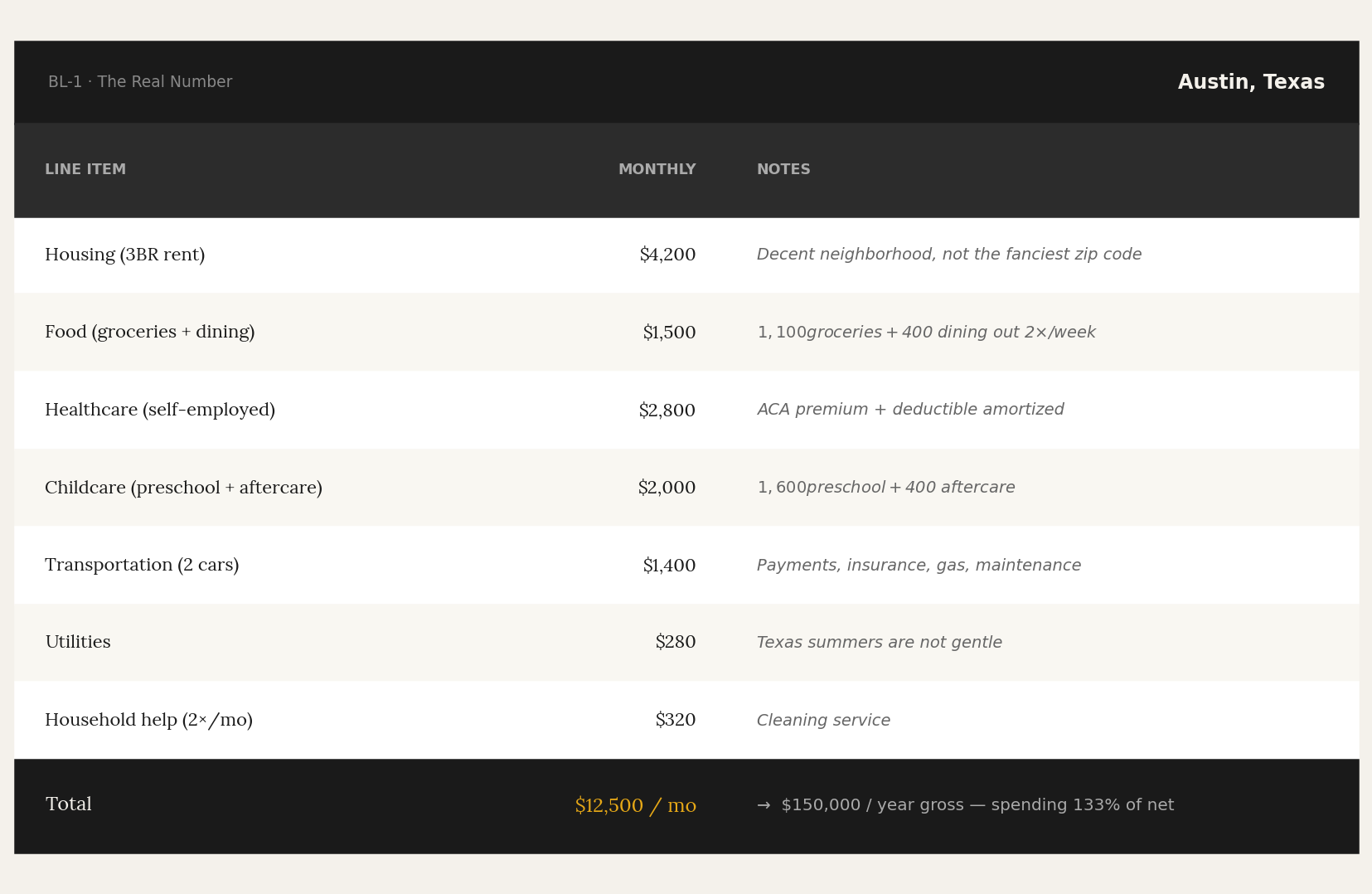
The household is spending 133% of its net income. They are going backward, drawing down savings, or having more income than this model assumes. This is the American middle-class math in 2026.
A $150,000 household income, and you are precisely not getting ahead. I’ve written extensively about this phenomenon at The Long Memo.
Lisbon, Portugal
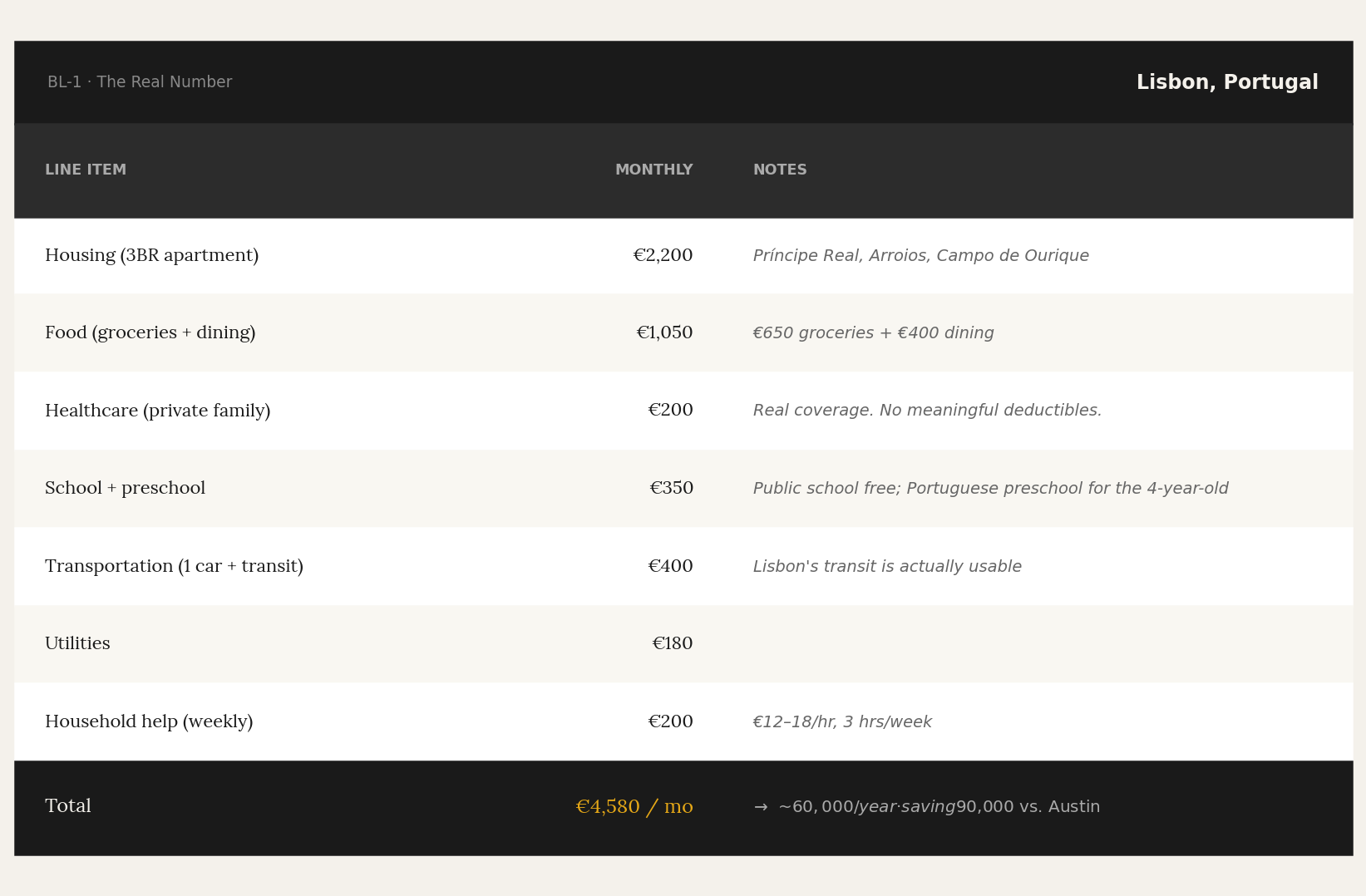
The same family. The same life — arguably a better one, in a city rated among the most livable in Europe, with a functioning public school, walkable neighborhoods, and healthcare that doesn’t require a financial risk calculus before every doctor’s visit.
Annual savings versus Austin: $60,000
Medellín, Colombia
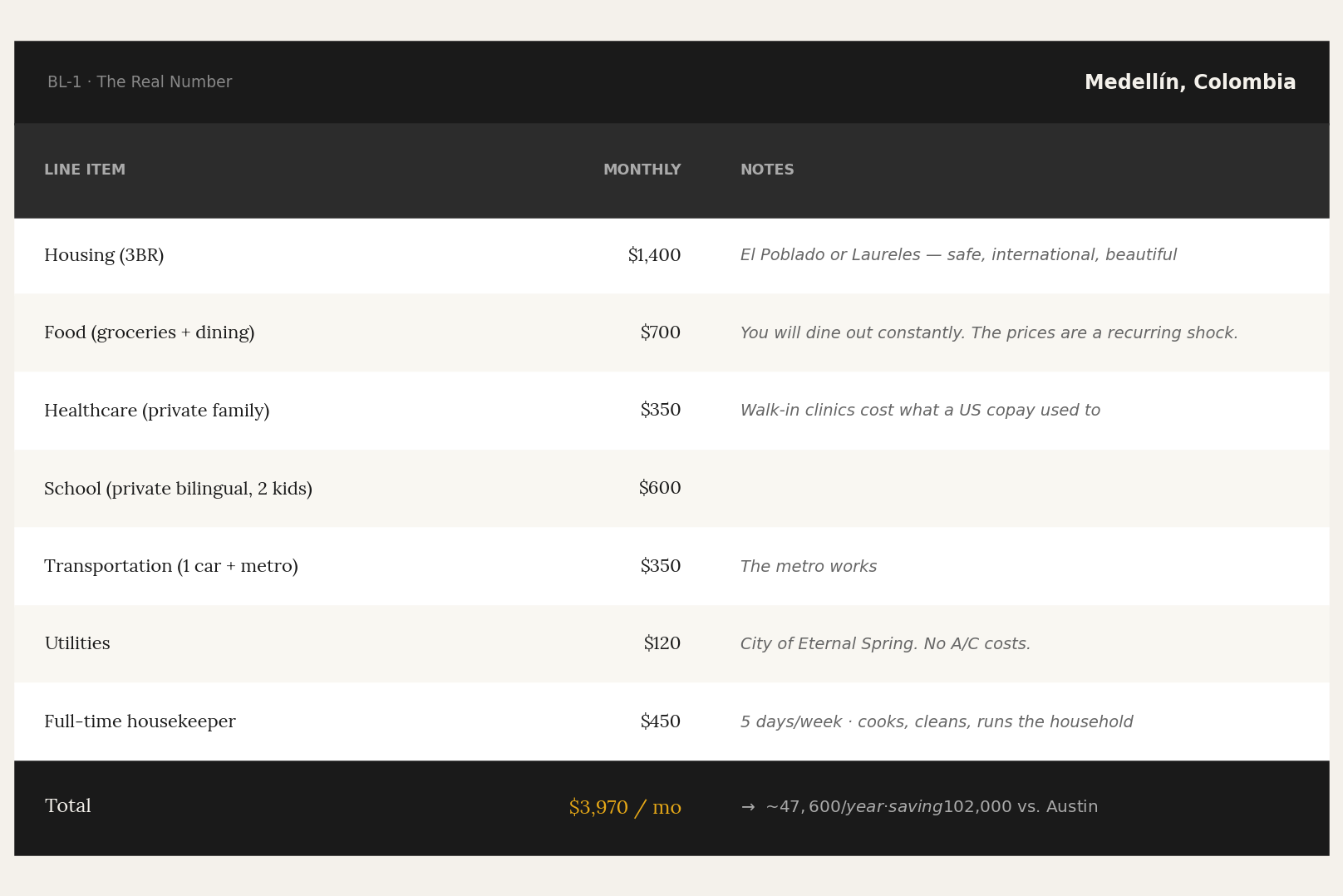
Annual savings versus Austin: $47,600
Palermo, Italy
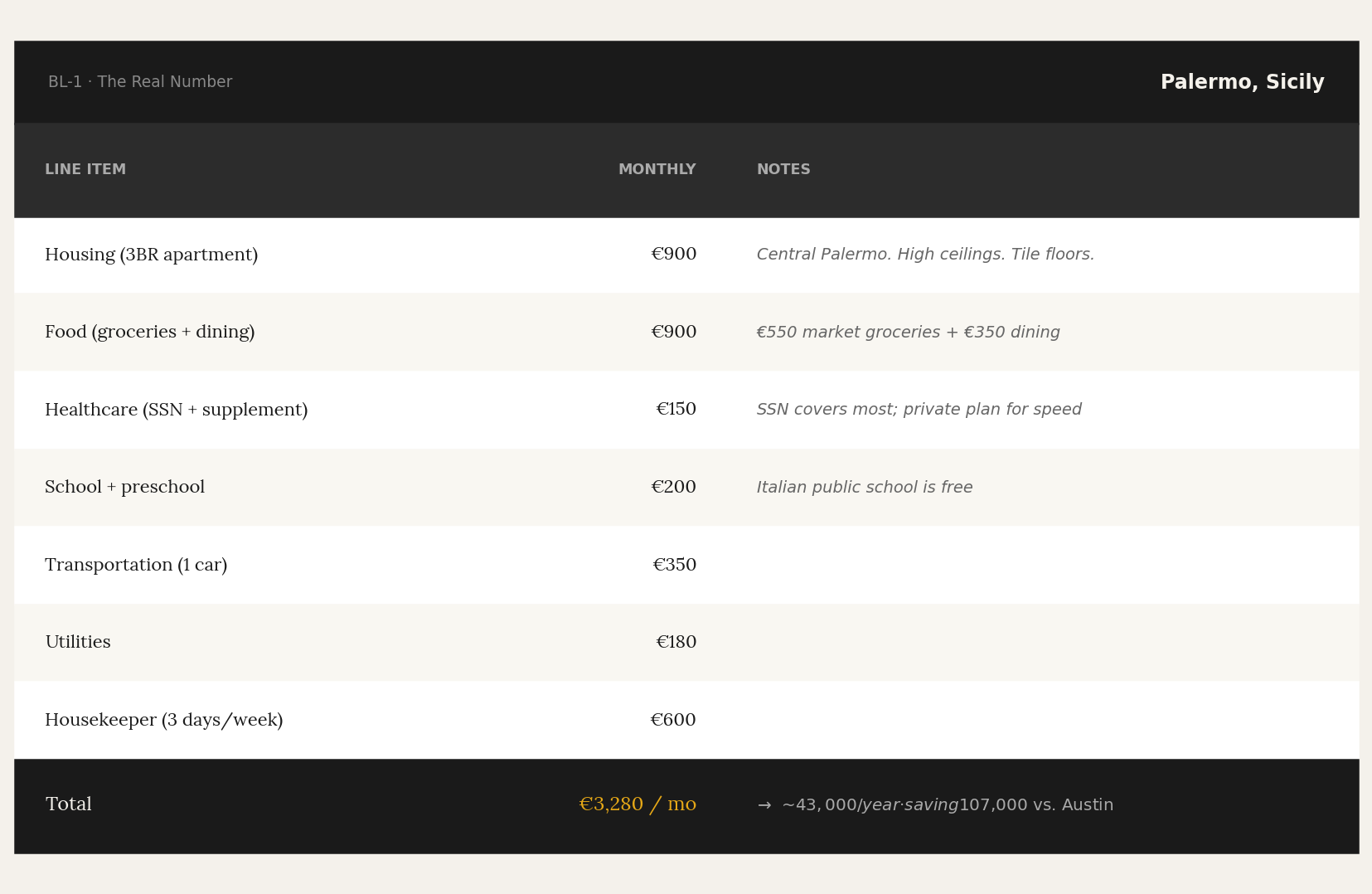
Annual savings versus Austin: $43,000
Final thoughts
The standard objection: yes, but income. A $150,000 household in Austin is probably tied to Austin-based employment.
If you leave, you lose the income. That’s undoubtedly a problem. That is why I discuss the idea of dimensionality of risks. That is why we focus on whether you (the sovereign architect) own the “means of production.”
Some of it, however, is your own frame and your own positioning. Remote work is durable for a significant portion of knowledge work. Freelance and consulting income follows the person. And the arbitrage compounds: a family earning $100,000 remotely and spending $47,600 in Medellín is in a substantially better financial position than the same family earning $150,000 in Austin and spending all of it (and then some).
The math doesn’t necessarily require you to take a pay cut.
It requires you to recognize that $150,000 is not a ceiling anywhere else.
For the record, this is the primary reason the vast majority of Americans not only consider moving abroad, but do so. The cost of living, health care costs, retirement expenses, and other expenditures are driving people to ask, “Is America the best place to remain?” In many cases, the answer to that question is increasingly no.
The visa, the apostilles, the background check — those are the easy part. People get all of that right and still end up in trouble. Even people with accountants, lawyers, and wealth managers.
What goes wrong is further back. A decision that looked perfect ten moves ago, arriving now as a tax bill, a letter from a government, a check you didn’t plan to write. And nobody had to do anything wrong. They just never saw the whole board.
A Situation Review takes 25 minutes. It’s free. You’ll leave knowing whether you have a wish or a plan.
Even in Stockholm - a family of 3-4 is doing great on a salary of $60-80k a year. The trick is securing permission to move there.
Just leave the MAGA politics in America please!