


Almost everyone who writes to me believes the same thing: that what stands between them and a decision is information.
Which country. Which visa. What it costs. How long the residency clock runs. So they read. They join the forums, they save the PDFs, they bookmark the consulate pages at eleven at night, and two years later the pile is enormous and the decision is exactly where it was.
That looks like a research problem. It isn’t. It’s the most convincing form of paralysis available, because researching feels like progress — you end every session knowing more than you did. The scoreboard says you’re winning. The decision never moves.
What actually stops people is the fear of making a mistake they can’t undo. And that fear is correct. The mistakes in this work are real, and they are almost never made at the moment they become visible.
Here is one.
A couple sells the house in December, because the buyer is ready and the market is good. In March they start the visa process. In June their Italian attorney files, and the filing is clean — he’s excellent, the paperwork is perfect. In September their CPA runs the numbers and goes quiet, because the capital gain from December landed in a tax year that now has foreign residency attached to it, and the state they left has a definition of domicile they never read.
Nobody made an error. The attorney did his job. The CPA did hers. The house sold well.
They did the right things in the wrong order.
That’s the failure mode. Not ignorance — sequence. And sequencing is the one thing the advisory stack is structurally unable to own, because immigration counsel is responsible for status, the CPA is responsible for the return, the wealth advisor is responsible for the portfolio, and none of them is responsible for what happens where the three meet. Each is excellent at their own tile. Nobody is holding the picture.
I hold the picture for people, one family at a time. I’ve written the whole thing down.
The book
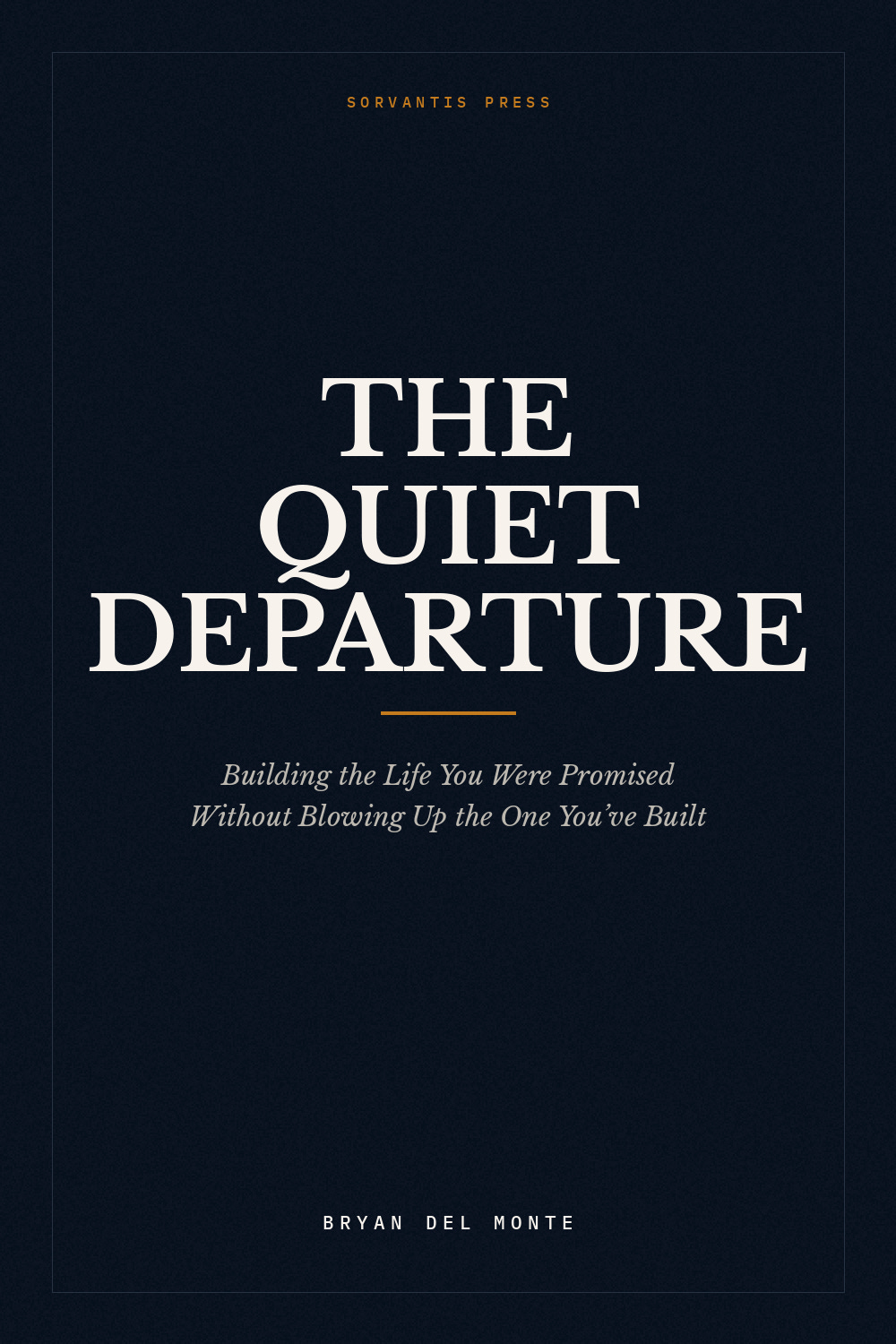
It’s called The Quiet Departure. Sixteen chapters in four acts, and the architecture is the argument.
The first act is the reframe — what is actually happening when a capable person stalls for two years. The second is the machine, taken apart system by system: the right to be somewhere, the country that taxes you wherever you go, moving capital across borders, the assets that won’t travel, and what it costs to detach cleanly. Each one worked end to end. The D7 from consular appointment to the five-year line. FBAR thresholds and the PFIC trap your foreign bank will never mention. State clawback. The covered-expatriate exit tax.
The third act is where those systems stop behaving as five things and start behaving as one machine — where the same move that’s harmless in March is unrecoverable in June, and reversibility turns out to be a property of timing rather than of the step. The fourth is what this asks of you: the posture that survives contact, the unglamorous middle nobody photographs, and the one condition under which capable people reliably destroy their own plans.
Most books in this category are brochures with page numbers. They describe the category, gesture at the possibilities, and route you to a consultation for anything that would actually be useful. The withholding is the business model.
This one withholds exactly one thing, and I’ll tell you what it is. It gives you every system and every worked pathway in full — nothing held back about how the job is done. What it can’t give you is the read of your life: which of these pathways your income, your assets, your family structure and your timeline actually support. That doesn’t exist on a page. It only exists when someone looks at your situation.
Everything else, you can do from the book. If you finish it, execute it yourself, and never speak to me, it did its job.
Why you’re hearing about it now
The manuscript is written. It’s in developmental editing, which is the stage where a book either becomes professional or stays something a person wrote.
Sorvantis Press is my own imprint. Nobody is underwriting this, which means the editing, design, and printing get paid for out of the presale—or by me doing it all myself at two in the morning. I’d rather do it properly.
So this is a presale in the real sense. You’re funding the completion of a book, not reserving stock from a warehouse. Sales are final. And the dates are set where the manuscript’s current stage says I can keep them, rather than where I hope to land: galley by February 2027, hardcover by April. I intend to be early. I’ve committed to dates I can hold instead.
The presale closes 30 November 2026, when the manuscript goes to the editor.
Three editions. The Galley Edition at $47 is the complete text as a PDF, well ahead of publication. The Signed Hardcover at $97 is the first printing, signed, with the galley arriving first so you’re not waiting. The Founder’s Edition at $2,000 is limited to twenty: your name printed in the book, the hardcover, the galley, and a Departure Briefing — the paid diagnostic, applied to your own facts. Those twenty don’t wait for publication. You can put the briefing on the calendar this month.
I’ve spent a long time telling people the information was never their problem. This is me putting it all on the page anyway, so the claim can be tested.
Understanding how flight works is not the same as building the airplane that carries your family. But you should be able to see the whole aircraft before you decide.
The payment mismatch problem is fixed. :) It should be working now. I just tested it myself. Thanks for letting me know.
is there an option for the Galley ante to be upped later to Signed Hardcover? you already have loyalty. an option might get you more buy-in $ immediately.
when i tried to self-publish, i underwrote it entirely, had no early buy-in, & 9-11 killed