


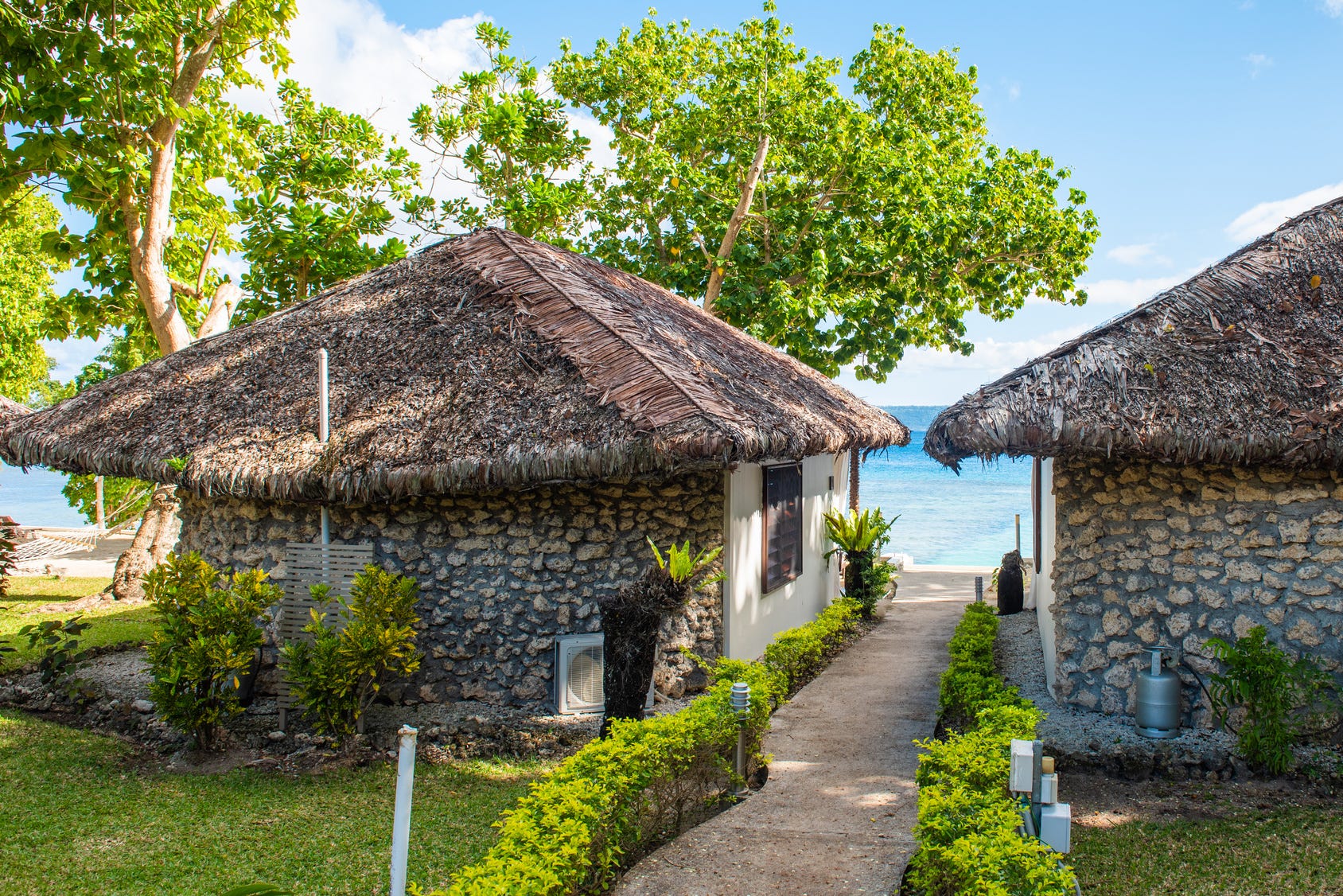
Far from the noise
A house on a hill above the lagoon, with a veranda that catches the trade wind. A swim before the heat comes up. A market where women from the outer islands sell the week's fruit and greens, and a church choir you can hear from the road on Sunday. Evenings with no news in them at all, because the news is happening a long way off and can wait until morning.
That's the wish people bring to Vanuatu. Not an escape from the world so much as distance from its noise: a small, warm country in the South Pacific where English is an official language, there's no income tax, and a retired couple can live on what they already have and spend most of the day outdoors.
It's also the wish that draws the loudest reaction at home. "Everyone we know thinks we're crazy." With Vanuatu, the friends are right about some of the details and wrong about the life. The details are real. The country sits on an active fault line inside the cyclone belt. Serious medical care means a flight to Australia or New Zealand. And for more than a year the country's own national bank has struggled to move US dollars in and out.
None of that makes the life wrong. Each one changes the order you do things in.
What I'd check first if this were my household is exactly those three: what happens when the cyclone comes, what happens when someone gets seriously ill, and how the money arrives every month. Settle those before you sign anything, and Vanuatu is one of the most beautiful places an American household can keep a second base. This report is about settling them first.
The life
Where Americans actually land. Almost everyone who settles in Vanuatu starts on Efate, around Port Vila. It is the capital, with the main hospital, the international airport, the banks and most services. The houses most people picture sit on the lagoons and headlands within a short drive of town. The second choice is Luganville, on Espiritu Santo, a smaller town with long white beaches and a slower rhythm, a short flight north. The outer islands are extraordinary to visit and hard to live on if you rely on regular medical care. There are no direct flights from the United States; you come and go through Australia, New Zealand or Fiji.
A good week. Picture a couple in their mid-sixties in a leased house above a lagoon a few miles outside Port Vila. He swims every morning and has taken up snorkeling with an enthusiasm that embarrasses their children. She volunteers two mornings a week with a literacy program and is learning Bislama from the women she works with. On Friday there are drinks with neighbors, a mix of Australians, New Zealanders, French families and ni-Vanuatu friends. Every other week someone from home calls to ask when they're coming back, and the honest answer is: in November, and back here in May.
What it costs. Local food, rent outside the best addresses, and help around the house are reasonable. Anything that comes in a container is expensive, and a great deal comes in containers. The fixed costs that surprise people aren't daily ones: a good medical evacuation policy, a water tank and backup power for the house, the residence visa fees, and the flights home.
Health care. This is the honest limit of the life. Hospitals and clinics are limited, care is often paid for in cash at the time, and serious cases are flown out, usually to Australia or New Zealand. Evacuation is expensive and hard to arrange on the day, so buy the policy first. Households in good health manage well with local clinics for the routine and evacuation cover for the rest. Households managing a chronic condition should think hard, and talk to their doctors, before they plan more than a long winter here.
People. Bislama, English and French are all official languages, so daily life in English is easy, and a little Bislama goes a long way. Ni-Vanuatu life is built around family, village and church, and the welcome is real. The households that are happiest joined something: a church, a sailing or diving club, a school board, a volunteer program. They also learned to live with island time, which is a feature, not a defect, once you stop fighting it.
The verdict
Where Vanuatu stands: a free, peaceful small democracy with a busy parliament and real exposure to nature, which works well for the healthy household that plans for cyclones, earthquakes, medical evacuation and banking before it moves. Current as of November 13, 2026.
What works. A self-funded residence visa asks for bank-certified income of 250,000 vatu a month, about $2,100 at the Reserve Bank's November 2026 rate, and there's no income tax on any of it. The country is free: Freedom House scores it 82 of 100, one point above the United States, and V-Dem ranks it 42nd in the world on liberal democracy, nine places above the US. A pact signed with Australia in June 2026 commits Canberra more firmly to Vanuatu's security and its recovery after disasters.
What doesn't. A magnitude 7.3 earthquake struck near Port Vila on December 17, 2024, killed 14 people and badly damaged two of the capital's main water reservoirs. In March 2023 two Category 4 cyclones hit within three days of each other. Health care is limited, and anything serious means evacuation. Since September 2025, when the National Bank of Vanuatu's Australian correspondent stopped clearing citizenship-agent transfers, moving US dollars has been harder. And parliament changes prime ministers often: Jotham Napat, in office since February 2025, is the fifth since 2022, and a no-confidence motion against him was withdrawn on November 9, 2026.
Two of these need proportion. The political churn plays out in parliament, not in the streets. The banking trouble grew out of citizenship sales, not anything a resident does, and it has a way through.
On civil liberties, Vanuatu is free but socially conservative. Same-sex relationships are legal, but a November 2024 amendment to the Marriage Act limits marriage to a man and a woman, and abortion is allowed only to preserve a woman's health.
Vanuatu fits the retired couple in good health, with income comfortably above the visa line, who want a quiet life outdoors and are content with a part-year plan or a long winter that keeps the American base intact.
Vanuatu fits poorly anyone managing a chronic illness that needs specialists nearby, anyone who wants a passport that opens Europe, same-sex couples who want their marriage recognized, anyone who must work locally, and anyone who wants to own land outright.
The bottom line: Vanuatu is a beautiful, low-tax second base for the healthy household that settles evacuation cover, the money pipe and a disaster plan before it settles the house.