


A second home in a language you already speak
A flat in a market town with a pub at the end of the road. A walk on Sunday that ends at a carvery, a bookshop that orders what you ask for, a theater you can reach by train. Friends who get your jokes on the first try. A doctor you can explain yourself to without a dictionary, and grandkids who are one overnight flight away.
That's the wish people bring to Britain. Not a new life from zero: a second base that already feels half familiar, with the history, the countryside and the city in reach, and no new language to learn.
I looked at Britain for my own household in September 2026. My read was plain: for someone in my position, residency there is, at best, challenging. Your position may be different from mine, so this report lays out every door that fits an American household and what each one asks of you. Britain itself is one of the safest, freest places on earth for an American to spend time. The question is which way in is yours.
Here's the part people miss. Britain has no retirement visa and no visa for people who simply have money to live on. Most of what you'll read online about "moving to the UK" assumes a job, a British spouse or a talent the government wants. If you have none of those, you can still build a real second life there, just a different shape of one than you pictured. As one reader put it, "We've read everything and still don't know what to actually do." The answer starts with being honest about which door you can use.
The life
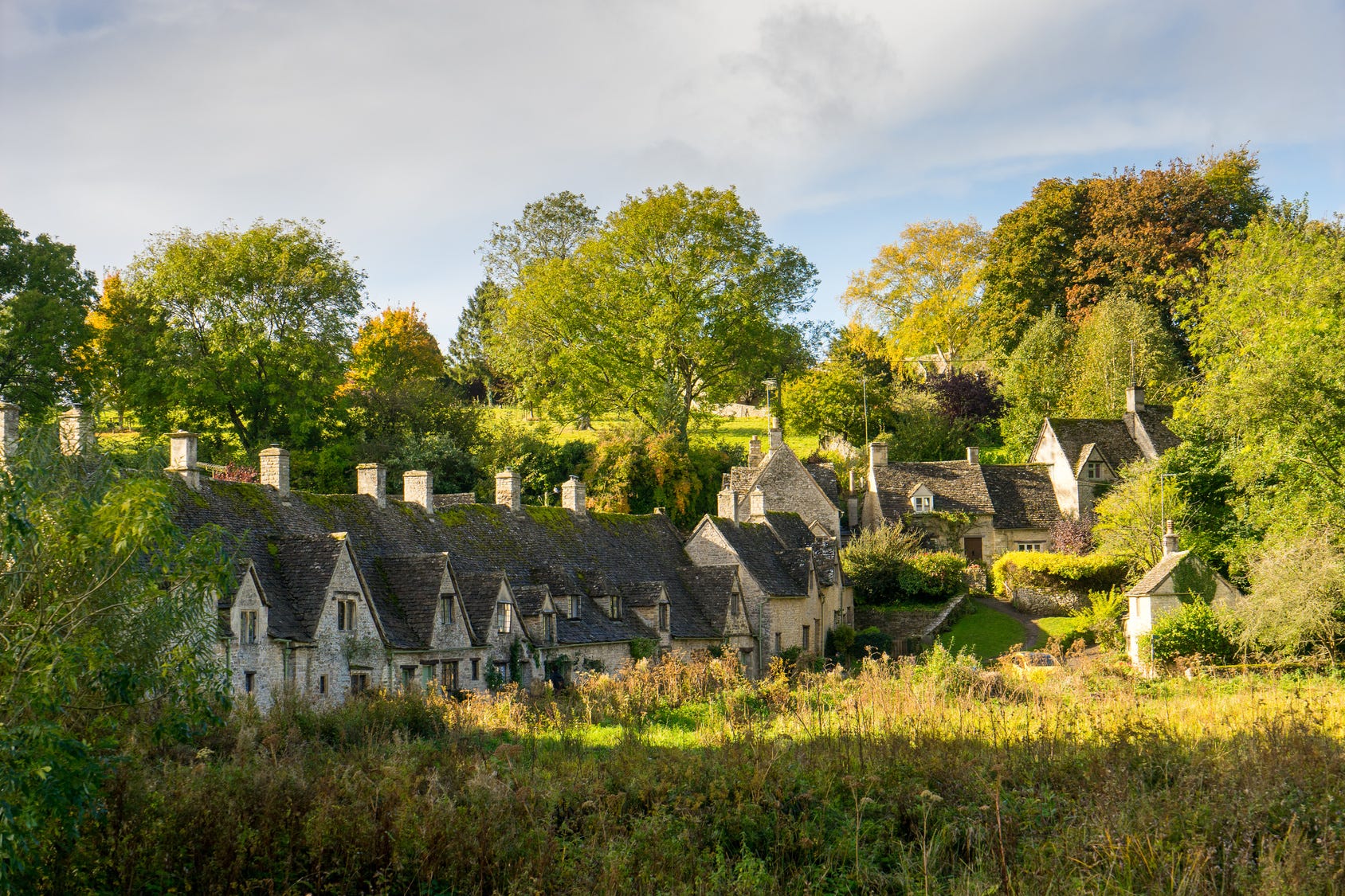
Where Americans actually land. Four kinds of place, mostly. London, for people who want one of the world's great cities on their doorstep and can carry its prices. The Cotswolds, the Chilterns and the market towns of the south, for the cottage, the footpaths and a fast train into town. The university and cathedral cities (Oxford, Cambridge, Bath, York, Edinburgh) for culture at a human scale. And, for people who want more house and more sky for the money, the north of England, Scotland and Wales.
A good week. Picture a couple in their sixties in a rented house on the edge of a market town. He walks the dog to the newsagent most mornings and has, by month three, become a regular at the quiz night he swore he'd never join. She volunteers two afternoons at the National Trust house up the road. Wednesday they take the train into London for an exhibition and a late lunch. On Friday the grandkids video-call from Ohio, five hours behind, and in July they come over for three weeks. Nobody needs a translator for the plumber.
What it costs. London and the commuter belt are expensive by any standard. Most of the rest of the country is noticeably more reasonable, and a household that drives less and walks more often finds daily life cheaper than at home. The costs that surprise people are the fixed ones: council tax on the home, a heating bill in a stone house, and an annual health surcharge paid up front with every visa.
Health care. The National Health Service is free at the point of use for people ordinarily resident in Britain. On most long-term visas you pay the immigration health surcharge with your application, currently £1,035 a year per person, and you can use the NHS from the day your visa starts. Waits for planned care are long, so many households keep a private policy for speed. Prescriptions and dentistry carry the usual resident charges.
People. This is where Britain is easiest. You speak the language, you know the references, and you will rarely be the only American in town. The households that are happiest joined something early (a walking club, a choir, the village hall committee, a church) and learned that British reserve is politeness, not distance. It thaws, usually at the pub. The first winter is the part people underestimate: short days, gray skies, a damp that gets into old houses. The households that thrive plan for it, with good boots, a warm room, a trip somewhere bright in February, and the long summer evenings to look forward to. You can stay entirely American and still belong.
The verdict
Where Britain stands: a stable, free country that is easy to live in and hard to move to. The ground is solid; the doors are narrow, and the road to permanence is getting longer. Current as of November 6, 2026.
What works. Daily life. Britain is free, scoring 92 of 100 with Freedom House, well above the United States. It is safe, 39th in the world for peacefulness where the US is 134th, and its press is among the freest in the world. The NHS covers you from the day your visa starts. Social Security arrives normally, and the treaty gives Britain the right to tax it. And a household that has lived outside Britain for ten years gets four years in which most foreign income and gains come in free of British tax.
What doesn't. The way in. There is no route for retirees or people of independent means, so a household without a British partner, a job or a recognized talent has no direct door. And on November 2, 2026, the government confirmed that the standard wait for settlement will double from five years to ten. That is policy, not yet law: the new rules start to be laid from December 2026, with implementation over 2027. Partners of British citizens keep a five-year path, and the talent and founder routes may keep a three-year one.
Read the scale first. Britain is a free, well-run democracy that scores ahead of the United States on press freedom, rule of law, corruption and peacefulness. V-Dem's 2026 report added Britain, with Italy and the United States, to its list of democracies whose scores are slipping; Britain still ranks 30th of 179, the US 51st. This is a country tightening its immigration rules, not one heading anywhere frightening.
Britain fits the household with a British spouse or partner, the founder or recognized professional who wants to keep working, and the household content with a long-stay visitor's life: up to six months at a time, renting, with home still in the US.
Britain fits poorly the retired household that wants to live there full time on passive income alone, anyone counting on a five-year path to permanence on an ordinary route, and very wealthy households who would become long-term residents for inheritance tax.
The bottom line: Britain is a wonderful place to spend part of a life and a hard place to make a full-time second base, unless you hold one of the few keys it hands out.