


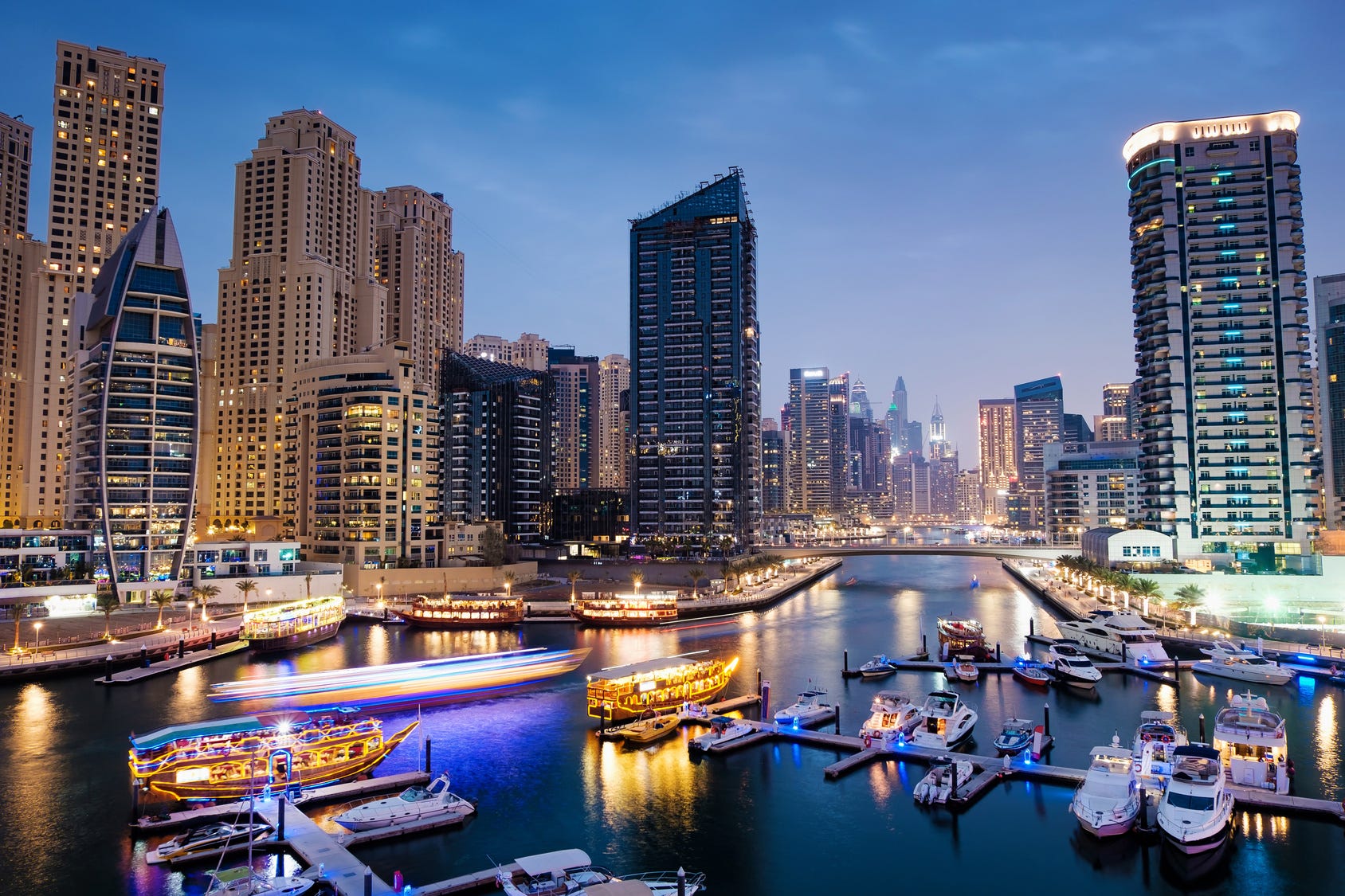
Easy, safe and in the middle of everything
A January morning warm enough for breakfast outside. A city where the paperwork is done on a phone app, the streets are clean at two in the morning, and nobody asks what you're doing there because nearly everyone came from somewhere else. A direct flight home when you need one, and Rome, Delhi or Cape Town a few hours away when you don't. A tax bill, on the local side, of zero.
That's the wish people bring to the United Arab Emirates. Not a slower life, mostly: an easier one. Fewer frictions, more sun in the months that matter, and a front-row seat on the rest of the world.
As one reader put it, "Leaving the US 3 months ago was among the best decisions I've ever made." The UAE is built to produce that feeling quickly. It is one of the easiest places on earth to arrive, set up and start living well.
It also asks more of you than the brochures admit. It is not a democracy, and it doesn't pretend to be. It does not end your American tax bill, whatever the zero suggests. And in 2026 it found itself on the front line of a war it didn't start. What I'd check first if this were my household is simple: whether the trade it offers, comfort and order in return for living by its rules, is one my household would make with open eyes.
The life
Where Americans actually land. Most land in Dubai, and within Dubai in a handful of places: the towers of the Marina and Downtown for people who want a walkable city life, Jumeirah and the Palm for the beach, and the villa communities inland for families and anyone who wants a garden and quiet. Abu Dhabi, the capital, is calmer, with Saadiyat Island drawing people who want museums and beaches. A smaller number choose Ras Al Khaimah, an hour or so up the coast, for mountains, space and lower prices.
A good week. Picture a couple in their early sixties in a rented villa on the edge of Dubai. He swims most mornings before the heat builds. She has a standing coffee with three women she met at a book club, from Lebanon, Scotland and Ohio. Thursday is the farmers' market by the water; Friday they walk the old souks across the creek and eat dinner outside. Twice a winter the grandkids fly in, and spend a week convinced their grandparents live in a theme park. In May they plan the summer, because summer here is something you plan around: many households spend July and August somewhere cooler.
What it costs. The UAE is expensive where Americans like to live and reasonable almost everywhere else. Rent and school fees are the big lines. The fixed costs that surprise people are private ones: health insurance priced by age, residence fees renewed every few years, and a US tax adviser you'll still need every April.
Health care. The hospitals in Dubai and Abu Dhabi are modern, many of their doctors trained abroad, and English is the working language. But there is no public system for foreign residents to join. You carry private insurance, and you need it to get or renew your visa. For a household in its sixties, price that premium first, and again for your seventies.
People. This is the easiest country in the world to find other foreigners, because foreigners are most of the population. Clubs, churches, sports leagues and alumni groups exist for almost every nationality. The harder thing is belonging in the deeper sense: the UAE welcomes residents generously and does not, as a rule, turn them into citizens. The households happiest here treat it as a long, comfortable chapter, not a final home, and keep a second base, often the American one, warm.
The verdict
Where the UAE stands: an orderly, prosperous country run by hereditary rulers, easy and comfortable for a foreign resident who lives within its rules, and in 2026 exposed to a regional war. Current as of November 13, 2026.
What works. Daily life, above all. The residence routes are clear and fast. There is no tax on income, gains or estates on the UAE side. The currency has been tied to the dollar since 1997. The airports, roads, hospitals and digital government are among the best anywhere. Street crime is rare.
What doesn't. Three things. First, the US tax bill doesn't go away: the zero is the UAE's, not the IRS's. Second, political rights and free expression are not on offer, to citizens or to residents. Criticism of the government online can lead to prison, same-sex relations are a crime, and the residence you hold can be ended by the state. Third, the war. When the US and Israel struck Iran on February 28, 2026, Iran fired missiles and drones at the UAE for weeks, then in smaller bursts until late August. Air defenses stopped most of them; debris and strikes still killed and injured people and briefly shut the airports. Daily life is normal again, but the war has not formally ended.
None of that is a slide: the UAE has never been a democracy, and its standing on rights is where it has been for years. The war is the new element, and it's external pressure on a state that held, not a state coming apart.
Who it fits. Households with real income or assets who want an easy, international life for part or most of the year; remote workers with a foreign employer; retirees who value safety, sun and flights over politics; families happy to treat it as a long chapter with a second base elsewhere.
Who it fits poorly. LGBTQ+ couples, for whom the law is a real danger. Anyone whose work or temperament involves public criticism of governments. Households who want a path to a second citizenship. Anyone hoping to escape US income tax. And anyone who can't live with the chance of air-raid alerts while the Gulf stays unsettled.
The bottom line: the UAE is an excellent second base for the household that fits it and knows exactly what it is trading, and the wrong one for the household that doesn't.