


The United States is in a war with Iran. This is true in the formal sense — there are active military operations, casualties, and strategic objectives pursued with kinetic means.
It has been true for weeks now. (Despite whatever the President may be saying today.)
Most Americans are relating to this as a news event. Something is happening somewhere that has consequences they can track on their phones. This is understandable. The war is not physically present in American daily life the way it is in the Gulf, in the corridors of the State Department, and in the risk matrices of every multinational with regional exposure.
But the war’s consequences are not contained to where the fighting is. They are distributed. And some of them are landing in places most Americans haven’t thought to look.
Let me map the exposure.
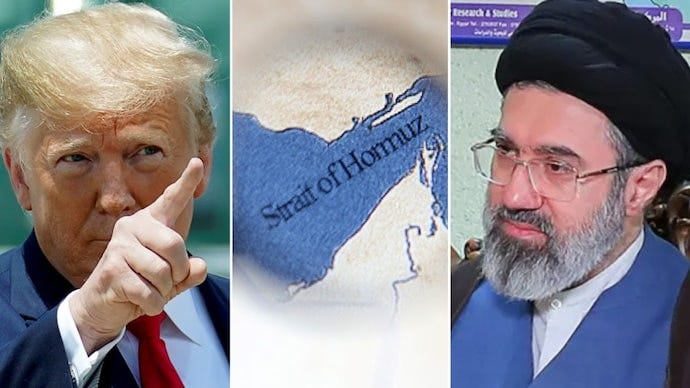
Energy. The Gulf accounts for a significant share of global oil transit. Disruption to Strait of Hormuz traffic — even partial, even temporary — produces fuel price spikes that arrive at the pump within days. If you hold a business with meaningful energy input costs, or if you are simply a person who drives and heats a home, the war is already affecting your operating costs. It will continue to do so for as long as the conflict persists at any level of intensity.
Capital markets. Defense equities have moved. Energy equities have moved. Risk-off positioning has affected certain sectors. If your retirement account or investment portfolio is heavily US-concentrated and sector-concentrated in areas that move inversely with geopolitical stability, you have war exposure that has nothing to do with your proximity to a military base.
Dollar risk. Wars are expensive. This one will be financed through debt — there is no political appetite for a war tax, and the fiscal situation was already precarious before hostilities began. Dollar-denominated assets absorb the eventual cost of that financing through inflation or currency erosion. The timeline is not months. But the trajectory is clear.
Tax and legal. This is the exposure most Americans are not thinking about at all. An active military conflict creates legislative and regulatory conditions that change the rules for capital movement, for expatriation, for taxation of foreign assets, for the use of certain international financial structures. The machinery for these changes already exists — it was built after 9/11 and expanded since. It can be activated faster than most people assume. If you have foreign accounts, foreign real estate, a second residence, or are actively planning to establish one, the window for doing certain things under current rules may be shorter than it looks.