


Where things simply work
A lake you can swim in from April. A train that leaves at 9:02 and means it. A doctor you can see this week, a pharmacy that has what the doctor ordered, a village where the bakery knows your order by the second Saturday. Mountains in the window that never stop being a surprise. Money that sits in a currency nobody worries about.
That's the wish people bring to Switzerland. Order. A place where the systems a household leans on, the trains, the clinics, the banks, the courts, the post, quietly work, so the life you came for gets all of your attention.
It's also the country Americans research hardest and understand least. Twenty-six cantons, each with its own tax law and its own habits. Three different kinds of residence permit, none of them a simple retirement visa. A tax you can, in effect, negotiate. As one reader put it, "We've read everything and still don't know what to actually do."
This report is the answer to that sentence. It's built the way I'd work through any country: what I'd check first if this were my household, in the order I'd check it.
Here's the short version. Switzerland is one of the safest, freest, best-run countries on earth, and one of the hardest for an American to move to without either a European passport or serious wealth. Find the right door, choose the canton before the house, and Switzerland gives back exactly what people hope for.
The life
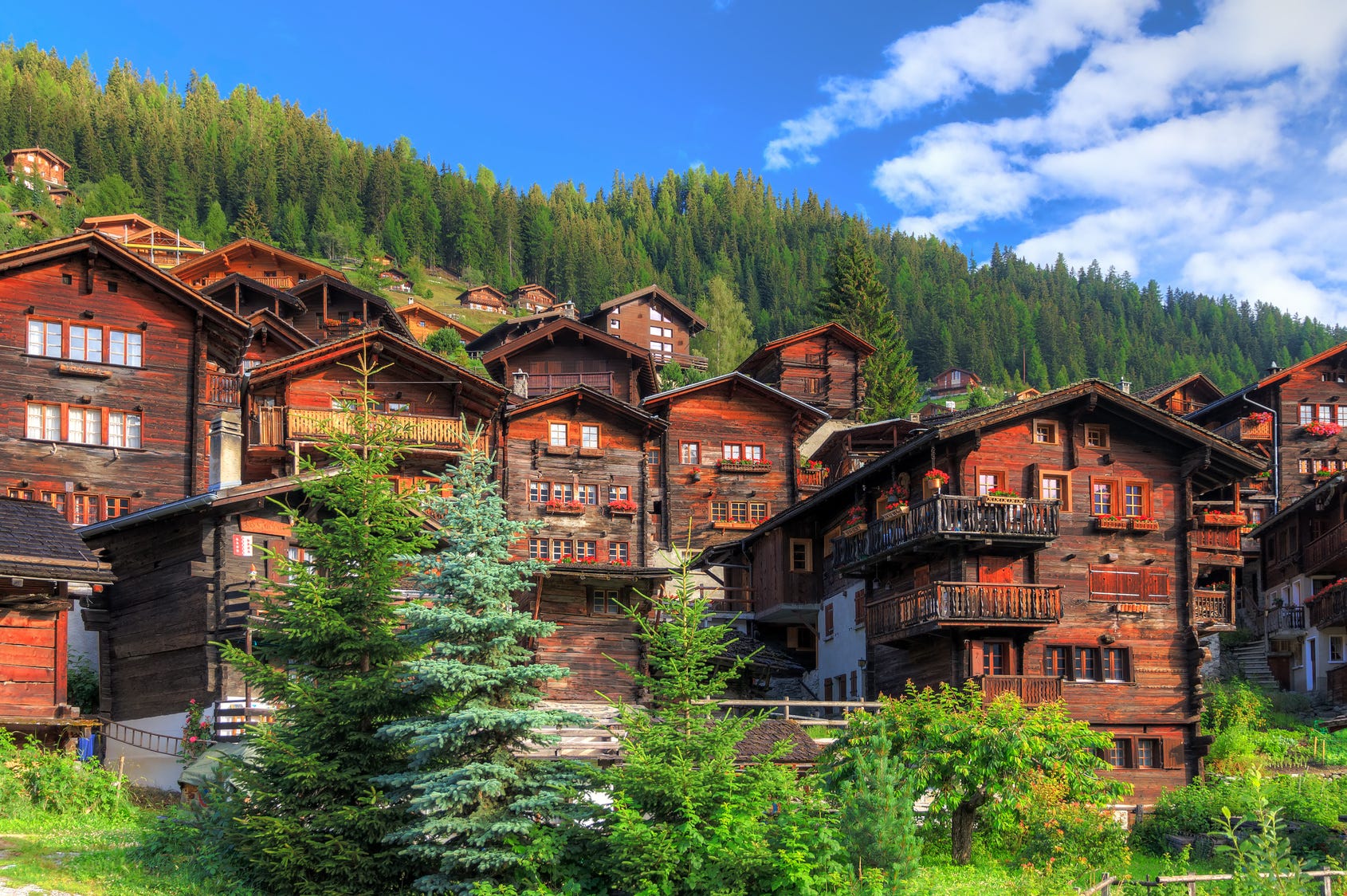
Where Americans land. Four kinds of place. The shores of Lake Geneva, from Geneva itself through the Vaud wine villages to Montreux, for people who want French, an international city and the Alps across the water. Zurich and Zug for people who want a German-speaking business capital with the best connections in the country. Ticino, around Lugano and Locarno, for people who want Italian, palm trees and a gentler winter. And the mountain cantons, Valais and Graubünden, for people who want the chalet and the ski lift. The wealthy foreign households on Switzerland's special tax deal cluster in Valais, Ticino, Vaud and Geneva, which tells you something about where the cantons want them.
A good week. Picture a couple in their sixties in a rented apartment above a lake town. Mornings, she walks the vineyard path to the next village and takes the boat back. He has learned that the Saturday market closes at noon sharp and has stopped arguing with it. Wednesday is a day in the mountains, door to summit by train and cable car, no car required. Friday dinner is with neighbors from the commune, who took two years to invite them and now won't stop. When the grandkids come in July, the hardest decision is lake or glacier. Nothing is late. Nothing is broken. Nothing is cheap.
What it costs. That last part is real. Consumer prices in Switzerland ran about 81% above the EU average in 2025. Rent, restaurants and services are where it shows; the trade-off is that what you pay for usually works. Budget generously, and budget by canton: income and wealth taxes vary enough from one canton to the next that the same household can pay twice as much in one as in another.
Health care. Excellent, fast and private-public in a way Americans find oddly familiar. Every resident, retirees and wealthy newcomers included, must buy basic health insurance from a Swiss insurer within three months of moving. Insurers have to accept you whatever your age or health, which is the part Americans find unfamiliar. The average adult premium for 2027 is CHF 487.60 a month, up 5% on 2026, and most households add supplementary cover for a private room or a free choice of hospital.
People. The Swiss are reserved, punctual and loyal once they've decided about you. The households that settle best learn the local language of their canton (French, German or Italian, not English), join something local, a choir, a hiking club, the village association, and show up to the commune's events. Integration happens at the level of the village and the commune, not the nation. You can stay entirely American and still, after a few winters, belong.
The verdict
Where Switzerland stands: one of the safest, freest and best-run countries in the world, holding steady, with a narrow front door for Americans and a high cost of living. Current as of November 13, 2026.
What works. Nearly everything a resident household depends on. Switzerland ranks 3rd in the world for peacefulness and scores 96 of 100 with Freedom House, fifteen points above the United States. Health care is excellent and open to every resident. The franc is one of the world's steadiest currencies, and the national statistics office reports bad news on schedule: inflation rose to 1.5% in October, pushed up by energy prices tied to the war with Iran. That is a cyclical bump from near zero, not a structural problem. Voters keep making careful choices about money: in November 2025 they rejected a 50% tax on very large inheritances by 78% to 22%.
What doesn't. The way in. Switzerland has no retirement visa in the American sense and no investor visa you can simply buy. For most Americans the door is a European passport, a retiree permit that requires real ties to the country, or a negotiated tax arrangement that only makes sense for the wealthy. Prices are the highest in Europe or close to it. And the politics of population growth are live: in June 2026, 45.2% of voters backed a cap on the population. It failed, but the pressure is there, and it shows up as proposals to tighten foreign property purchases.
Who it fits. Americans with an EU passport who want to live without working; very wealthy households willing to agree a lump-sum tax with a canton and pay for the privilege; retirees 55 and over with genuine long-standing ties to Switzerland; and anyone who would trade a high cost of living for order, safety and some of the best health care anywhere.
Who it doesn't. Households that need to work locally; budget-conscious retirees; anyone hoping for a quick path to a second passport, which takes ten years and a language test; and households who want to buy a holiday home before they live there.
The bottom line: Switzerland is a superb second base for the household that has a door in, and an expensive puzzle for the household that doesn't. Settle the door first.