


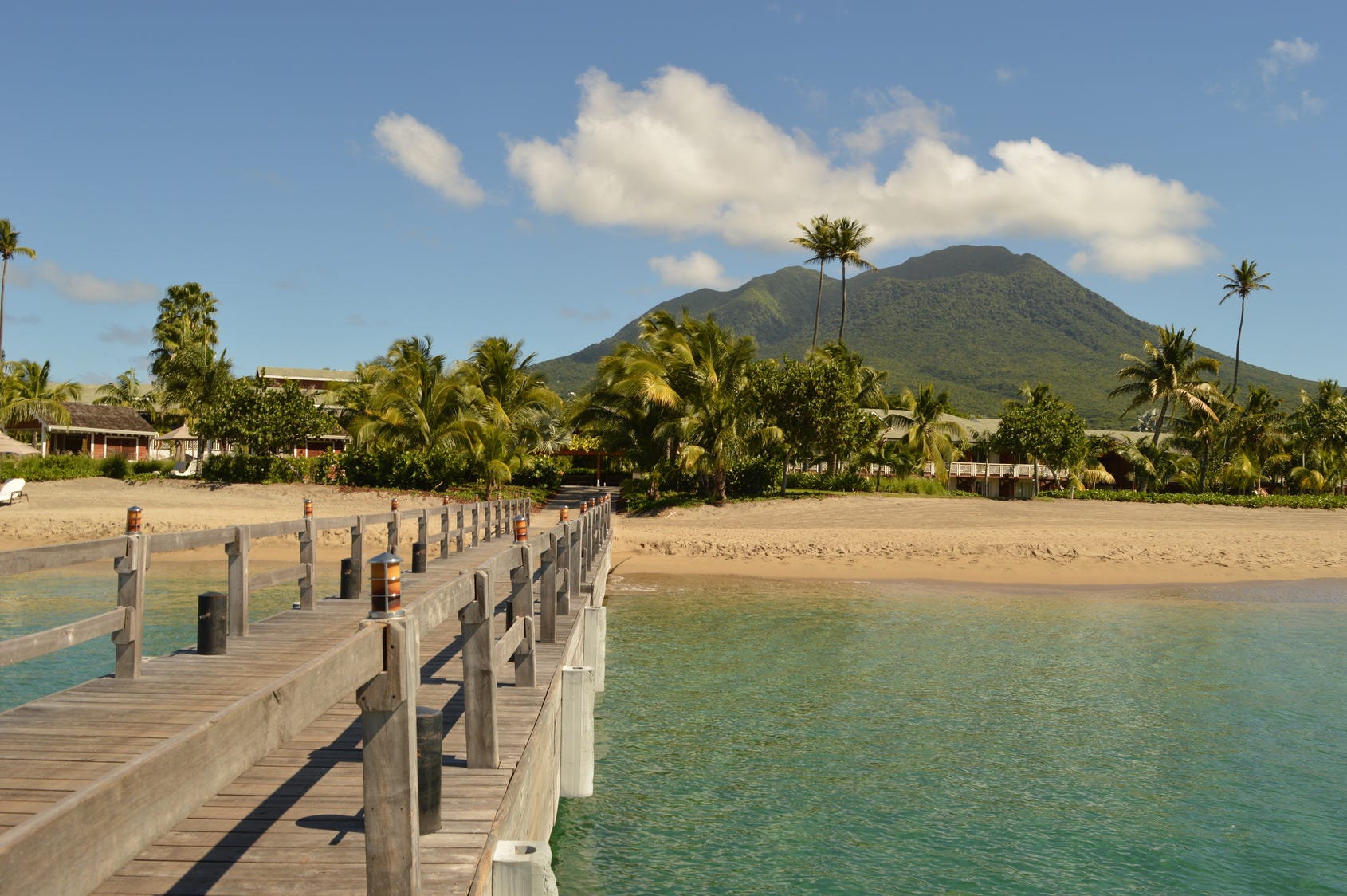
An island, and a second door
A house on a hillside with the sea on two sides. Mornings that start on the porch because there's nowhere you have to be. A ferry across the channel to Nevis for lunch, a fish market where you learn whose boat came in, an evening swim when the light goes gold. A place small enough that people know your name by the second month, where English is the language at the bank, the clinic and the hardware store.
That's the wish people bring to St. Kitts and Nevis. For many of them there's a second half to it: a second passport in a drawer, and the quiet knowledge that the family has another door.
The federation offers both, and that's what makes it unusual. An American household can rent a house here for the winter, apply to stay longer, and, as a separate matter, buy citizenship outright. That last door is under pressure from Washington and Brussels, and it's changing as I write.
If this were my household, I wouldn't start with the view. I'd check three things first: what the passport actually does for an American, which is less than the brochures suggest; what happens to health care when something goes wrong at two in the morning; and what the house looks like after a hurricane season.
As one reader put it, "We have money, but not enough to survive a massive mistake." St. Kitts and Nevis has a few mistakes it punishes, and the costliest come from treating the island and the passport as the same purchase. They aren't. Made in the right order, both decisions are within reach, and the life on the other side of them is a good one.
The life
Where Americans actually land. Two islands, two temperaments. St. Kitts is the busier one: Basseterre, the capital, for errands and government offices, and the Frigate Bay area and the southeast peninsula for the newer homes, the restaurants and most of the people who came from somewhere else. Nevis is the quieter choice, a short ferry ride across the channel: greener, slower, fewer cars, the kind of place where the evening's plan is deciding which porch to sit on. Together they hold about 47,700 people, and that scale is both the charm and the limit.
A good week. Picture a couple in their late sixties renting a two-bedroom house above the water from November to May. He has taken up sailing again after forty years away and is not very good at it, which bothers nobody. She volunteers two mornings a week and, by the end of the first winter, has more friends here than she made in her last decade at home. Saturday is the market in Basseterre. In March the grandkids come for spring break and nobody wants to leave. The couple fly home before the heart of hurricane season and come back when it's over. Their American tax life didn't change at all.
What it costs. Day-to-day prices run high, because nearly everything arrives by ship, and there's a 17% value-added tax on most of what you buy. The surprises are rarely in the grocery bill. They're in insurance: hurricane cover on a house, and an international health plan with evacuation. Budget for both before you budget for the boat.
Health care. The State Department says medical facilities on the islands don't meet US standards and that very serious injuries often require medical evacuation. Medicare doesn't pay for care outside the United States. Routine care is fine for routine things; anything serious means a flight. The households that do well here carry international health insurance with evacuation cover from the first day, know which mainland hospital they'd go to, and choose a home with the airport in mind. Done that way, it's a managed risk, not a reason to stay away.
People. English is the everyday language, the culture is warm and the place is small enough that you'll be known quickly. The happiest newcomers join something early (a church, a sailing club, a volunteer board, a Saturday cricket crowd) and treat the island's pace as the reason they came, not a problem to fix. Freedom House says the government has struggled in recent years to contain a high rate of violent crime, and 2024 bore that out: police counted 28 homicides among fewer than 50,000 people. In 2025 InSight Crime counted just seven, about 14 per 100,000, the fewest in 23 years and below the regional median, though on so small a population one bad year swings the rate. The State Department adds that Americans aren't specifically targeted, and the ordinary habits of any resort town cover most of it.
The verdict
Where St. Kitts and Nevis stands: a small, free and stable island democracy that works well for a part-year island home, with health care and hurricanes to plan around. Current as of November 13, 2026.
What works. Freedom House scores the federation 89 of 100, Free, eight points above the United States, with full marks for independent courts and media. It ranks 37th of 143 on the World Justice Project's rule-of-law index, ahead of most Caribbean neighbors and close to the United States at 30th. There's no local income tax (your US tax is unchanged), the currency has been pegged to the dollar since 1976, and it's English-speaking.
What doesn't. Health care, first: anything serious means evacuation. Hurricanes, second: when Hurricane Georges struck in September 1998, more than three-quarters of the homes on St. Kitts were damaged. Third, the public finances: citizenship fees fell from about 26% of GDP in 2022 to 6% in 2025, by the IMF's count, and the deficit reached 11.7% of GDP. That squeezes the government, not your residence.
The citizenship program is the part in motion. In June 2026 the European Commission wrote to the five Eastern Caribbean countries that sell citizenship, asking them to wind their programs down by June 1, 2028, with visa-free travel to Europe at stake. None of this touches your ability to live here; it changes what the passport is worth.
On civil liberties it's free, with gaps in identity and reproductive law: same-sex couples have no legal recognition, and abortion is legal only to save the woman's life. And it's moving toward more freedom: a 2022 court ruling ended the ban on sex between men.
Who it fits. The retired couple who want a winter home in English, an easy flight from the grandkids. The household that wants an island base for a few months a year while its doctors stay in the US.
Who it doesn't. Anyone with a medical condition that needs a specialist nearby. Anyone hoping a Caribbean passport will lower their American taxes; it won't. A same-sex couple who need their marriage recognized where they live. Anyone counting on an investment passport as a long-term key to Europe.
The bottom line: St. Kitts and Nevis is a sound place for a part-year island home if you plan for the hospital and the hurricane. Treat the passport as a separate decision.