


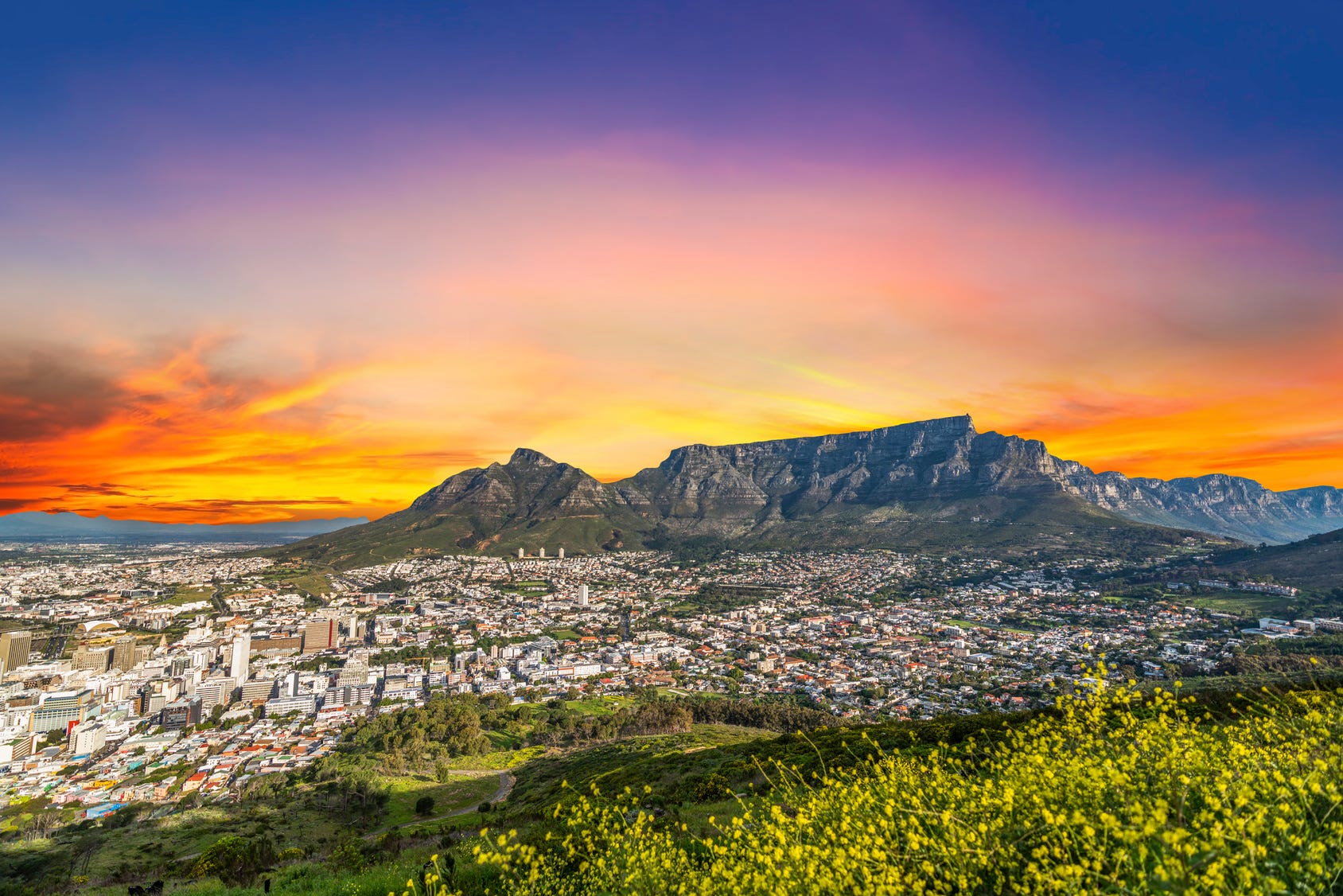
Mountain, ocean and room to breathe
A house on the slope above the sea, with a mountain behind it and the light doing something different every evening. Wine country an hour away. A long weekend on the Garden Route, a week in the bush watching elephants come down to the water at dusk. Neighbors who speak English, a dollar income that stretches further than it does at home, and a summer that arrives just as the American winter does.
That's the wish people bring to South Africa: a bigger, more beautiful life, lived outdoors, at a cost that lets you actually live it.
If you've mentioned South Africa at dinner, you may already have heard the reaction. As one reader put it, "Everyone we know thinks we're crazy." The people who think so have usually heard about two things, the crime and the power cuts, and not much else. Both are real. Neither is the whole picture, and one of them has largely gone away.
If this were my household, the view is not what I'd check first. I'd check three things: which street, and how the house on it is secured; how money moves into the country and back out again; and who inherits what we own there. Get those three right and South Africa is one of the most rewarding second bases an American household can build.
This report is about doing it in the right order.
The life
Where Americans actually land. Many settle in the Western Cape. Cape Town's Atlantic Seaboard and southern suburbs for a real city with the mountain and the ocean at the end of the road. The Winelands, Stellenbosch, Franschhoek and Paarl, for a smaller town and good restaurants. Hermanus and the Overberg coast, and the Garden Route around Knysna and Plettenberg Bay, for space and quiet. A smaller group chooses Johannesburg's northern suburbs or the KwaZulu-Natal coast.
A good week. Picture a couple in their sixties in a house in the Winelands, inside a residential estate with a gate, a guard and a walking trail along the vines. He's taken up mountain biking, badly. She volunteers two mornings a week and has a standing coffee with friends from her book club. Saturday is the farmers' market. Once a month they drive to the coast for a few nights, and in December, when South African summer lines up with American school holidays, the grandkids come and spend three weeks in the pool and on the beach.
What it costs. For a household living on dollar income, daily life is where South Africa shines: eating out, wine, help at home and the outdoors all cost noticeably less than in comparable American places. The costs that surprise people are private medical cover, security, backup power and water, and imported goods. Budget for those four and the rest is kind.
Health care. Two systems run side by side. The private hospitals in the cities are excellent and are where foreign residents are treated, paid for through private medical cover, known locally as medical aid, which you'll need for a long-stay visa. The public system is overstretched; plan on the private one. A national health insurance law signed in May 2024 has been on hold since February 2026 while the Constitutional Court rules on challenges to it; it doesn't change the plan for a private patient today. Outside the cities, choose a town within reach of a good private hospital.
Safety, in proportion. Violent crime in South Africa is high by any global measure, and it is falling. The national murder rate was 36.6 per 100,000 people in the year to March 2026, down from 40.7 the year before, against an international average of about 5.6. It is also concentrated. Four provinces account for more than 80% of murders, the largest single cause is arguments and provocation rather than attacks by strangers, and gang killings happen almost entirely in the Western Cape, in neighborhoods with long-running gang conflicts. In the suburbs and estates where Americans settle, the everyday risk is property crime and house robbery, managed the way locals do: a secured estate or a well-chosen street, an alarm, an armed-response company, and care when driving at night. House robberies fell 20.4% in the first quarter of 2026 from a year earlier.
People. South Africans are warm, outdoorsy and quick to invite you to a braai. English works everywhere you're likely to live, and the country's history and its inequality are part of everyday conversation; the newcomers who are happiest listen first. Hiking clubs, wine societies, churches, golf and volunteering are the usual ways in.
The verdict
Where South Africa stands: a free, stable democracy with a sophisticated private economy, high but falling crime and residence rules under review; it works well for the household that chooses its neighborhood, its money plan and its health cover before it lands. Current as of November 13, 2026.
What works. The ways in are clear and affordable today: a retiree visa on R37,000 a month of pension income, and permanent residence without a visa first for households with a net worth of R12 million. The press ranks 21st in the world, where the US ranks 64th, and the courts are independent. The power is back on: there has been no load-shedding since May 2025. Private health care in the cities is first-rate, English is everywhere, a dollar income goes a long way, and South Africa doesn't tax US Social Security or pensions earned by working abroad.
What doesn't. Crime first: violent crime is high by global standards, though falling and concentrated in particular provinces and neighborhoods. Municipal services vary widely from town to town, and Home Affairs is slow; permanent residence can take one to two years. The entry rules are under review: in March 2026 the Cabinet approved a plan to raise the bar for retirees and replace the net-worth route, not yet law. Exchange controls still apply to residents, and corruption is a real drag. Relations with Washington are strained: the US boycotted the G20 summit South Africa hosted in November 2025, left it out of the December 2026 summit in Miami, and on September 15, 2026 announced visa restrictions on individuals it holds responsible for South Africa's land and empowerment policies. Pretoria says it has met some of Washington's demands. None of this touches an American resident's visa, pension or bank account.
South Africa fits the retired or financially independent household with US income, a love of the outdoors and the patience to set up a house properly. It's strong for English speakers who want warmth and space, and for same-sex couples, whose marriages the law recognizes.
South Africa fits poorly anyone who wants to walk anywhere at any hour without a thought, households counting on public health care, and plans that need large sums moved out on short notice.
The bottom line: South Africa is a rewarding second base for the household it fits, as long as the street, the money and the will are settled before the move.