


A small country, a whole life
A flat in an old town where the river runs under the bridges and the café owner knows your order. A morning walk with mountains at one end of the view. A Saturday that can be a lake, a vineyard or the Adriatic, all inside two hours, and Venice or Vienna close enough for a weekend. Streets that feel safe at midnight. A life that is quieter than the one you have now, and fuller.
That's the wish people bring to Slovenia. Not a famous address, a livable one: green, calm, well run, small enough to learn, and sitting right in the middle of Europe, so the people you love can reach you and you can reach everything else.
It is also a choice that draws a certain look from friends at home. As one reader put it, "Everyone we know thinks we're crazy."
What I'd check first, if this were my household, is the door in. Slovenia is easy to love and narrower to enter than its neighbors. It has no visa built for retirees, a tax system that can reach you before you've spent half the year there, and a citizenship rule that asks most newcomers to give up the passport they arrived with. None of that is a reason to look away; all of it is a reason to do things in the right order.
The life
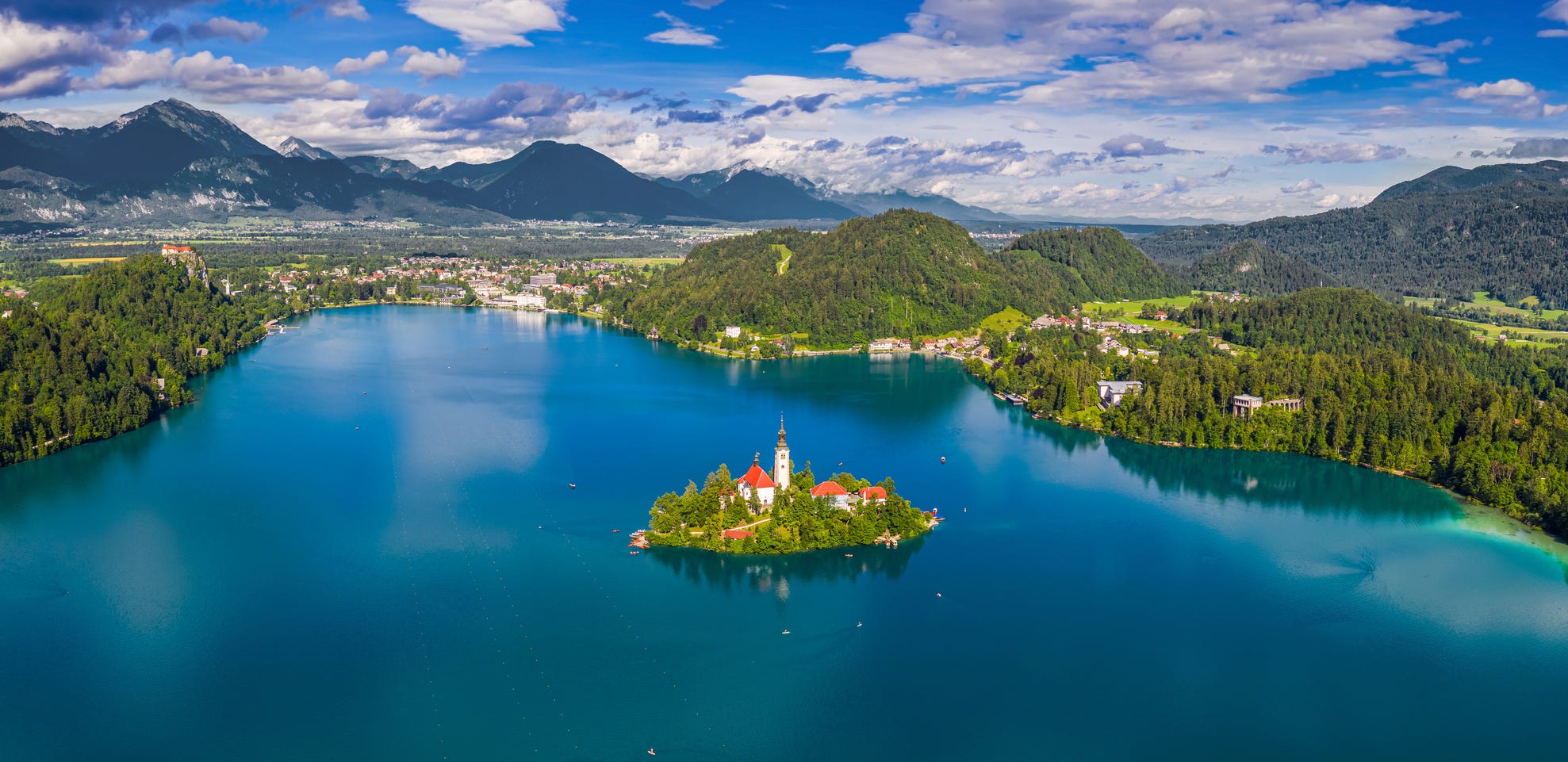
Where Americans actually land. Slovenia is small enough that you choose a landscape more than a city. Ljubljana, the capital, is for people who want a real town on foot: the river, the markets, concerts, the main hospital and the airport. The Alpine northwest, around Bled, is for walkers, skiers and anyone who wants mountains outside the window and doesn't mind a quiet winter. The short Adriatic coast, Piran, Izola and Koper, is for the sea and an Italian accent to daily life. The wine country in the west, the Karst and the hills of Brda, is for a stone house, a vineyard view and a long table on Sunday.
A good week. Picture a couple in their sixties in a rented flat in Ljubljana's old town. He walks to the central market most mornings and has started to argue, politely, with the man who sells cheese. She takes a Slovene class twice a week, because she wants to read the notices on the building door. On Thursday they take the train to the lakes and hike; Saturday is a vineyard lunch that stretches past four. In summer the grandchildren come for two weeks and spend most of it in a lake. Nobody at dinner asks them what they do for a living.
What it costs. Day to day, Slovenia is noticeably cheaper than Austria or northern Italy next door, with Ljubljana and the coast the dearest places to live and the countryside the least. Housing is the cost that has moved, and it dominated the March 2026 campaign. The costs that can surprise you are the fixed ones: a lawyer or adviser for the permit file, an accountant who can file in two countries, private health cover for the first stretch, and Slovene lessons, which you will want anyway.
Health care. Slovenia runs a public system built on compulsory national insurance. Health care was the other big issue in the 2026 campaign, so budget for a private policy too, for speed and English-speaking specialists; the permit needs proof of cover anyway. The national insurer, ZZZS, lists people drawing a pension from abroad, and anyone with permanent residence, among those it covers. Insured adults pay a flat health contribution, €39.36 a month since March 2026, plus a 1% long-term-care contribution added in July 2025. Whether your US pension gets you in before permanent residence, and the monthly bill, are questions to put to ZZZS in writing.
People. Slovenes are reserved at first and loyal once you're in. English goes a long way, especially with younger Slovenes, which makes the first year easy and the second year a trap: the households who settle best push past English into Slovene, join something (a hiking club, a choir) and accept that a small country runs on knowing people. Belonging here is a slow build, and a durable one.
The verdict
Where Slovenia stands: one of the safest and freest small countries in Europe, and a good second base for the household that can find a door in. Current as of November 13, 2026.
What works. Slovenia ranks 4th of 163 countries for peacefulness; the United States ranks 134th. Freedom House scores it 97 of 100, against 81 for the US, and it sits a few places ahead of the US on rule of law. It is inside the euro, the EU and NATO. Same-sex couples can marry, abortion is available on request, and daily life is calm.
What doesn't. The way in. There is no visa for retirees or investors; most use a general-purpose permit that leaves a lot to the official reading the file, and a bill the government approved in October 2026 would double its income test and raise the language bar. Permanent residence takes five years and a Slovene exam; citizenship takes ten and, for most, giving up your other passport. The tax bite is real: up to 50% on pensions and other income above about €82,000, and 25% on most investment income.
Read the drift in proportion. Slovenia slipped from 33rd to 36th in world press freedom this year, and V-Dem now counts it among countries where democracy has started to slide, measured from 2022. That's a drift among the freest countries in the world, not a turn toward anything frightening; Slovenia still outscores the United States on both. A near-tie election in March 2026 brought in a center-right government under Janez Janša, a change of direction, not a crisis. Energy and food prices are under near-term pressure from the Middle East conflict: a squeeze, not a flaw.
Who it fits. A household with Slovenian roots, which has a far shorter road to a passport. A couple who want a calm, walkable base in the middle of Europe and will plan the tax side and learn some Slovene. Same-sex couples, who can marry here.
Who it doesn't. Anyone who wants a simple retirement visa. Anyone set on a Slovenian passport, without Slovenian ancestry, who won't give up a US one. Households with large pension or investment income and little appetite for high rates.
The bottom line: a sound, safe second base for the household it fits, if the route in is chosen first and the tax plan built before the move.