


A family line, and a quieter Europe
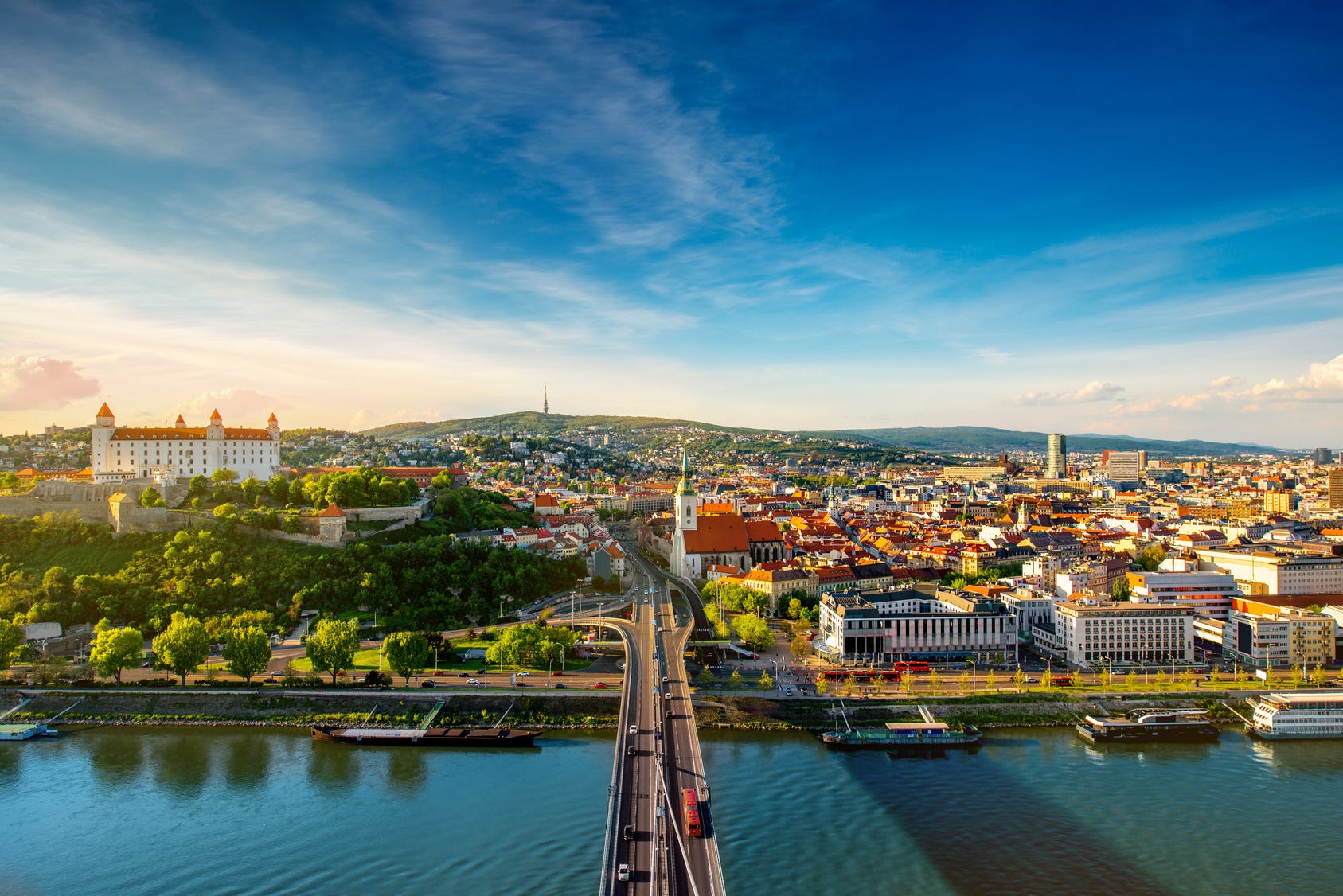
A flat on a cobbled street in Bratislava, with the Danube at the end of the road and Vienna close enough for a concert on a Tuesday night. Or a house in a valley town in the north, the High Tatras on the skyline, and a great-grandmother's village half an hour down the road. Cousins who turn out to be real people. A week that costs noticeably less than the same week in Vienna or Munich, in a country that is calm, safe and inside the euro.
That's the wish people bring to Slovakia. For many American households it begins with a family line: a baptismal record in a parish book, a surname on a village war memorial, a grandfather who left for the mills of Pennsylvania and never went back. For others it's simpler: a quiet, affordable base in the middle of Europe, away from the crowds of the better-known capitals.
Slovakia can give you that life. What it doesn't give anyone is a door built for retirees. There is no visa for people living on pensions or investment income, and no golden visa. The doors it does have are real, and some are unusually generous, but almost all of them run through family: a Slovak ancestor, a Slovak spouse, or a relative who already lives there. One of those doors opened wider this summer.
What I'd check first if this were my household is the family tree, before the flat or the flight. As one reader put it, "We have money, but not enough to survive a massive mistake." In Slovakia the expensive mistake is rarely the tax bill. It's building a whole plan on a residence permit that doesn't fit the life you actually mean to live there.
The life
Where Americans land. Three kinds of place. Bratislava, the capital, for people who want a walkable city, the best hospitals, an international crowd and Vienna on the doorstep. Košice in the east, the second city, with a restored old town, a university and prices well below the capital's. And the towns of the north and center, Žilina, Banská Bystrica, Poprad and the spa towns, for mountains, hiking, skiing and thermal baths. Families with a line there often choose one of those towns over the village itself: close enough for Sunday lunch with the cousins, big enough for a late pharmacy.
A good week. Picture a couple in their sixties renting a flat on the main square of Banská Bystrica. Twice a week they have Slovak lessons, which go slowly. Tuesday is a hike in the hills above town. Thursday is the market, where she has learned the words for the cheese she likes. On Saturday they drive to the village where his great-grandfather was baptized and have lunch with a second cousin who speaks more English than anyone expected. Once a season, the train to Vienna for a concert. In winter, the thermal pools. Nobody at the table talks about American politics for very long.
What it costs. Daily life is markedly cheaper than in Western Europe, and housing outside Bratislava is modest by American standards. Prices are drifting up, though: the government raised VAT in 2025 as part of repairing the budget, and moved more goods to the top rate this year. The costs that can surprise you are bureaucratic: translations, apostilles, private health cover until you qualify for the public system, and a Slovak-speaking accountant.
Health care. Slovakia runs a public health insurance system. A foreign resident joins it in one of two ways: by holding permanent residence, or by working or running a business in Slovakia. Everyone else buys a private policy, and the residence law requires you to have cover within three working days of collecting your residence card. In our reading, care in Bratislava and the regional university hospitals is solid; outside the cities the complaints are waits and stretched staff. Choose a private policy that also covers you on trips home.
People. Slovaks tend to be reserved with strangers and generous once you're in. Outside Bratislava, English thins out quickly, and a little Slovak goes a long way at the pharmacy and the town hall. The households that settle best join something local: a hiking club, a choir, the parish. For families with a Slovak line there's a ready-made network: Slovak-American societies at home and Slovak cultural groups abroad. Join one before you go. As you'll see, it can matter for your paperwork as well as your friendships.
The verdict
Where Slovakia stands: a free, safe European democracy that works well for the household that can find a way in, with its institutions under more strain than its western neighbors'. Current as of November 13, 2026.
What works. Slovakia ranks 29th of 163 countries for peacefulness. Freedom House rates it Free, at 88 of 100, above the United States. The tax on a retiree's core income is gentle: Slovak law exempts foreign state pensions of the Social Security kind, and the US treaty leaves Social Security to the US alone. There is no inheritance, gift or wealth tax. And for families with roots: since July 15, 2026, descendants of a Czechoslovak citizen born in Slovakia, down to great-grandchildren, can apply for citizenship without first living there.
What doesn't. There is no door for the retiree or investor with no Slovak tie. Taxes rose in 2025 and again in 2026 to repair the budget, and the top income tax rate is now 35%. Public debt crossed the limit set in the constitution, and the government had to win a confidence vote in June 2026. That's a squeeze, not a crisis.
Read the institutional trend in proportion. Since 2023 the government has abolished the special anti-corruption prosecutor, leaned on the press and civil society, and amended the constitution to recognize only two sexes and assert national sovereignty over "cultural-ethical" questions. V-Dem now lists Slovakia among countries moving away from liberal democracy. But it is still rated Free, above the United States and well above Hungary, and voters get their say at a general election due in 2027. That's a democracy under strain, not a country heading somewhere frightening.
Who it fits. Households with a documented Slovak line. An American married to a Slovak citizen. Someone with a real business to run. And part-year households who want Central Europe for a season at a time.
Who it doesn't. Retirees with no Slovak tie who want a pension-based permit; there isn't one. Same-sex couples, for whom Slovakia offers no union. And households that need daily life to run in English outside the capital.
The bottom line: for a family with roots there, Slovakia is one of the most accessible second bases in Europe this year. For everyone else, it's a lovely place for a season and a hard place to live in full.