


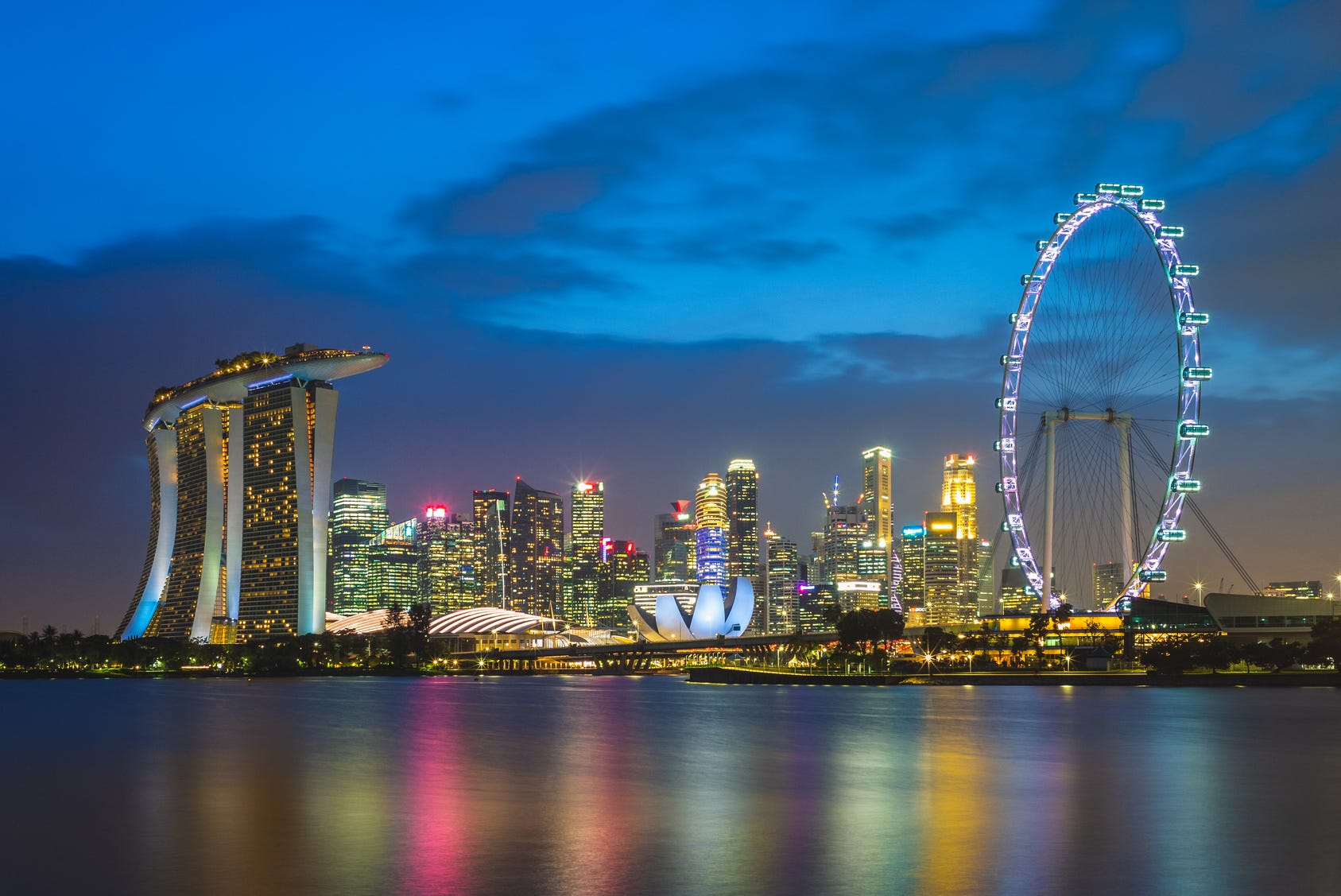
Family close, in a city that works
Imagine your daughter's family has lived in Singapore for six years. The grandkids switch accents depending on who's asking. You want more than a two-week visit every spring: the school pickup twice a week, a standing Sunday dinner, the stall at the hawker center where the man at the counter starts your order when he sees you coming. And you want the rest of what Singapore offers: a city that is safe at midnight, clean, efficient and English-speaking, with excellent hospitals and an airport that puts much of Asia a short flight away.
That's the wish people bring to Singapore. Few Americans come for a beach or a cheap life. They're following family, or a career that took a child there.
The fear runs right alongside the wish. As one reader put it, "What if we're lonely and broke in the wrong country, missing the grandkids, and then it all goes back to normal here?" In Singapore that fear has a particular shape. The city is easy to love and expensive to live in, and for a retired American the front door is narrow. Singapore has no retirement visa. For a non-working American, the realistic doors are a child's sponsorship or very large sums of capital.
So what I'd check first if this were my household isn't the neighborhood. It's which door we actually qualify for, and what happens to that door if our child's job moves. Get that right and Singapore can be one of the most rewarding second bases anywhere: the grandkids down the street, a city that simply works, and the way back to the US open the whole time.
The life
Where Americans actually land. Singapore is one city on one island, so the choice is a neighborhood, not a region. American households tend to rent private condominiums in the green, central districts around the Botanic Gardens, River Valley and Holland Village, or out east toward Katong and the long seafront park along the East Coast. Grandparents usually choose by one test: how many train stops to the grandkids. Public housing, where most Singaporeans live, runs on its own eligibility rules; a foreign household should plan on a private condo.
A good week. Picture a couple in their late sixties in a rented two-bedroom, ten minutes by train from their son's family. They walk in the Botanic Gardens at seven, before the heat builds. Tuesday and Thursday he does the school pickup; Wednesday she volunteers. Lunch is often at a hawker center, where a good plate of chicken rice is one of the city's great bargains. Once a month they take a long weekend somewhere in the region, because everywhere is close. In November they cook Thanksgiving for the whole family, and the grandkids invite friends who have never seen a sweet potato casserole.
What it costs. Housing is the bill that decides everything. Rent for a good condo is high by any American standard, and buying is a bigger decision still (the property rules come later in this report). Everyday life can be surprisingly reasonable if you eat the way Singaporeans do, at hawker centers and wet markets. Cars are very expensive, and most households in the central districts manage without one.
Health care. Singapore's hospitals and clinics are among the best in Asia, public and private alike. The catch is who pays. The national insurance plan, MediShield Life, covers Singapore citizens and permanent residents only. Government subsidies on hospital stays, up to 80% for citizens and up to 50% for permanent residents, don't reach a foreigner on a visit pass, and Medicare usually doesn't cover care outside the US. You'll pay full price, so international health insurance bought before you move, while you're still easy to insure, is the foundation of the whole plan.
People. English is the working language, which makes arrival easy. Belonging takes longer. Singapore is a mix of Chinese, Malay, Indian and many other communities, plus a large international population, and newcomers find their people through the grandkids' school, a church or temple, volunteering, or a walking group. The households that do best treat it as integration, not assimilation: you stay American and still become a regular. The one thing nobody gets used to quickly is the weather. It is hot and humid every month of the year, and life arranges itself around mornings, evenings and air conditioning.
The verdict
Where Singapore stands: one of the safest, best-run and least corrupt places on earth, with tightly managed politics and press, and a narrow door for a retired American. Current as of November 13, 2026.
What works. Daily life, almost all of it. Singapore ranks 8th of 163 countries for peacefulness, where the US ranks 134th. It ranks 14th in the world on rule of law and 3rd on corruption, well ahead of the US. Singapore generally doesn't tax overseas income you bring in, so your US pension, Social Security and investment income go untaxed there. And Americans get a property advantage most foreigners don't: under the US–Singapore free trade agreement, an American buying a first home pays no additional buyer's stamp duty, where most foreigners pay 60%.
What doesn't. The door, first and always. There is no retirement visa, the parent pass depends entirely on your child's status and job, and the investor route starts at S$10 million. Housing is expensive. Public health subsidies stop at citizens and permanent residents.
On civil liberties, read Singapore in proportion. It scores 48 of 100 with Freedom House, "Partly Free" and unchanged from last year, and ranks 123rd of 180 on press freedom, against 64th for the US. One party has governed since 1959, and it won 87 of 97 seats in May 2025. None of it is new or sliding. The limits fall mainly on political speech, protest and the press, not on a foreign family's daily life, which is about as safe and orderly as anywhere. Sex between men was decriminalized in 2023, but Singapore doesn't recognize same-sex unions. Abortion is available on request up to 24 weeks.
Singapore fits grandparents whose child is a Singapore citizen or permanent resident, or a senior professional earning enough to sponsor parents; very wealthy business owners and family-office principals who will actually live there; executives still earning at the top of their field; and part-year households based in the US who visit for long stretches.
Singapore fits poorly a retired couple with no family there and less than eight figures to invest; anyone who wants permanence without a sponsor; same-sex couples who need their marriage recognized; and households for whom open political life matters day to day.
The bottom line: Singapore is a superb second base for the household whose family is already there, and close to closed for most others. The work is in the door, not the city.