


The island, on your own terms
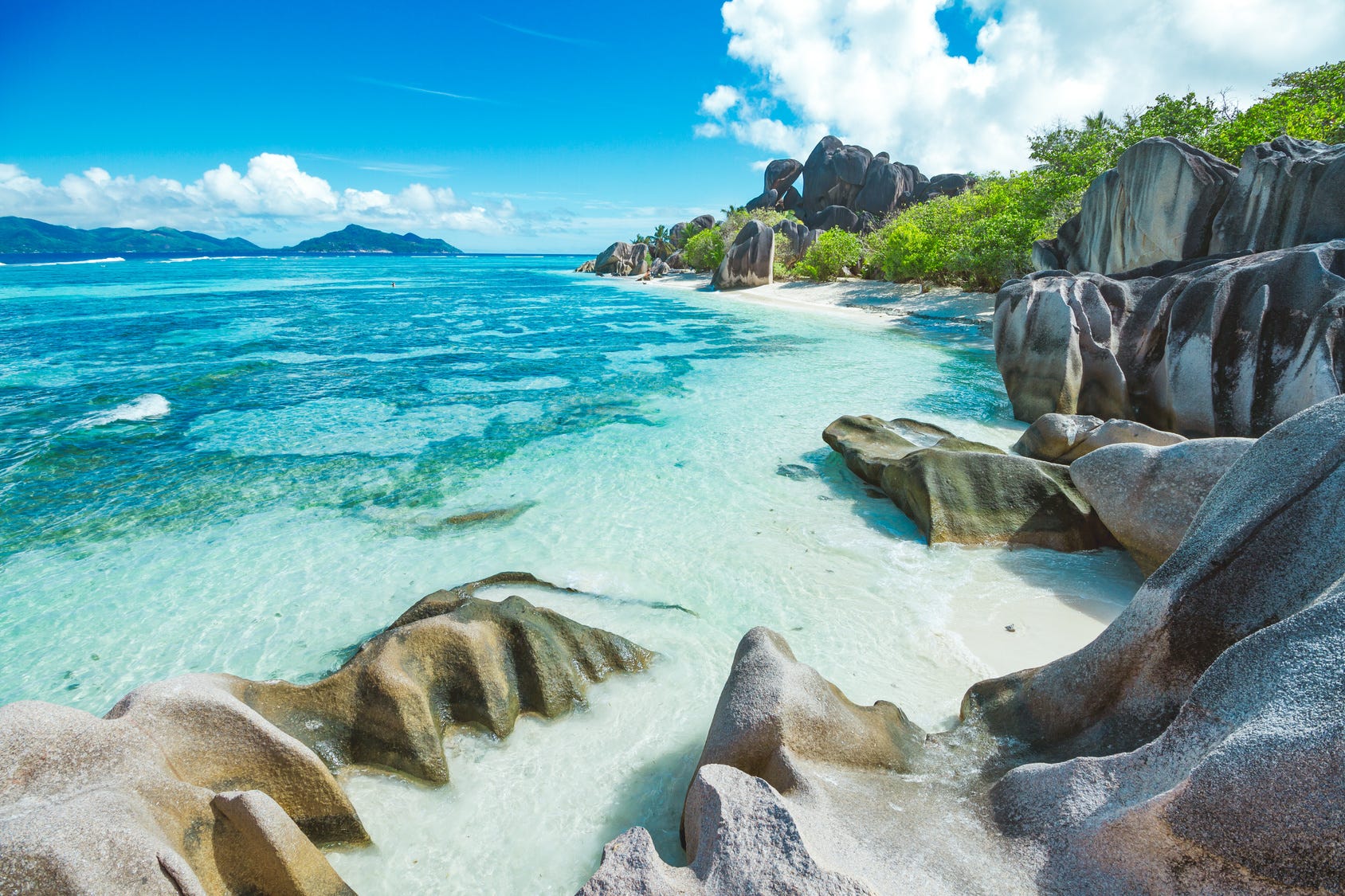
A house above a granite cove, shutters open to the trade wind. A swim before the heat comes up. Saturday at the market in Victoria, fish bought from the man who caught it that morning. Long evenings with no traffic, in a small country where people still know who you are. Then, when the school year ends somewhere in America, a long flight home and a summer in the house you never sold.
That's the wish people bring to Seychelles. Not a full emigration: an island home to come back to, held lightly, with the American life still standing behind it.
The fear sits right beside the wish. As one reader put it, "What if we're lonely and broke in the wrong country, missing the grandkids, and then it all goes back to normal here?" Seychelles answers part of that fear better than almost anywhere. Its residence permit asks you to spend as little as five days a year on the islands. It can be a second base without ever becoming a one-way move, and the way back never closes because you never really left.
What Seychelles doesn't do is make the door easy. It's a small country with very little land, and it guards that land carefully. There is no simple retirement visa you qualify for by showing a pension. The residence permit turns on a family tie or a contribution the government judges worthwhile, and a foreigner buying a house needs the government's sanction and a price near the top of the market.
If this were my household, the beach is not what I'd check first. I'd check three things: which door we actually qualify for, how we'd be cared for if one of us got seriously ill, and who inherits the house. This report takes them in that order.
The life
Where Americans land. Almost everyone settles on Mahé, the main island, because that's where the airport, the capital, the banks and the main hospital are. Within Mahé the choice is about pace: the beaches and restaurants of the northwest coast around Beau Vallon, the cooler hills above Victoria, or the marina developments near the capital, where foreign owners are common and the neighbors change with the seasons. Praslin and La Digue, a ferry ride away, are quieter and lovelier still, and much thinner on services. They suit a household that is healthy, unhurried and happy to cross to Mahé for anything serious.
A good week. Picture a couple who spend January to April on Mahé and the rest of the year at home. He swims every morning and has joined a group that counts nesting turtles. She has a standing Tuesday lunch with two women she met at church and is slowly learning Creole from the woman who sells her vegetables. Their daughter's family flies out for two weeks at Easter. When the couple fly home in May, the house is closed, the caretaker has the key, and nothing about their American life has stopped.
What it costs. Seychelles is not a cheap island. Most of what you eat, drive and build with is shipped in, and prices reflect it. The costs that can surprise you are structural rather than daily: the five-year permit fee, the price floor and duties on a house, the annual tax on foreign-owned homes, and health insurance that includes evacuation. None of it is hidden; all of it belongs in the budget before you fall in love with a view.
Health care. This is the part to take most seriously. The main public hospital is on Mahé, with an emergency department and most surgery. Clinics on Praslin and La Digue offer very limited treatment, and the private clinics are mostly general practice, without hospital beds. A residence permit gives you no right to free public care, so you pay as you go. A serious illness or injury can mean evacuation off the islands, which is very expensive without insurance. Buy an international policy with evacuation cover before anything else.
Getting there and finding people. From the US, most journeys run through the Gulf or Europe, and the Middle East war showed in 2026 how much the islands depend on those connections, when visitor arrivals fell sharply in the spring. Seychellois are easygoing and welcoming to visitors; becoming part of a place this small takes longer and rewards effort. English is spoken widely, alongside French and Creole. Join something (a dive club, a conservation group, a parish) and the island gets smaller in the best way.
The verdict
Where Seychelles stands: a stable, free island democracy that handed power peacefully to the opposition in October 2025, taxes only what's earned on the islands, and asks a resident for five days a year. The catch is the door: it opens to a family tie, a large investment or a case the government accepts, not to a pension alone. Current as of November 13, 2026.
What works. The country itself. Seychelles scores 81 of 100 with Freedom House, the same as the United States, and ranks 35th in the world for press freedom, well ahead of the US at 64th. Power has changed hands at the ballot box in 2020 and again in 2025, when the outgoing president conceded and came to his successor's swearing-in. Seychelles taxes only income earned in Seychelles, not your pension, Social Security or US portfolio, and there is no inheritance tax. And the residence permit's light presence rule suits a part-year plan almost perfectly.
What doesn't. The door, first: no retirement visa, and a discretionary permit. Property is expensive to enter: a house must be worth at least SCR 10 million (roughly $720,000) before a foreigner may buy it, with a 12% sanction duty on top. Health care is thin for anything serious. And same-sex couples, whose relationships have been legal since 2016, get no legal recognition. After growth of 5.8% in 2025, the tourism slump of 2026 held growth to an estimated 1%: a near-term squeeze on a well-managed economy, not a structural problem.
Who it fits. A household with a Seychellois spouse or family. A wealthy couple ready to invest US$1 million, which opens permanent residence, or to buy at Eden Island, a marina development with its own permit scheme. A remote worker who wants a trial year.
Who it doesn't. A retiree looking for a straightforward visa on pension income alone. Anyone with a health condition that needs a specialist nearby. Same-sex couples who need their marriage recognized. A family that wants the grandkids within a short flight.
The bottom line: for a household that fits one of its doors, Seychelles is a beautiful, well-governed second base that asks only five days a year; for one that doesn't, it's a place to love on long visits while the second base sits elsewhere.