


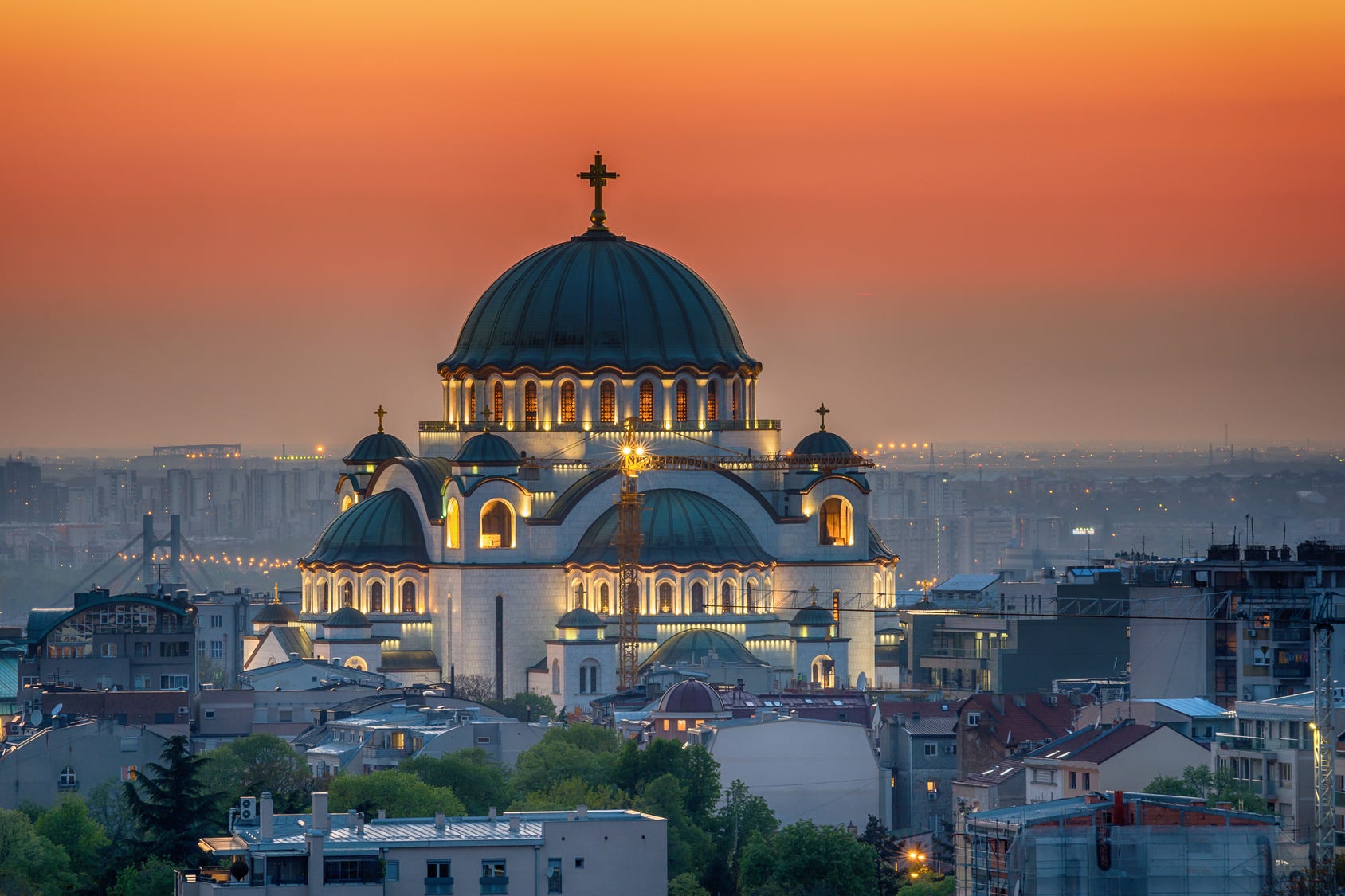
A big European life, without the big European bill
A flat on a leafy street in Belgrade, with a balcony and a bakery downstairs that opens before you do. Coffee that turns into an hour because nobody is rushing you out. A city that stays up late, a river walk on Sunday, the theater on a Tuesday, and a weekend in the hills where the lamb is slow-roasted and the plum brandy is homemade. Money that stretches far enough that the plan doesn't depend on everything going right.
That's the wish people bring to Serbia. Not a resort and not a hideout: a real capital with a real life in it, at a cost that leaves room to breathe, a short flight from the rest of Europe and a long weekend from the grandkids.
As one reader put it, "We have money, but not enough to survive a massive mistake." Serbia speaks to that worry better than most places. The way in is simple, the cost of living is gentle, and the mistakes it punishes are few and avoidable.
What I'd check first, if this were my household, isn't the flat. It's the ground under it. Serbia has just been through two years of protest, and on October 25, 2026 its voters removed the party that had governed since 2012, peacefully and at the ballot box. That is a country changing hands, and a change of government is the moment to read the rules carefully rather than to panic or to celebrate.
The good news comes first: the rules an American household relies on (the residence permit, the tax system, the bank guarantee) didn't move during any of it.
The life
Where Americans actually land. Most land in Belgrade, and most of those in a handful of neighborhoods: Vračar and Dorćol for walkable streets, cafés and old apartment buildings; Senjak and Dedinje for houses, gardens and quiet; New Belgrade for newer buildings with elevators and parking. Novi Sad, an hour north, is smaller, calmer and younger, on the Danube below the vineyards of Fruška Gora. A smaller group goes to the mountains around Zlatibor or Kopaonik for air and space, and accepts the drive to a big hospital as the price.
A good week. Picture a couple in their sixties in a two-bedroom flat in Vračar. He walks to the green market on Tuesday and Friday and has stopped asking the prices, because they no longer matter much. She has a Serbian lesson twice a week and a standing lunch with two women she met at it. They take the train to Novi Sad for a day, drive to a winery on Fruška Gora in the autumn, and spend a long weekend each spring in Vienna or Budapest. When the kids visit, they rent the flat upstairs for a week.
What it costs. Day to day, Serbia is one of the least expensive places in Europe to live well: eating out, transport, help in the house, private doctors and the theater cost a fraction of what they do at home. The exception is a good flat in central Belgrade, which has climbed fast. The costs that can surprise you are the paperwork ones: a lawyer for the purchase, a translator, and an accountant who files in both countries.
Health care. Serbia has a public system run by the national health insurance fund and a large private sector alongside it. Most foreign residents use private clinics and hospitals in Belgrade or Novi Sad, which are modern, quick, often staffed by English-speaking doctors, and inexpensive by American standards. Your residence permit requires health insurance, so you'll hold a private policy from the start. Treat the public system as a backstop to look into once you're settled, not as your plan, and ask your insurer whether it covers care on trips home.
People. Serbians are direct, hospitable and quick to feed you, and the first invitation home comes sooner than you expect. English is common among younger city dwellers, much less so with officials. Serbian is written in two alphabets, and the official one, Cyrillic, is worth learning to read in the first month: forms and the tax office use it. The households that thrive learn enough of the language to be polite, join a club, a church, a choir or a hiking group, and let the neighbors adopt them. You can stay fully American and still belong here.
The verdict
Where Serbia stands: a peaceful, affordable country with easy residence rules and weak institutions, in the middle of a democratic change of government. Current as of November 13, 2026.
What works. The way in: a permit through owning the home you live in, with no minimum price in the law, up to three years at a time, and permanent residence after three. Daily life is safe and inexpensive: Serbia ranks 70th of 163 countries for peacefulness, where the United States ranks 134th. The deposit guarantee works: when a Belgrade bank lost its license on October 30, 2026, payouts to insured savers began two weeks later. And the economy is growing.
What doesn't. The institutions. Serbia's baseline is low for Europe: Freedom House scores it 53 of 100, Partly Free, against 81 for the United States and 82 for neighboring Croatia. It ranks 104th of 180 on press freedom, and its corruption score is among Europe's weakest. There is no US income tax treaty. And the paperwork: Cyrillic forms, a strict currency law, and a tax return within 30 days of any foreign income.
The change of government, in proportion. Protests began after a station canopy collapsed in Novi Sad on November 1, 2024, killing 16 people, and two years later found their answer at the ballot box. On October 25, 2026, a student-led list won 140 of 250 seats with about 54% of the vote; Aleksandar Vučić, who had resigned the presidency to run for prime minister, conceded that night. Against that baseline, a peaceful transfer of power is the strongest sign a fragile system can give, though the new majority has never governed. Expect change at the top and little change in the rules you live under.
Who it fits. The household with pension and investment income that wants a lively European capital at moderate cost, will buy the home it lives in, and can live with bureaucracy and some political noise. Serbian-American families most of all, since both residence and citizenship come easier.
Who it fits poorly. Same-sex couples, because Serbian law gives their relationship no recognition. Households that want to naturalize and keep their US citizenship. Anyone who needs institutions they never have to think about.
The bottom line: Serbia is a good second base for the household it fits, bought as a home and planned as a residence, with the tax questions settled in writing before the move.