


Warm water, a short flight home
A house on a hillside above the sea, with a porch that catches the evening trade wind. Mornings that start with a swim before the heat comes up. A Saturday market where the same woman sells you mangoes every week. English spoken everywhere, and a flight home short enough that a birthday or a graduation never costs you a week.
That's the wish people bring to Saint Lucia. Not a move to the far side of the world: a warm second base close enough to the family that leaving never quite feels like leaving.
The fear underneath it is just as specific, and one reader put it better than I could: "What if we're lonely and broke in the wrong country, missing the grandkids, and then it all goes back to normal here?" Saint Lucia answers part of that by geography. The grandkids can come for spring break. A part-year life here doesn't require selling anything or cutting anyone off, and the way back is a direct flight, not an emigration in reverse.
The "broke" part is where this island needs care. Saint Lucia has no income tax treaty with the United States, a citizenship program that Europe is pressing to close, a hurricane season, and hospitals that send complicated cases off the island. None of those is a reason to stay away. Each one is a decision that has to be made in the right order.
If this were my household, the first thing I'd check is which of three things we actually want from the island: a winter home, a full second residence, or a second passport. Here they are three different plans with three different price tags, and the costly mistakes come from mixing them up.
The life
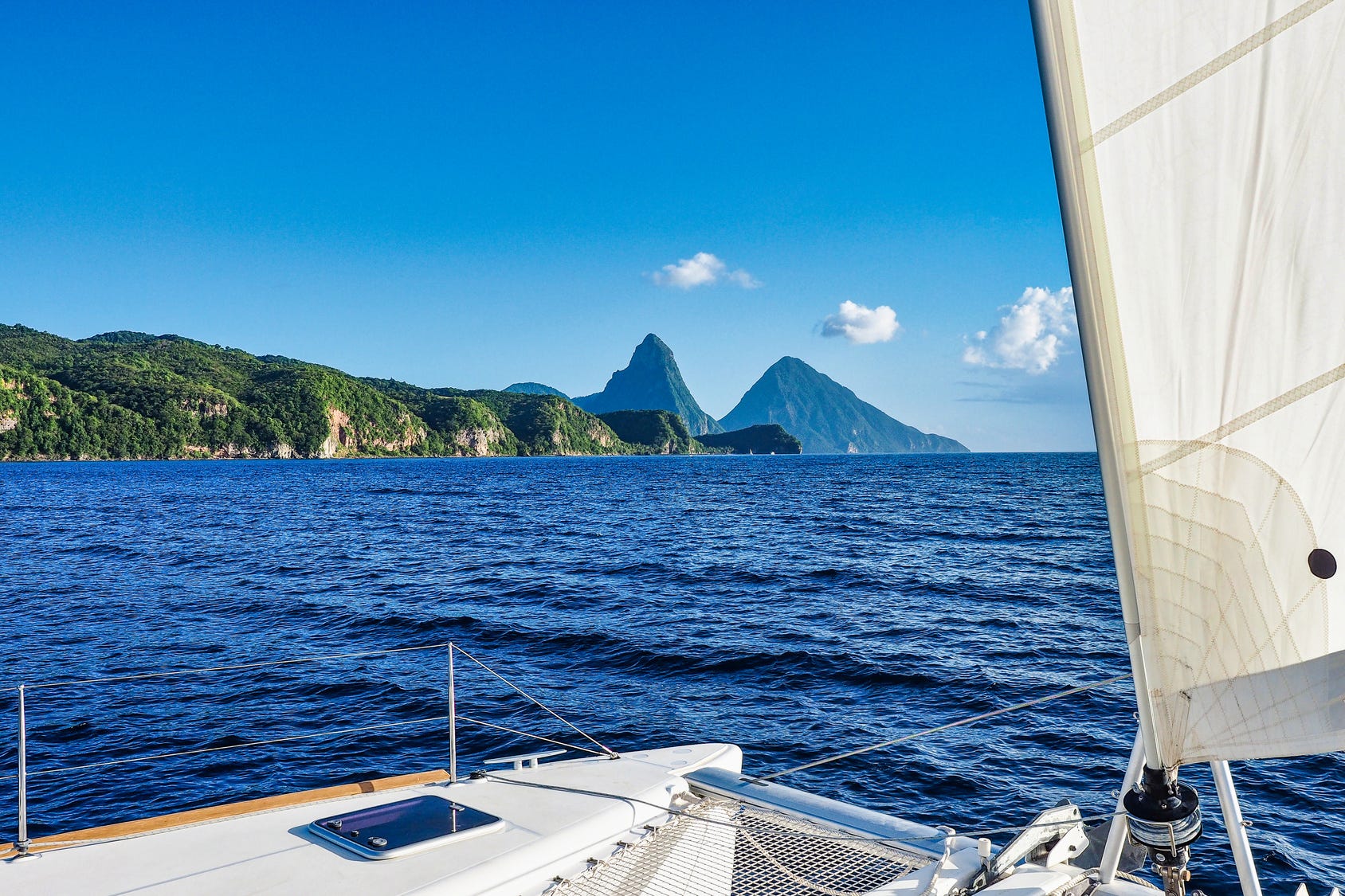
Where Americans actually land. Most foreign buyers end up in one of two places. The north, around Rodney Bay and Gros Islet, is where daily life is easiest: the marina, the restaurants, the supermarkets and the beaches you can walk to. The southwest, around Soufrière and the Pitons, is the postcard: rainforest, hot springs and the two peaks over the bay, and a long, winding drive from the shops and the main hospital.
A good week. Imagine a couple in their early sixties, a composite rather than anyone real, who spend January through April here and the rest of the year at home in Ohio. He walks the beach before breakfast. She takes up sailing their first winter and crews on a friend's boat on Wednesdays. Friday night is the street party in Gros Islet. On Sunday they drive south for a long lunch facing the Pitons. In March their daughter flies down with the grandchildren for a week. In May they fly home, and nothing at home has to be undone.
What it costs. Saint Lucia is not a bargain island. Most of what you buy arrives by ship and is priced accordingly. What's light is the tax on what you own: a small annual property tax, and no tax on capital gains or inheritance. The costs that surprise people come once: the license a foreigner needs to buy land, the closing costs, and serious insurance for both the house and the people in it.
Health care. Everyday care is close at hand. There's a modern public hospital near Castries and a private hospital with a 24-hour emergency room. Advanced specialist care is a different matter: for complex cases, patients are often flown to a larger island or to the United States. The households that are happiest here carry international health insurance with medical evacuation built in, and know before they need it where they'd be flown.
People. Saint Lucians are warm, proud and unhurried. English is the official language, and you'll hear Kwéyòl, the French-based creole, in the market and on the street. The foreign community is small, which cuts both ways: easy to find, and easy to exhaust. The people who build a real life here join something local: a church, a sailing club, a volunteer board, the crowd at the Saturday cricket. On an island, loneliness is the cost nobody budgets for. A short flight home and a calendar of visitors is how you price it in.
The verdict
Where Saint Lucia stands: a stable, free island democracy that works well as a winter or part-year base, with a citizenship program under heavy pressure from Europe. Current as of November 13, 2026.
What works. The ground under a resident is solid. Saint Lucia scores 91 of 100 with Freedom House, ten points above the United States. Its December 2025 election was decisive and, in the prime minister's words, "free from violence." The currency has been fixed to the US dollar since 1976. There's no tax on capital gains and no inheritance tax. And a foreigner who buys a home under a landholding license can apply for a permit to stay for as long as the license lasts.
What doesn't. There's no US income tax treaty, so a full-time resident living on US investment income can owe Saint Lucia the gap between its rates, up to 30%, and what the IRS already took, unless the plan is set before the move. Advanced specialist care often means a flight off the island. The island sits in the hurricane belt: Hurricane Tomas in 2010 caused damage and losses worth more than 40% of that year's economy. And violent crime reached a record in 2024, which makes where you live, and how the house is secured, a real decision.
Separately, the citizenship program is caught in a larger fight. The European Commission has asked Saint Lucia and four neighbors to wind their programs down by June 1, 2028, or risk their citizens' visa-free travel to Europe. That changes what the passport is worth. It doesn't change the island you'd live on.
Who it fits. The household that wants a warm base for three or four months a year, keeps its life and its tax home in the United States, and can carry international health cover. It also fits a household that wants a second passport as insurance and understands it may be buying into a program with an end date.
Who it doesn't. Anyone who needs advanced hospital care nearby; anyone planning to live here full time on US pensions and dividends without a cross-border tax plan; same-sex couples who need their partnership recognized in law; and anyone who dreads hurricane season.
The bottom line: Saint Lucia is a lovely second base for the part-year household and a more demanding full-time home. Decide which one you're building before you buy anything.