


Europe, with room to breathe
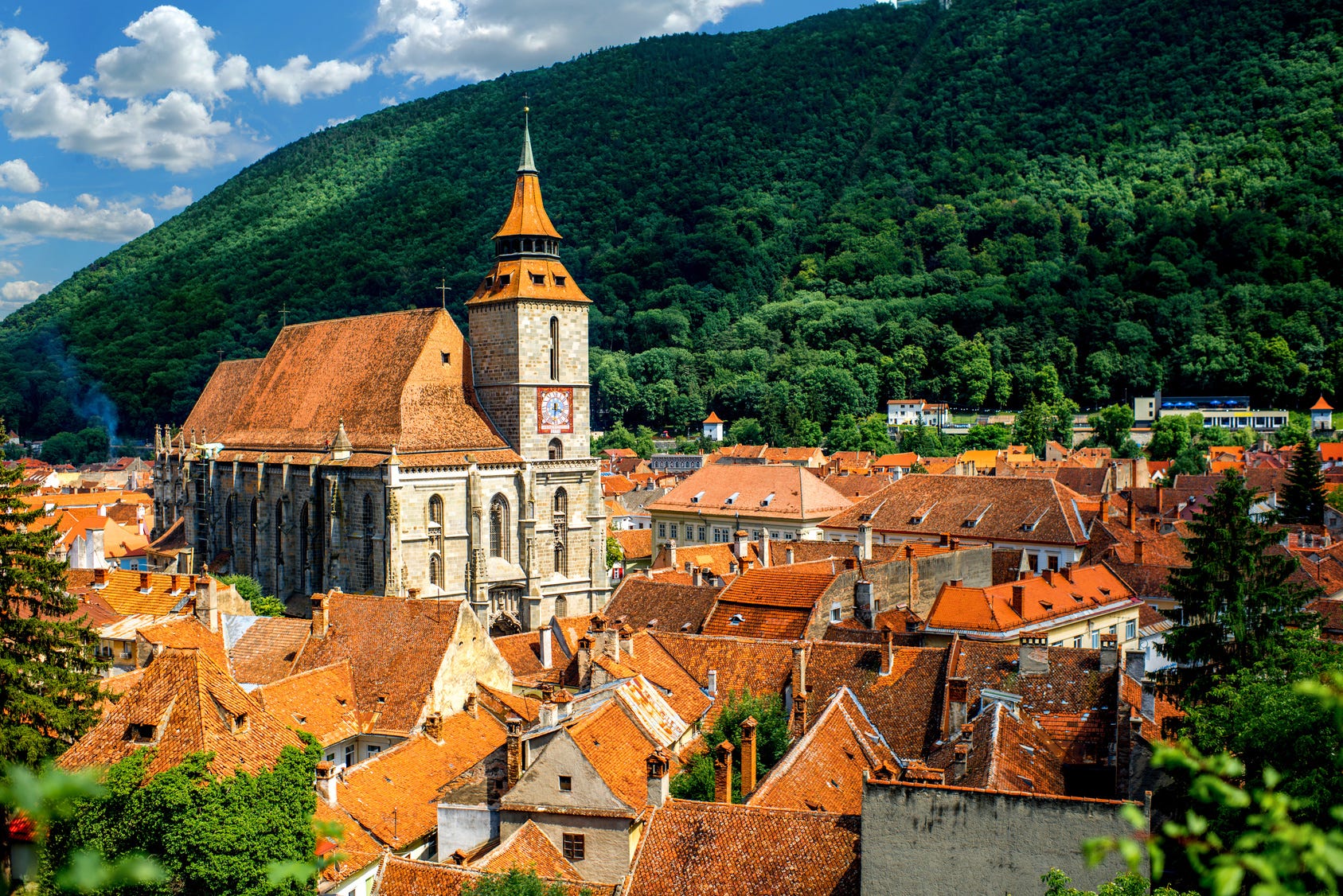
An apartment above a cobbled square in a Transylvanian town, painted houses the color of apricots and sage, a church tower that has kept the hours for five hundred years. The Carpathians close enough that Saturday is a walk in the beech woods and Sunday is lunch at a guesthouse where the soup comes with sour cream and nobody brings a check until you ask. Coffee in the square that costs what a parking meter costs at home. Neighbors who notice when you've been away.
That's the wish people bring to Romania. Not a cheap escape: the Europe of their imagination, older and quieter than the version on the postcards, at a price that lets them stay as long as they like, with the grandkids a flight away.
It's a wish that can come true. As one reader put it: "Leaving the US 3 months ago was among the best decisions I've ever made." That's the outcome this report is built to protect.
I've read Romania the way I'd read any country for a second base: what I'd check first if this were my household, what the rules actually say, and where the traps sit. The short version is encouraging. Romania is a free EU country, inside Schengen, with one of the lowest income tax rates in Europe and a cost of living most Western Europeans envy. It also has one gap an American retiree needs to understand before anything else: there is no visa built for people who simply want to live there on their own money. That gap has workable answers. They just have to come first.
The life
Where Americans actually land. Most settle in one of four kinds of place. Bucharest, for a real capital: the airport, the private hospitals, the restaurants, the energy. Cluj-Napoca, the university and tech city of Transylvania, younger and greener, with its own international airport. The mountain and old-town circuit of Brașov and Sibiu, for people who want the medieval square and the Carpathians at the end of the street. And the west, Timișoara and Oradea, handsome Habsburg-era cities a few hours' drive from Budapest and Vienna, for people who want Central Europe on their doorstep.
A good week. Picture a couple in their early sixties in a rented apartment off the main square in Sibiu. He walks to the market most mornings for bread, cheese and whatever is in season. She is taking Romanian lessons twice a week and is pleased with herself that the woman at the pharmacy now answers her in Romanian instead of switching to English. Wednesday they drive forty minutes into the hills to hike. Friday there's a concert in the old church. Once a season a cheap flight takes them to see friends in Vienna or Rome, and twice a year the kids fly in and are astonished, every time, by what dinner costs.
What it costs. Romania is still one of the least expensive places in the European Union to live well, though not as cheap as it was. The government raised the standard VAT rate from 19% to 21% in August 2025, and annual inflation was 6.6% in September 2026, so prices have been climbing faster than in most of Western Europe. Bucharest and Cluj cost noticeably more than smaller towns. The costs that surprise people are the ones around the edges: a good lawyer for the residence file, a Romanian accountant, translations of every document, and private health cover.
Health care. Romania has a public, insurance-based system run by the national health insurance house. A resident who has no Romanian salary or pension can buy in by paying the health contribution on a set base; in 2026 that comes to roughly RON 2,430 to 2,600 for twelve months of cover, depending on when you file. Public hospitals vary a great deal; in the big cities, private clinic and hospital networks offer speed and English-speaking doctors, with public cover as the backstop. Outside the large cities, the nearest good hospital can be an hour or more away: choose your town with that in mind.
People. Romanians are generous hosts. In my reading, Americans meet more curiosity than wariness. English is common among younger people in the cities and much less so in villages and offices. Romanian is a Romance language, so Italian, Spanish or French gives you a head start. The households that settle in best learn enough to manage the market, the doctor and the paperwork, find their people through a church, a hiking club or the expat groups in Bucharest, Cluj and Brașov, and stop expecting the town hall to run on American time.
The verdict
Where Romania stands: a free, safe EU democracy with restless politics and a tight budget, steady for the American household that arrives on the right permit. Current as of November 13, 2026.
What works. Most of what a household leans on. Romania is a full member of the Schengen area, so it sits inside Europe's open borders. It is free, scoring 83 of 100 with Freedom House, two points above the United States. It is safe, ranking 45th of 163 countries for peacefulness, where the US ranks 134th. Income is taxed at a flat 10%. A US–Romania totalization agreement took effect on September 1, 2026, and Social Security payments arrive normally.
What doesn't. There is no visa for a retiree living on savings and pensions, so a household without another door builds its case with a lawyer under a discretionary category. Politics are unsettled: a presidential election annulled in December 2024 and rerun in May 2025, a government that fell in a no-confidence vote on May 5, 2026, and a minority government under Luca Niculescu, an independent, approved only in October 2026. The budget squeeze behind that crisis has raised taxes on dividends, gains and larger pensions, and prices are climbing: a cost-of-living and tax pressure for 2026 and 2027, not a threat to anyone's residence.
Read the institutional trend against the baseline. Romania sits mid-table among the EU's newer members: ahead of Hungary and Bulgaria on freedom, behind Poland and Czechia on the rule of law. A democracy research institute lists it as autocratizing, and its courts annulled an election over interference allegations. That's a young democracy under strain and holding, not one sliding toward danger. LGBTQ+ law is the clearest weak spot: same-sex couples have no legal recognition.
Romania fits a household still earning remotely, a household with a Romanian parent, grandparent or great-grandparent, and a household where one spouse holds an EU passport. It suits people relaxed about paperwork in a language they're learning.
It fits poorly a retiree with none of those doors who wants a clear statutory route, anyone who needs top-tier hospitals within minutes wherever they live, and same-sex couples for whom legal recognition at home is non-negotiable.
The bottom line: Romania is a sound and affordable second base for the household with a door in, and a harder one for the household without.