


A real European life, within reach
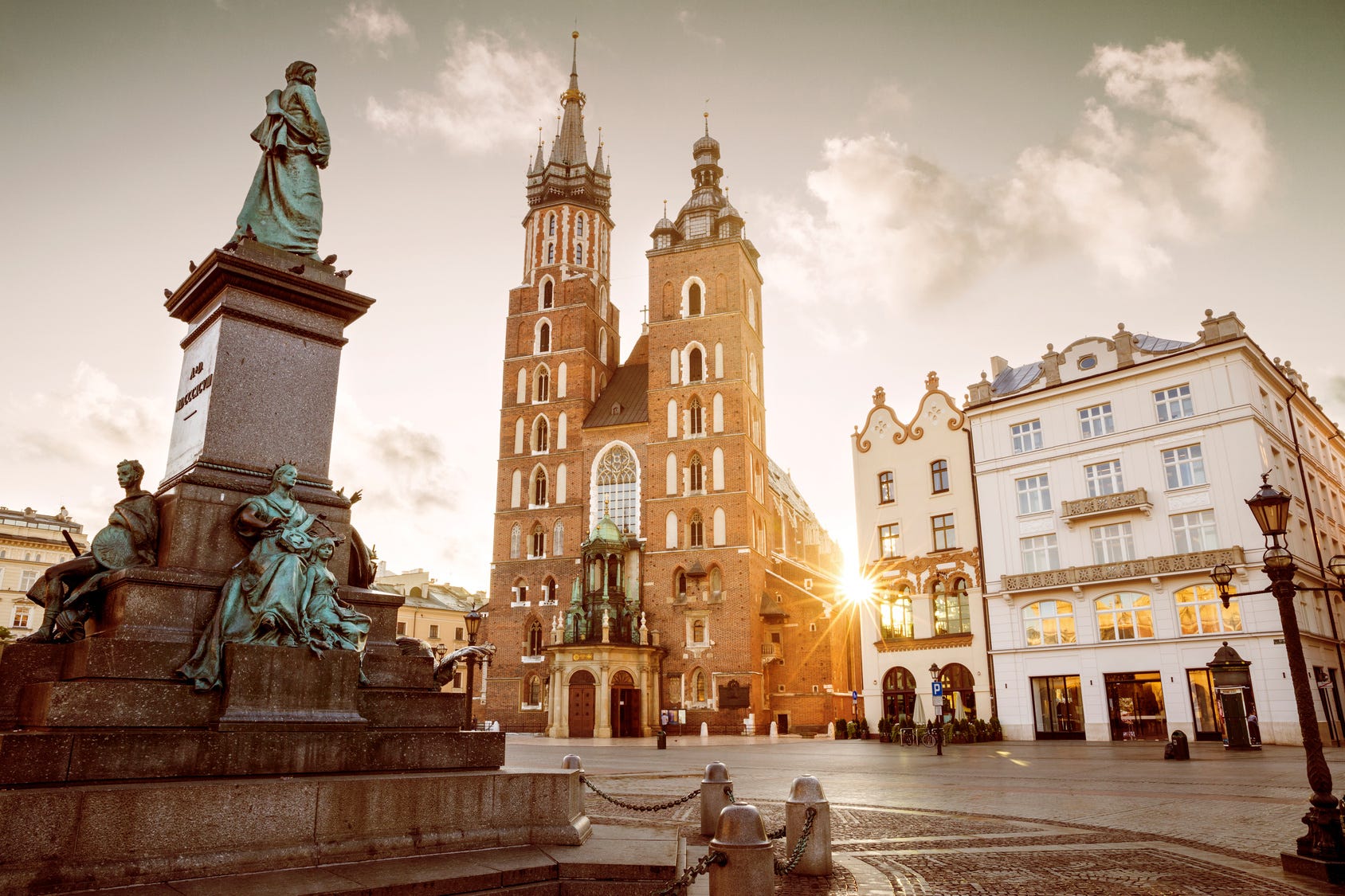
An apartment in a Kraków building older than the United States, ten minutes on foot from the market square. A morning coffee that doesn't make you wince at the bill. A fast train to Warsaw, a doctor's visit you can afford without thinking about it, and concerts, opera and jazz cellars within walking distance.
That's the wish people bring to Poland. A full European life in a country that is safe, growing and still affordable, with room in the budget for flights home and visits from the grandkids. For many American families there's a second layer to it. A grandmother's prayer book, a surname that got shortened at Ellis Island, a parish in Chicago or Buffalo or Pittsburgh where the Christmas Eve supper still has twelve dishes. For them Poland isn't foreign. It's where the story started.
Then comes the part where you tell people. "Everyone we know thinks we're crazy." Friends who have never been picture something gray and long ago. The country you'd actually move to is growing fast, among the most peaceful in the world, and far cheaper than its western neighbors.
What I'd check first if this were my household is the paperwork that decides everything else: whether a family line gives you a door that strangers don't have, and if not, which permit carries you. Poland has no retirement visa, but it has generous family-line routes and a general permit that works. Getting the order right is most of the work, and all of it can be done.
The life
Where Americans actually land. Most settle in one of three kinds of place. Kraków, for people who want beauty, a university town's energy and the mountains within reach. Warsaw, for people who want a capital: the best hospitals, the most English, the direct flights. And the smaller cities with good universities and old centers, Wrocław, Gdańsk and Poznań among them, for people who want a real city at a gentler pace. Families with roots often find the village on the old documents, then live in the nearest city and visit on weekends.
A good week. Picture a couple in their sixties in a two-bedroom apartment in Kraków's old Jewish quarter, Kazimierz. Mornings, she takes her Polish lesson online and he walks the dog along the river. Tuesday is the farmers' market, where the woman selling mushrooms has started correcting his pronunciation and setting aside the good chanterelles. Thursday evening there's a chamber concert in a Gothic church down the street. Once a month they take the train somewhere new, and in July the grandkids arrive and want pierogi at every meal.
What it costs. Poland is one of the least expensive countries in the European Union: in 2025, household prices were 73% of the EU average, the third-lowest in the bloc. Expect to pay more in the centers of Warsaw and Kraków than that national figure suggests. The costs that surprise people are the official ones: health insurance, a sworn translator for every foreign document, and an accountant who files in both countries.
Health care. Poland has a public system run by the National Health Fund (NFZ) and a large private sector alongside it. A retiree on a residence permit isn't covered automatically. You show private health insurance to get the permit, and once you live in Poland you can join the public system voluntarily, for a monthly contribution of 844.77 zł (about $212) in late 2026, plus a one-time entry fee that grows with the time you've gone without coverage. Ask the regional NFZ office how it will count your years in the US. Many foreign residents also keep a private clinic subscription, for speed and English-speaking doctors.
People. Poles can seem reserved at first, then turn out to be generous hosts once you're at their table. Younger Poles often speak good English; officials usually don't. The households that do best learn the language seriously, because Polish is hard, and because it's also the key to permanence. They join something: a choir, a parish, a hiking club. Once friendships form, expect invitations to name-day celebrations as well as birthdays. And the families with roots find something no permit can give them: cousins, a grave to tend, a name that people recognize.
The verdict
Where Poland stands: a free, safe and fast-growing democracy that works well for the household moving there, with a government and a president from rival camps locked in a standoff that slows lawmaking. Current as of November 13, 2026.
What works. Poland ranks 22nd of 163 countries for peacefulness, where the United States ranks 134th. Freedom House rates it Free at 82 of 100, a point above the United States, and its democracy has been recovering from the last decade's strains, though the repair is now contested. The economy should grow about 3.5% in 2026, among the EU's fastest. For Americans with Polish roots, the routes in are unusually good: a confirmed citizen needs no permit at all, and a holder of the Karta Polaka (the Pole's Card) can get permanent residence and, a year later, apply for citizenship.
What doesn't. Without a family line, there's no retirement visa: the general permit works, but it's discretionary, slow and in Polish. Citizenship takes about eight years, and both political camps want it longer. Politics is gridlocked: President Karol Nawrocki's vetoes have run at almost one a week, and in October 2026 his fight with the government over the constitutional court came to a head. None of it has touched anything a resident relies on. And Poland sits on NATO's eastern edge, next to the war in Ukraine; in September 2025 Polish and allied jets shot down Russian drones over its territory.
On civil liberties, Poland is moving the right way on most counts but trails its neighbors on two. Abortion is legal only when a pregnancy threatens the woman's life or health or results from a crime. Same-sex couples cannot marry or form unions, though since August 2026 their marriages from other EU states are registered.
Poland fits the household with a documented Polish line that wants to make it real; the retiree who wants a big European city, safety and room in the budget; and the couple willing to learn a hard language.
Poland fits poorly anyone who needs easy access to reproductive care or legal recognition for a same-sex partnership; anyone without Polish roots who wants a fast, rule-bound visa; and anyone who can't face a Central European winter.
The bottom line: Poland is a sound second base, and an excellent one for families with Polish roots, as long as the family line is checked first.