


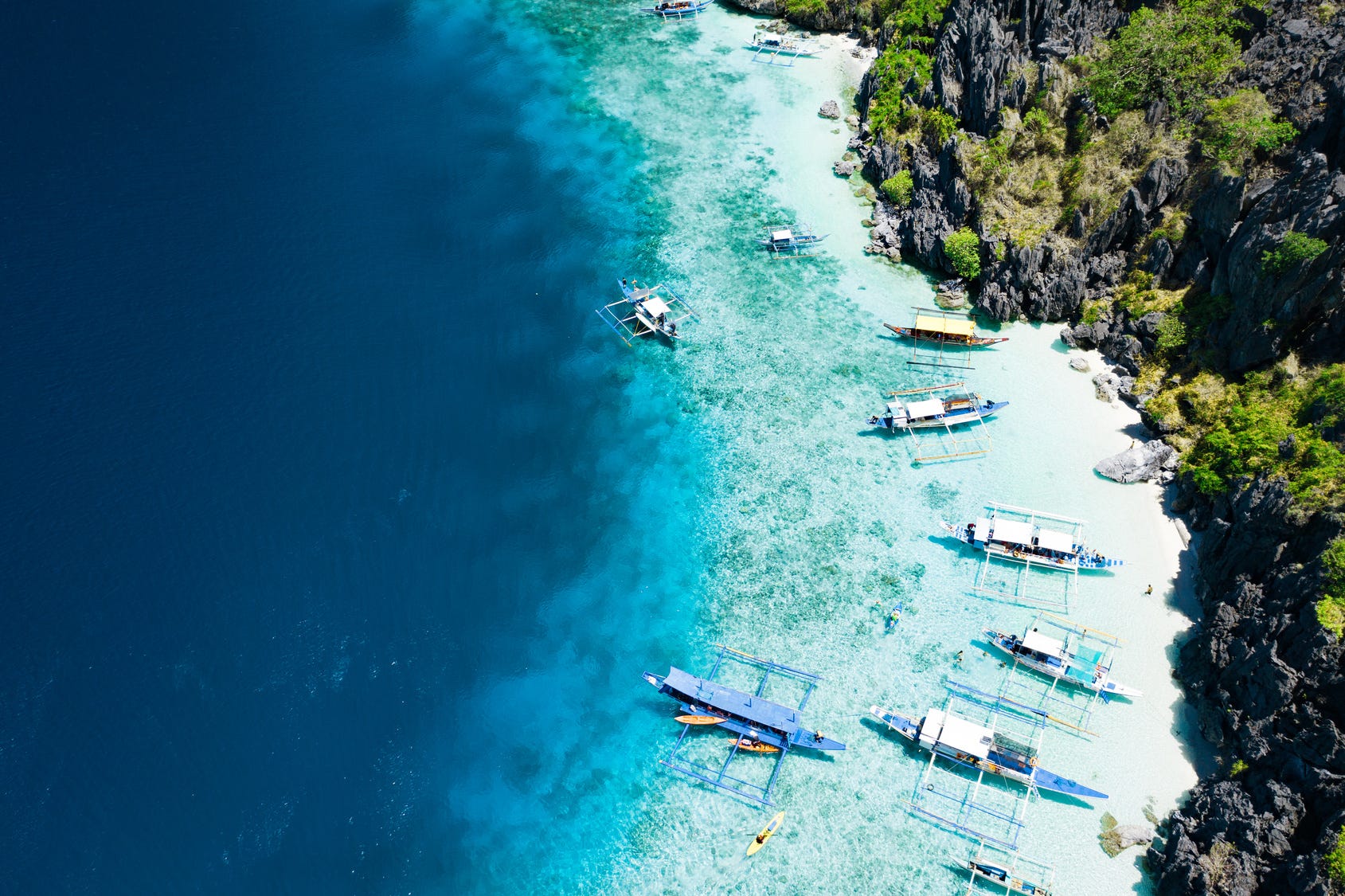
A warmer life, in English, by the water
A condo with a view of the sea, or a house on a quiet street ten minutes from town. Mornings out early, before the heat, at a market where the mangoes cost less than parking did at home. People who smile first and ask questions later. English on the signs, at the bank and in the doctor's office. For many households, family close by: cousins at Sunday lunch, a godchild's christening, a place at the table that was always waiting.
That's the wish people bring to the Philippines. Not a cheaper copy of America: a warmer, slower life where the money stretches and people are glad you came.
It's a wish the country is unusually well built to grant. The Philippines runs its retirement visa through a government agency whose whole job is attracting retirees. And it taxes foreigners only on income earned in the Philippines, so a US pension, an IRA and Social Security never meet a Philippine income tax bill.
The hard parts sit elsewhere. You can't own the land under your house. Safety is good where most Americans live and poor in a few regions you'd avoid anyway. Health care is excellent in a handful of cities and thin across much of the country. And the rules at death reach further than the rules on income.
As one reader put it, "We've read everything and still don't know what to actually do."
What I'd check first if this were my household isn't the beach. It's three things: which island has the hospital we'd need at seventy-five, whose name the home is in, and what happens to it when one of us dies. Settle those and the Philippines is a generous place to build a second life.
The life
Where Americans actually land. Four kinds of place. Metro Manila, mostly Makati and Bonifacio Global City, for the hospitals and the airport. Cebu, a second city with its own international airport and an easier pace. The smaller university and seaside towns: Dumaguete with its boulevard along the water, Baguio up in the mountains where evenings call for a sweater, the coasts of Bohol and Palawan. And the old American bases at Clark and Subic, north of Manila, where an American community never entirely went home. Many Americans here are married to Filipinos, and they usually end up where the spouse's family is.
A good week. Imagine a couple, not a real one but a common shape here, in their late sixties in a condo in Cebu. Say she was born twenty minutes away and spent forty years in California, and he spent those years learning to pronounce her cousins' names. Their mornings would start early, because by eleven it's hot. Tuesday might be a specialist at a private hospital across town: booked the same week, seen on time, paid with a card. Sunday lunch would be at her sister's: twenty people, three generations. Christmas here starts in September, so grandkids flying in from San Diego in December would land in a season three months old.
What it costs. Daily life is inexpensive by American standards outside the premium districts of Manila: fresh food, household help, local transport and domestic flights all cost a fraction of home. The costs that surprise people are imported goods, the electricity bill once the air conditioning runs all afternoon, and private health insurance as you age.
Health care. The private hospitals in Metro Manila and Cebu are very good, and a specialist visit is quick and affordable. Away from the big cities, care thins out, and serious cases are flown to Manila or Cebu. Foreign residents can join PhilHealth, the national health insurer, but it covers only part of a hospital bill, so most foreigners carry private international insurance. Medicare usually doesn't cover care outside the US, so price that policy before you choose an island. If you're a veteran, Manila has the only VA health facility in a foreign country.
People. English is one of the two official languages and is spoken widely, so nothing official needs a translator. Filipinos are warm, hospitable and quick to include you, and the church, the barangay (the neighborhood council) and family gatherings are where friendships form. Family is the center of life, and generosity is expected in both directions. The households that do best decide early, together, how they'll help relatives, so that help stays a gift and never becomes a strain. Learn some Tagalog or Cebuano, show up to the fiesta, and you'll belong sooner than you expect.
The verdict
Where the Philippines stands: a warm, English-speaking country that is easy to enter and light on tax for a retiree, with weak rule of law, safety that varies sharply by region, and prices up hard this year. Current as of November 13, 2026.
What works. The way in and the money. The retirement visa opens at 40 and is permanent residence. Foreigners pay Philippine tax only on Philippine income, so US pensions, IRAs and Social Security arrive untouched. And the country ranks 102nd of 163 for peacefulness on the Global Peace Index, ahead of the United States at 134th.
What doesn't. Rule of law, first. The Philippines ranks 97th of 143 on the World Justice Project's index, and Freedom House rates it Partly Free at 58 of 100, against 81 for the US. That's the country's long-standing baseline, not a threat to a foreign retiree's daily life.
Safety varies by place. The State Department advises Americans to exercise increased caution countrywide, its second of four levels, citing crime, terrorism, civil unrest and kidnapping. It says to reconsider travel to most of Mindanao, Davao City and Siargao excepted, and not to travel to the Sulu Archipelago, the Sulu Sea or Marawi City. The places Americans settle sit outside those zones.
The near-term pressure is cyclical. Inflation hit 7.8% in October, led by fuel, and growth slowed to 2.1% in the third quarter as a corruption scandal over flood-control projects froze public construction. That's a hard year, not a broken economy.
On rights, the Philippines is conservative: no recognition of same-sex couples, and abortion is prohibited.
Who it fits. The retired household living on US pensions and Social Security that wants warmth, English and a dollar that goes further. The American married to a Filipino. Veterans, who have a VA clinic in Manila. And part-year households wintering in Cebu or Dumaguete.
Who it doesn't. Same-sex couples, who get no legal recognition and no marriage visa. Anyone who must own the land they live on. Households who want a small island and first-rate hospitals within an hour. And anyone who needs fast courts.
The bottom line: the Philippines is a sound, generous second base for a retired household that buys right, insures well and settles where the care is.