


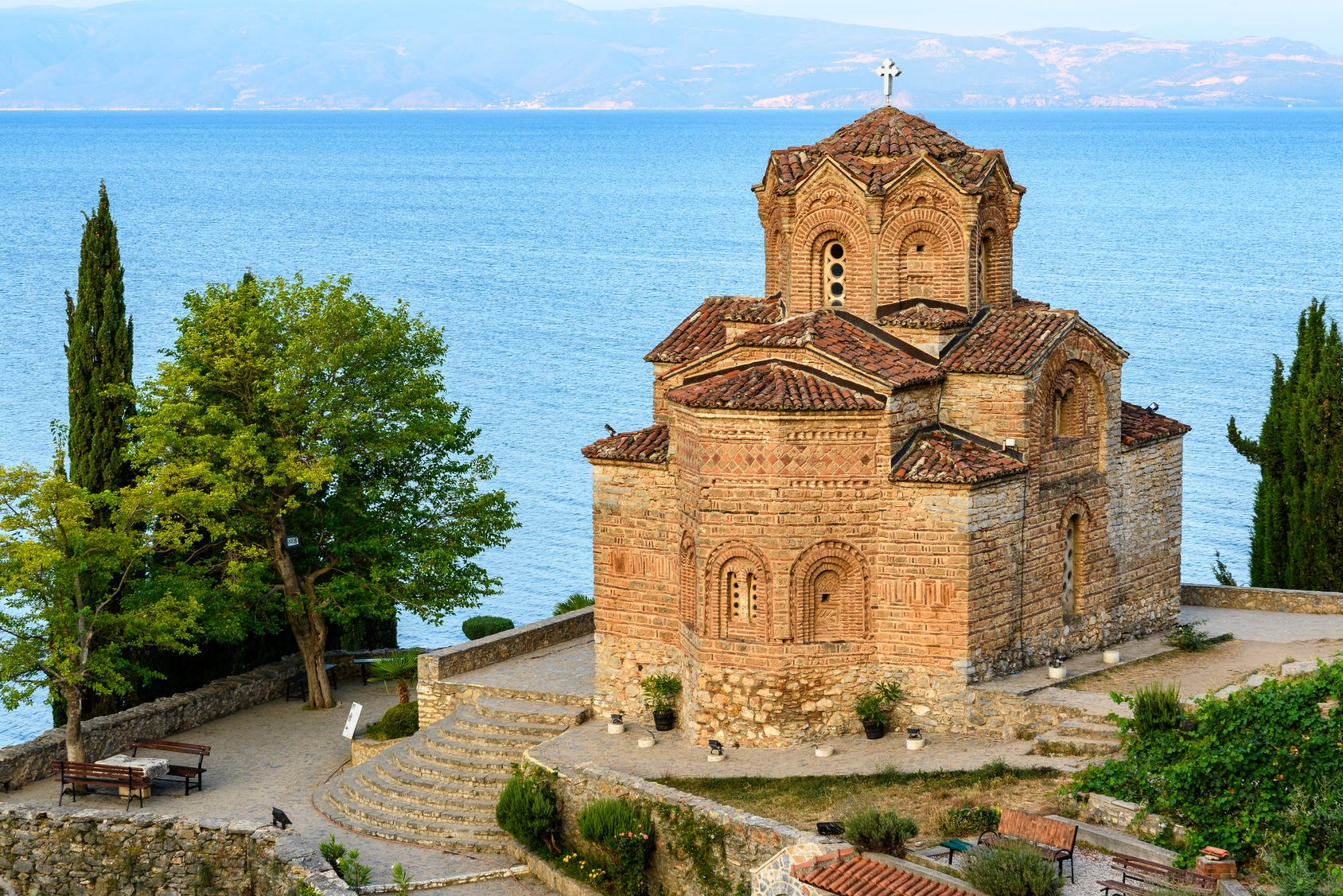
A lake, a slower week, a budget that breathes
A stone town on a lake so clear you can see the bottom from the dock. A morning walk along the water to a café where the coffee costs less than the tip you'd leave at home. Churches older than most countries, a bazaar where the spice seller learns your order, and an afternoon with nothing on it. Evenings when money, for once, isn't the loudest thing in the room.
That's the wish people bring to North Macedonia. Not a grand reinvention: a smaller, calmer, less expensive week, with a real home under it, and a short flight to the rest of Europe when the grandkids want a bigger trip.
It's a modest wish, and a reasonable one. North Macedonia is a small country of about 1.8 million people, a member of NATO, more peaceful than most of the world, and home to one of the simplest income tax systems in Europe. It is also a place where the information online is thin, contradictory or years out of date. As one reader put it, "We've read everything and still don't know what to actually do." With North Macedonia, that's no failure on the reader's part. The rules that matter most sit in a Macedonian-language statute, and two or three of them change the whole plan.
What I'd check first, if this were my household, isn't the view from the balcony. It's one sentence in the immigration law: the permit most American buyers will use never turns into permanent residence. That doesn't rule the country out. It changes what kind of plan the country can hold, and it puts the family question, the tax filing and the calendar in a different order than people expect.
Everything this report flags can be planned around.
The life
Where Americans land. Three kinds of place. Ohrid and the lake towns around it, for people who want water, history and a walkable old town; summers are lively and winters are very quiet. Skopje, the capital, for people who want the big hospitals, the airport and a city's worth of restaurants and concerts. And smaller cities such as Bitola, with its long pedestrian street and a café on every corner, for people who would rather live a local life than a tourist season.
A good week. Picture a couple in their late sixties in a two-bedroom apartment a short walk from the lake. She takes Macedonian lessons twice a week, mostly so she can debate tomatoes with the man at the market, and is winning more often than she lets on. He swims from late spring to early fall and reads through the winter. On Fridays they drive up to a village restaurant in the hills where the menu is whatever the owner's mother made that day. Once a month they take the bus to Skopje for a specialist, a flight or a concert. In July the grandkids arrive and spend two weeks in the water, and the apartment is loud in the best way.
What it costs. Daily life is inexpensive by American standards. Rent for a 60-square-meter apartment in central Skopje runs about €400 to €550 a month. The costs that surprise people are the administrative ones: notarized translations of every document, the yearly permit renewal, private health cover, and an accountant who handles the monthly tax filings on your foreign income.
Health care. A public Health Insurance Fund covers family doctors, specialists and hospitals, and foreigners with temporary or permanent residence can be insured through it. Insured patients pay part of the cost of treatment, capped at 20%. The most advanced care is concentrated in Skopje's university clinics, so a household in Ohrid or Bitola should expect to travel for anything complex. Most American households keep a private international policy too, which the permit requires anyway.
People. Macedonians are hospitable and family-centered, and an invitation to a home meal comes sooner than you'd expect. English is common among younger people in Skopje and Ohrid and much less so in government offices, which work in Macedonian. The households that settle best start the language early, because permanent residence later requires it, and find their people through a church, a walking group, a language class or the small international circles in Skopje and Ohrid. Belonging here comes from showing up at the same café, the same market stall and the same name day celebrations, year after year.
The verdict
Where North Macedonia stands: a peaceful, affordable democracy that is holding steady and reforming slowly, where an American can settle easily on a permit that never becomes permanent. Current as of November 13, 2026.
What works. The daily life. The country is calm, 46th of 163 on the Global Peace Index against 134th for the United States, and its press freedom ranking, 45th of 180, is ahead of America's 64th. Income tax is a flat 10% on almost everything a retiree earns. The property-owner permit is open to Americans for a home worth €40,000 or more. The denar is pegged to the euro, the banks are well capitalized, and a government with a clear majority, which took more than 50 mayoralties in the 2025 local elections, isn't about to swing the rules around.
What doesn't. Permanence, first: years on the property permit don't count toward permanent residence, and naturalization generally means giving up US citizenship. Then institutions: courts are slow, and the European Commission's November 2026 report found no progress against corruption. Freedom House scores the country 67 of 100, Partly Free, against 81 for the United States, about where Montenegro and Albania sit. Same-sex couples have no legal recognition.
In proportion. These are weak spots in how institutions perform, not in a foreign resident's safety or freedom to live quietly. EU accession talks formally opened in July 2022, then stalled over a constitutional amendment to name Bulgarians among the country's peoples, which the government has not put forward. That slows convergence with Europe; it doesn't touch a permit, a pension or a property title.
Who it fits. A household living on pensions and investments that wants a peaceful, low-cost main home, is happy to renew a permit each year and doesn't need permanence. A household with a Macedonian spouse or parent, for whom the routes lead further.
Who it doesn't. Anyone whose goal is a second passport or permanent status without family ties. Households planning short seasonal stays, because the permit expects you to live in the country for most of each year. Households for whom LGBTQ+ legal equality is non-negotiable.
The bottom line. North Macedonia is a good place to live and a hard place to become permanent, unless family gives you a way in. Plan it as a renewable base, with the tax filings set up from the first month, and it works.