


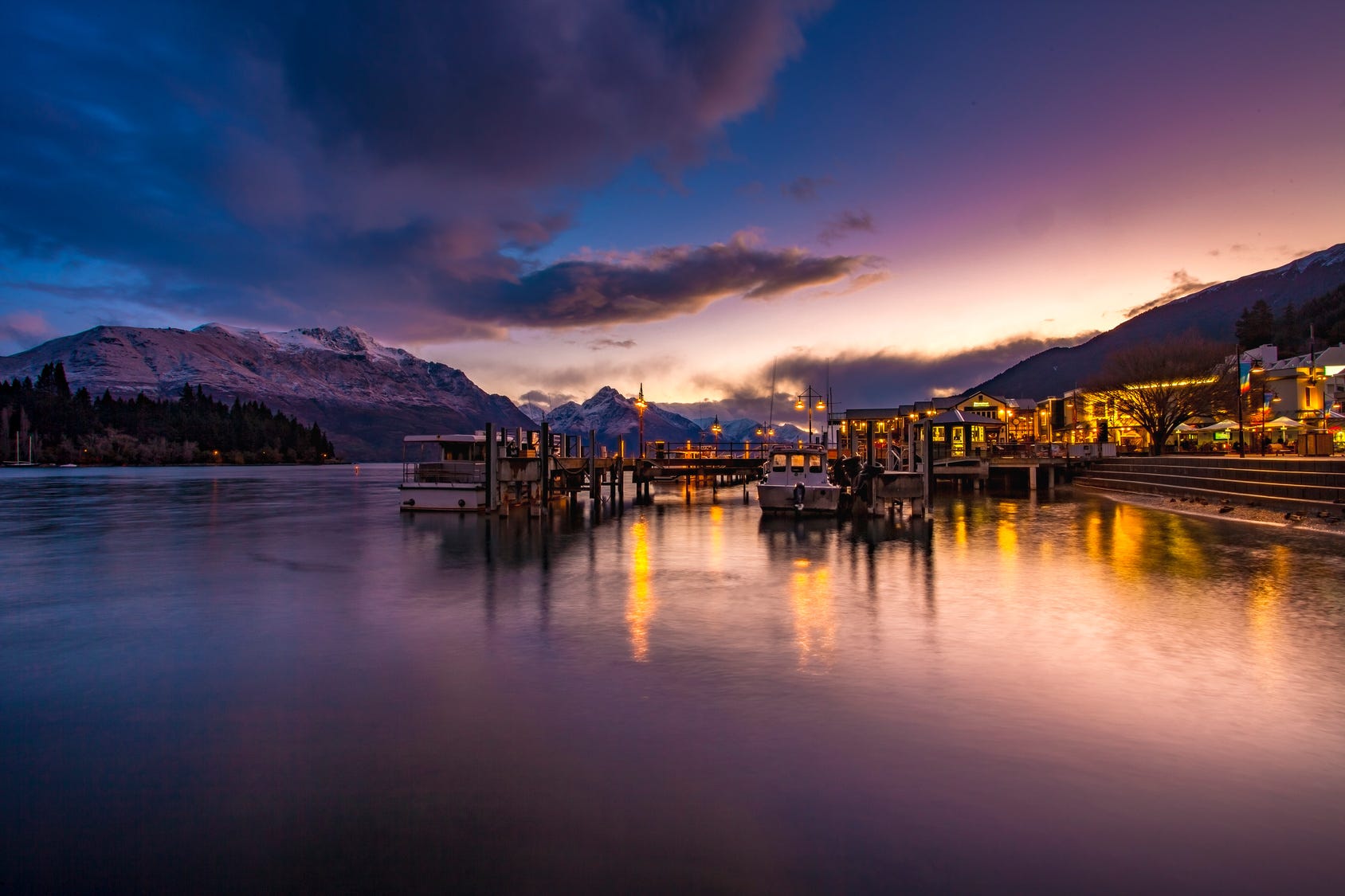
Far from the noise, on purpose
A house with a deck that looks out over water. A morning walk on a beach where the only other footprints belong to somebody's dog. A town where the café owner knows your order by the second week, the hiking trail starts at the end of the road, and nobody at the barbecue wants to talk about American politics. And summer arriving in December, right when the northern states are digging out.
That's the wish people bring to New Zealand. Not an escape from the world: distance from the noise, in an English-speaking country that works, where the rule of law is solid, the streets are safe and the scenery still stops you on the side of the road.
It is a real wish, and New Zealand can grant it. What I'd check first if this were my household is the price of the door, because New Zealand is unusually clear about who it wants to stay. It welcomes visitors generously, retirees for a season, parents of people who've settled there, and investors with serious capital. It is much less open to a household that simply wants to move in on a comfortable pension and buy a modest house by the water. That gap is where most American plans for New Zealand go wrong.
As one reader put it, "We have money, but not enough to survive a massive mistake." New Zealand's mistakes are quiet: a visa that was never going to lead anywhere, a house you weren't yet allowed to buy, a tax exemption that ran out in year five while nobody was watching. Every one of them can be avoided, and the life on the other side is worth the care.
The life
Where Americans actually land. Three kinds of place. Auckland and Wellington for people who want a real city, good hospitals and an international airport close by. The lake and mountain country around Queenstown and Wānaka for people who want the postcard and can pay for it. And the gentler middle: Nelson and Tasman, Hawke's Bay, the Bay of Plenty, the outskirts of Christchurch, where the weather is kind, the towns are small enough to know, and a good life costs less than it does near the ski fields.
A good week. Picture a couple in their late sixties on a part-year plan. They spend the northern winter in a rented house above a bay in Nelson and the northern summer at home in the States. Mornings, he walks the coastal track and she swims. Tuesday is the farmers' market, Thursday is a long lunch at a winery twenty minutes out of town, and on Saturday the neighbors have them over for a barbecue that runs until the light goes, which in January is late. The grandkids come for two weeks at Christmas and spend most of it on the beach.
What it costs. New Zealand is not a cheap country, and this year it's a little pricier. Annual inflation was 3.7% in the September 2026 quarter, down from 4.1% in June, led by petrol (up 19.1% on the year) and electricity (up 9.3%). Housing is the biggest line in any budget, especially in Auckland and Queenstown. The other big line is travel: every visit home, and every visit from home, is a long-haul trip.
Health care. New Zealand's public health system is good, and who gets it depends on your visa. Holders of a resident visa are eligible for publicly funded care; adult visitor visa holders usually are not, which is why the long-stay visitor routes require private insurance. One thing covers everybody: the national accident scheme, ACC, pays for treatment of accidental injuries for residents and visitors alike. Once eligible, enroll with a local GP practice in the first week.
People. New Zealanders are easy to talk to and quick to invite you to something: a walking group, a community garden, a quiz night at the local pub. The households that settle fastest join one thing in the first month and keep showing up. You will never be asked to stop being American. You will be gently teased for it, which is how you know you're in.
The verdict
Where New Zealand stands: one of the freest, safest and best-run countries in the world, with a narrow front door for the household that wants to live there. Prices are up this year, and the November 7 election is still being counted: the outgoing coalition holds 67 of 131 seats on the preliminary count. Neither changes the ground under a resident. Current as of November 13, 2026.
What works. Nearly everything a household relies on day to day. New Zealand scores 99 of 100 with Freedom House and ranks 2nd in the world for peacefulness. It speaks English and its courts are trusted. For a resident it has no general capital gains tax and no inheritance tax, and new residents get roughly four years in which most foreign investment income isn't taxed in New Zealand. US Social Security is taxed only by the United States under the treaty.
What doesn't. The price of permanence. The residence route built for a household that won't work there starts at NZ$5 million of qualifying investment. The cheaper routes are long-stay visitor visas: they give you seasons in New Zealand, not a future there, and they don't come with public health care. Most Americans can't buy a home until they hold a residence visa and have lived there for a year. And it is far away: the grandkids can come, but not for a long weekend.
The near-term pressure is economic: inflation at 3.7%, led by fuel and electricity, and interest rates expected to rise. That's a squeeze for 2026 and 2027, not a structural problem.
New Zealand fits the household with substantial capital that wants a resident visa without moving full time; the retiree couple who wants the northern winter in the southern summer; and the American parent whose son or daughter has already made a life there.
New Zealand fits poorly the household that wants a full move on a pension and savings below the investor threshold, anyone who needs to buy a home on arrival, and anyone for whom being a few hours from family in an emergency is non-negotiable.
The bottom line: a superb second base for the household that can meet its terms, as long as you pick the visa for where you want to end up, not just for how you want to arrive.