


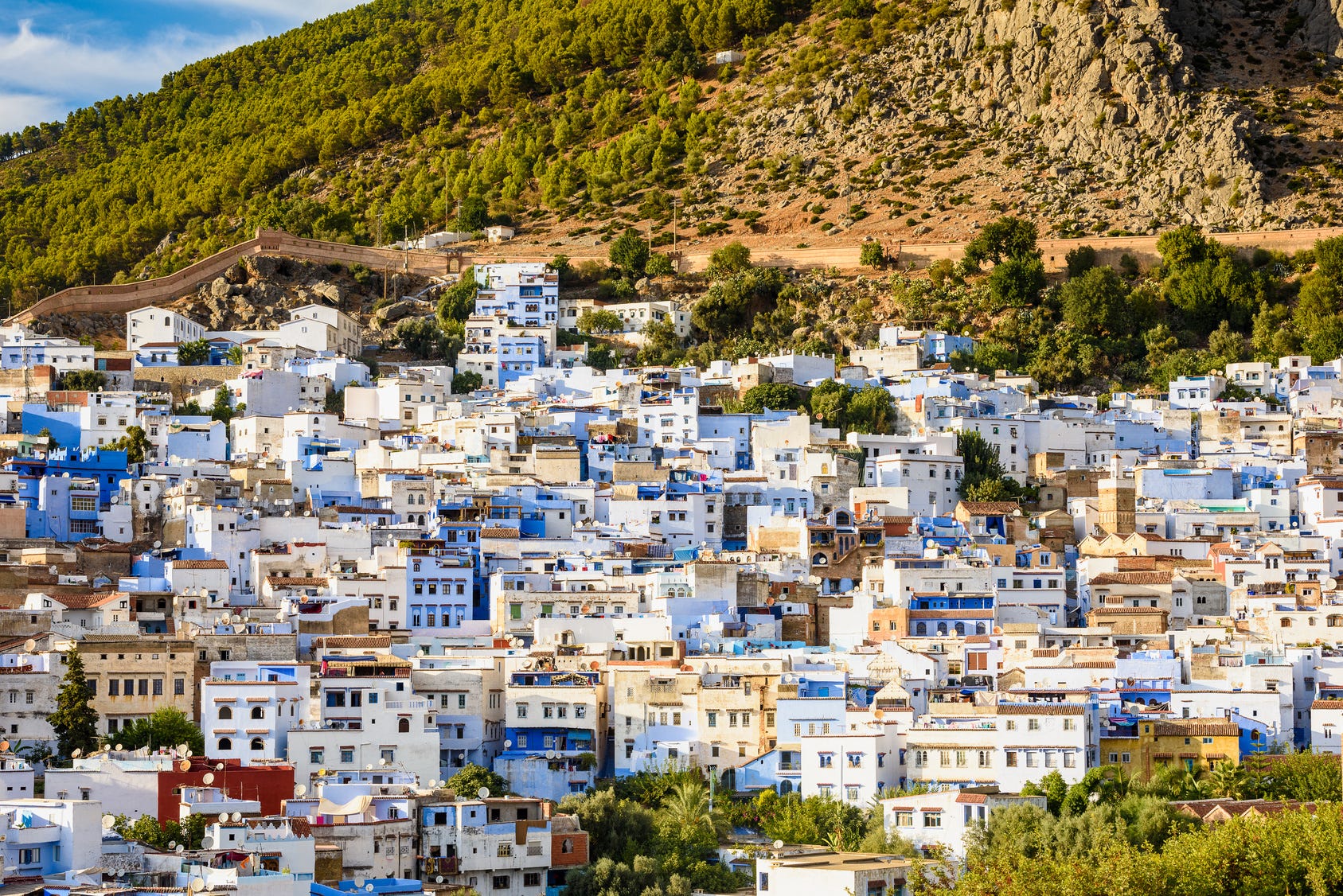
A warmer life, within reach of Europe
A white house with a roof terrace where breakfast runs late in the winter sun. A courtyard with a lemon tree and the sound of water. Mornings in the market, where the man who sells olives already knows which ones you like. A train to the coast when you feel like the sea, a short flight to Paris or Madrid when you feel like Europe, and a pension that stretches further than it ever did at home.
That's the wish people bring to Morocco. Not an adventure for its own sake: a warm, unhurried life with real texture, close enough to Europe that the grandkids can come for a long weekend, with money left at the end of the month.
Morocco can give a household that life, and European retirees have been building it there for a long time. It also asks more of a newcomer than most places Americans consider. It's a kingdom with real limits on what can be said in public, a legal code that still treats some private matters as crimes, and a currency that doesn't move as freely as the dollar. None of that stops a household from living well there. It does mean you choose Morocco with your eyes open, and set things up in the right order.
As one reader put it, "We have money, but not enough to survive a massive mistake." The mistakes Morocco punishes are mostly quiet ones: money that gets stuck, a tax break lost on a technicality, a rule a tourist never had to think about. Each one has a way through.
The life
Where Americans actually land. Most foreign households settle in one of four places. Marrakech, for the courtyard house in the old city or a villa in the palm groves outside it. Tangier, facing Spain across the strait, for the sea and Europe close at hand. Rabat, the capital, for a calm, orderly city with good clinics and a long beach walk. And the Atlantic coast, from Essaouira down toward Agadir, for winter sun, wind and a slower pace. Casablanca is for business and specialists; few retire there.
A good week. Picture a couple in their late sixties in a rented apartment near the sea in Rabat. He walks to the market most mornings and has learned enough Darija, the Moroccan Arabic of the street, to bargain badly and enjoy it. She takes French lessons twice a week and has a standing coffee with a neighbor who has adopted them. Friday is couscous at the neighbor's, which they've stopped trying to decline. In the spring the grandkids come for a week and spend most of it on the beach. Nobody at the café wants to talk about American politics, and nobody there talks about Moroccan politics either, which is worth knowing.
What it costs. Daily life is where Morocco is generous: food, a café, help at home and getting around cost a fraction of what they cost in the States. The costs that surprise people are the imported ones: a good private clinic, international insurance, a car, and anything that comes in a box from Europe. Budget for those at close to European prices and the rest takes care of itself.
Health care. Foreign residents mostly use private clinics and keep private international insurance. Care is available in the largest cities, but the US State Department notes that not every facility meets US standards, and that emergency and specialist care outside the major cities is far below what Americans are used to. That shapes where you live: near a big-city hospital, not two hours from one.
People. Moroccan hospitality is not a brochure phrase; you'll be fed, helped and invited in, often before you know anyone's last name. French gets you a long way in the cities, Darija gets you further, and a few words of either change how you're received. The households that do best accept that they are welcome guests in a conservative, Muslim society with its own rhythms. Ramadan changes the hours of everything. Some things are said at home and not in public. Within those lines, the life is warm, social and easy to love.
The verdict
Where Morocco stands: a steady, safe kingdom that welcomes retirees and treats their pensions kindly, with limits on speech and private life that a household should accept before it moves, not after. Current as of November 13, 2026.
What works. The day-to-day machinery a retired household relies on. The residence card for people of independent means is long-standing and simple, and a foreign pension brought into the country is taxed lightly. Morocco is comparatively safe: it ranks 65th of 163 countries for peacefulness, where the United States ranks 134th. Politics are steady. The September 23, 2026 election produced a new coalition under the country's first woman head of government, Fatima Ezzahra El Mansouri.
What doesn't. Freedom, measured the way Americans measure it. Morocco scores 37 of 100 with Freedom House, rated Partly Free, where the United States scores 81. That is where Morocco has long sat, not a sudden slide. Criticizing the monarchy or Islam can bring prosecution, and in 2025 courts jailed an activist and upheld a journalist's prison sentence for what they said. Same-sex relations are a crime, and abortion is legal only to protect the woman's health. In the fall of 2025, youth protests over hospitals, schools and corruption spread across the country; security forces killed three people and arrested about 2,100. The protests targeted the government's priorities, not foreigners, and a year later the country voted peacefully. The other limit is money: the dirham isn't freely convertible, so how money comes in decides whether it can go back out.
Morocco fits the retired couple living on US pensions and Social Security who want warmth, a lower cost of daily life and a social, unhurried week, who are comfortable as guests in a conservative society, and who will live near a major city. It also fits the part-year household wanting a winter base.
Morocco fits poorly same-sex couples, for whom the law is a real exposure; households for whom saying what they think about politics or religion is part of the life; anyone who needs to work locally; anyone counting on a second passport; and anyone with a serious ongoing illness who needs top specialist care close by.
The bottom line: Morocco rewards the household that arranges its money before it arrives and accepts the rules it will live under. For that household, it is a warm, affordable second base.