


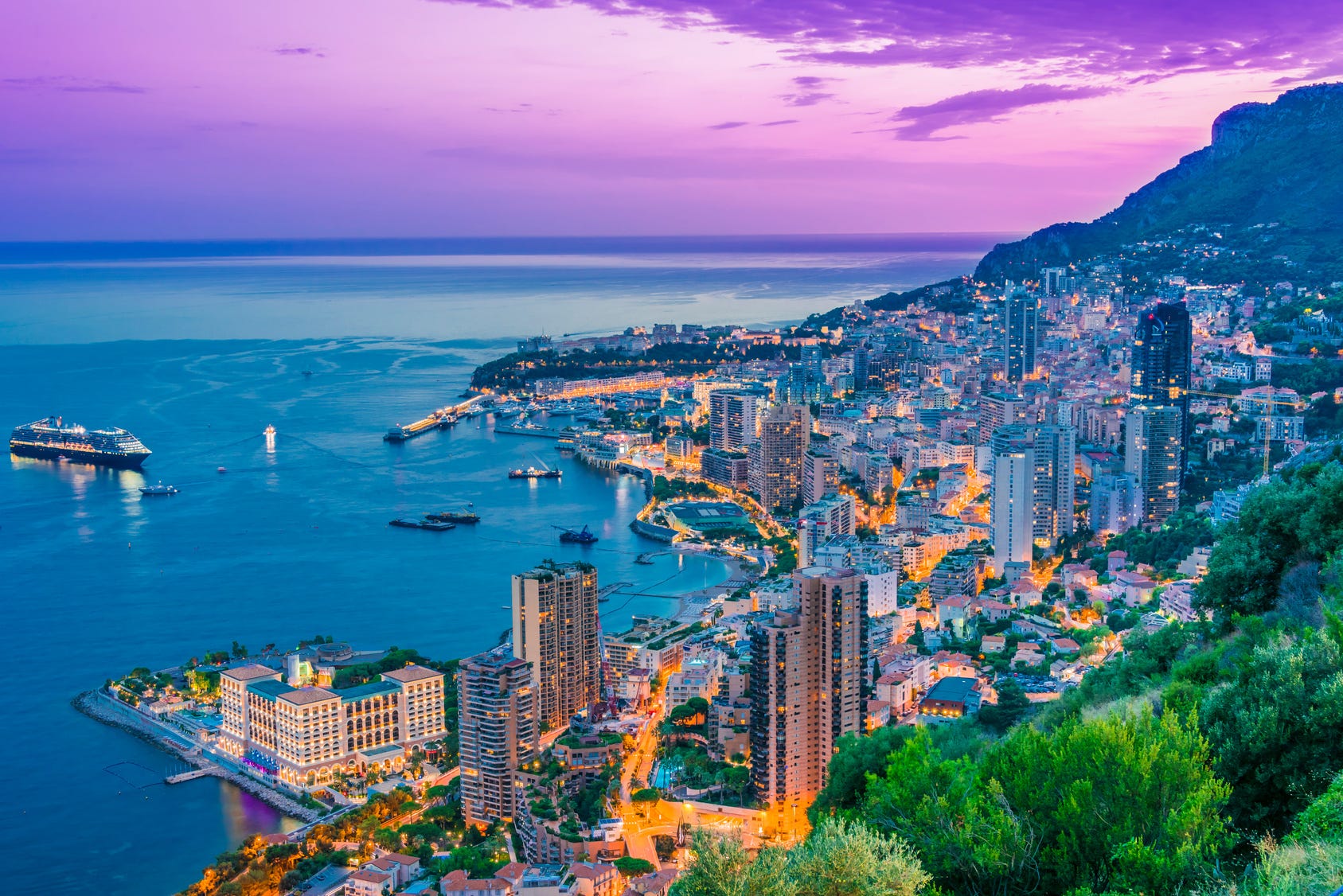
A small harbor, and a safe one
A morning walk along the harbor before the town is fully awake, the boats still asleep and the café on the corner setting out its chairs. A doctor, a market and a bank that knows your name, all a short walk or an elevator ride away. A window you can leave open at night. Italy down the coast for lunch, France up the hill for dinner, and grandkids who can land at Nice in the morning and be in the sea by the afternoon.
That's the wish people bring to Monaco. For most of them it isn't glamour for its own sake. It's a small, orderly, beautiful place where the streets feel safe, the sun is reliable and the paperwork, once done, stays done.
It's also a wish with a fear stitched into it. As one reader put it, "What if we're lonely and broke in the wrong country, missing the grandkids, and then it all goes back to normal here?" Monaco owes that fear an honest answer, because the costs are real and one headline promise doesn't reach Americans. Monaco has no personal income tax for most residents. The United States taxes its citizens wherever they live. For an American household, Monaco's zero is mostly someone else's zero.
So this report is written the way I'd want it if this were my household: the life, the costs, what Monaco gives an American and what it doesn't, and the order that avoids the expensive surprises. Done in the right order, Monaco can be a lovely second base, close enough to everything that loneliness has fewer places to hide. Done in the wrong order, it's the priciest way on the Riviera to learn that the IRS still has your address.
The life
Where Americans actually land. Monaco covers about two square kilometers, so "where" is a question of neighborhood, not region. Monte-Carlo is the center of things, and the busiest. Larvotto sits on the beach and carries the highest prices. Fontvieille is quieter and popular with families and with people who keep a boat. La Condamine wraps around the port. Up the hill, Les Moneghetti and the Jardin Exotique are calmer and a little less expensive.
A good week. Picture a couple in their late sixties in a two-bedroom apartment in Fontvieille. He walks the harbor every morning and knows the names of half the boats. She has French class on Tuesdays and a swim most afternoons. Thursday they take the train along the coast into Italy for lunch and a market. Friday is dinner with a British couple and a widower from Sweden they met at one of the government's information meetings for new residents. At Easter the grandkids come, and the apartment is too small and nobody minds, because the beach is a short walk away.
What it costs. The apartment is the budget; almost everything else is ordinary Riviera money. The official statistics office put the average price of a home at €57,569 per square meter in 2025, and rents for even a small studio start at roughly €3,000 to €4,000 a month. A lease has to be registered with the tax office, at a duty of 1% of the year's rent and charges.
Health care. Care is excellent and close: the Princess Grace Hospital Centre at home, the larger hospitals of Nice a short drive away. What's different is who pays. Monaco's public health funds are built around work in Monaco, so a retiree who moves without working needs full private health insurance from day one. There is a backstop: since a July 2024 law, a foreign resident of at least five years who can't obtain private cover can buy state subsidiary cover, at €700 a month per person. It's a safety net, not a plan; the plan is a private policy bought before you land.
People. Monaco had 38,857 residents of 144 nationalities in 2025. Monegasques are the largest group at 24%, followed by the French, the Italians and the British. Nearly one in five residents is between 65 and 79, so you won't be the only one with grandkids. Loneliness is a real risk anywhere new, and Monaco answers it better than most places, because everyone lives within a few streets of everyone else. The households that settle best learn enough French to be easy in the shops, join something (a club, a choir, a parish, a newcomers' meeting) and accept that friendships here are international before they are local.
The verdict
Where Monaco stands: a safe, free and very expensive principality that works well for a wealthy household that wants a small, easy life on the Riviera, and that saves an American far less tax than its reputation suggests. Current as of November 13, 2026.
What works. The daily machinery. The residence system is clear and unchanged, and care is close and good. Monaco scores 82 of 100 with Freedom House, rated Free, one point above the United States, and ranks 13th in the world for climate readiness, ahead of the US. At the end of October 2026 the FATF, the global money-laundering watchdog, took Monaco off the "gray list" it joined in June 2024, though the EU still lists it.
What doesn't. The cost, first: Monaco has some of the most expensive homes on earth. The tax, second: for an American the saving is mostly state tax, because the federal bill follows you. The bank is the real gatekeeper, and private health insurance is not optional. A Monaco passport is effectively out of reach, since it requires giving up every other nationality.
On rights, Monaco is a free country with a traditional streak, and the streak is old, not new. Abortion is legal only on narrow grounds, and in November 2025 Prince Albert II ruled out a bill to legalize it. Same-sex couples can sign a civil solidarity contract but cannot marry. None of this is a slide: these are long-standing features of a stable Catholic monarchy, and the government said in June 2026 that it is drafting a law to recognize same-sex unions.
Monaco fits the liquid, well-off retired or semi-retired household that values safety, walkability and proximity to France and Italy over space, especially one leaving a high-tax state or wanting a small European base beside a larger home elsewhere.
Monaco fits poorly a household hoping to cut its federal tax on pensions and investments, one that needs public health care or a lot of space for the money, one that wants a second citizenship someday, and couples for whom same-sex marriage or easy access to reproductive care is non-negotiable.
The bottom line: Monaco is a sound second base for the household it fits, as long as the bank, the home, the health cover and the US tax picture are settled before the boxes are packed.