


A second life, one flight from home
A house with a courtyard and a lemon tree. Breakfast outside in January. A town where the market, the café and the doctor are all a short walk away, and a Spanish teacher twice a week who laughs, kindly, at your verbs. And the best part: the kids and the grandkids are one flight away, and so is home.
That's the wish people bring to Mexico. Not an escape. A second life close enough to the first that nobody has to choose between them.
Being close answers one of the biggest fears. As one reader put it, "What if we're lonely and broke in the wrong country, missing the grandkids, and then it all goes back to normal here?" Mexico takes the grandkids part off the table. A long weekend is enough for a visit, in either direction. The rest of that fear is planning.
I've written this report the way I'd work it if it were my household: what I'd check first, in what order, and where I'd slow down. Mexico is one of the easiest countries in the world for an American to start a second life in. It is also one of the most uneven. It works beautifully in some places and poorly in others, its courts are weaker than ours, and the money you need to show for residence depends on which consulate you walk into. Every one of those can be planned around.
The life
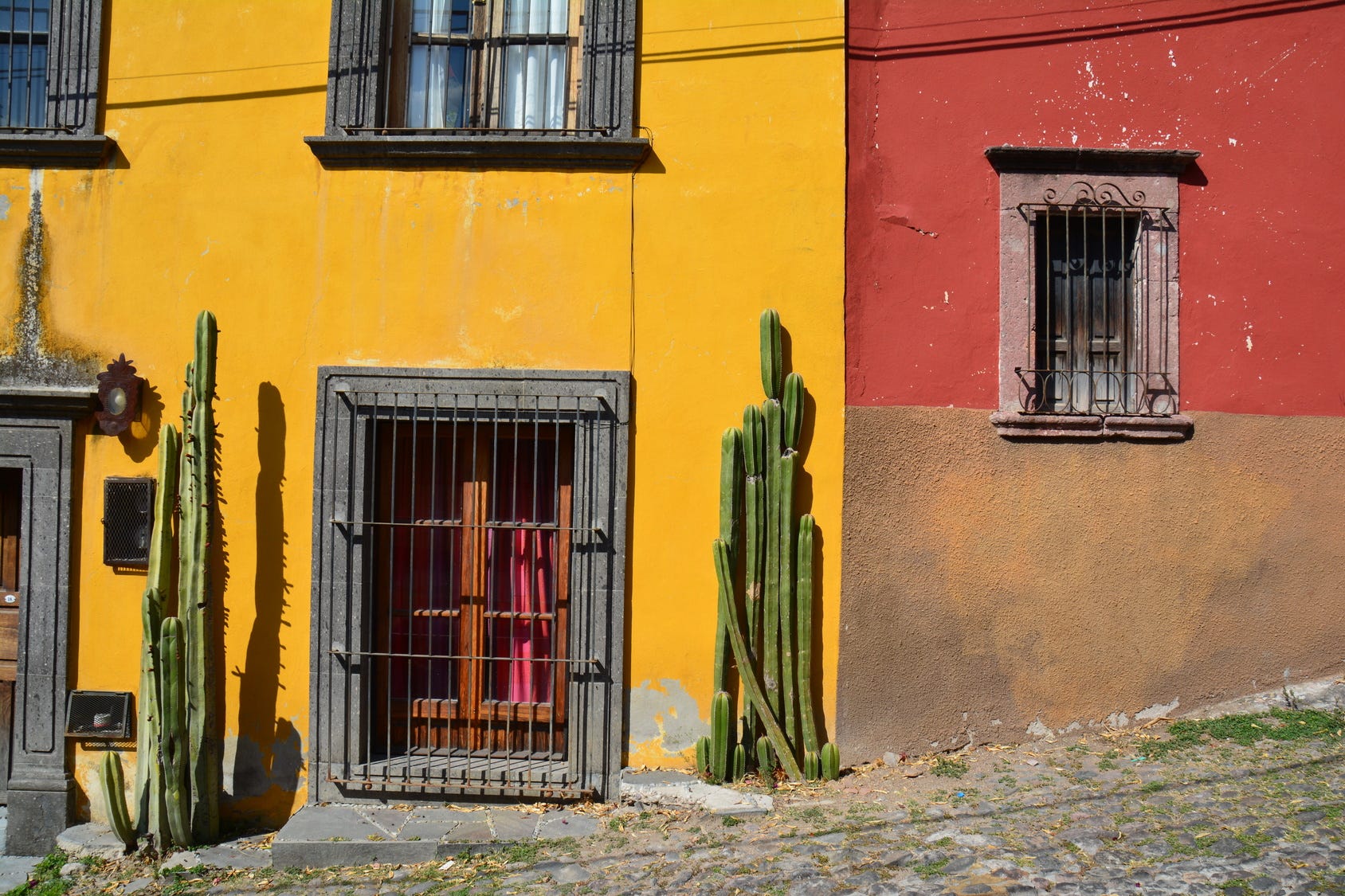
Where Americans settle. Most land in one of five kinds of place. The colonial highlands, San Miguel de Allende and Querétaro, for the cobblestones, the art and the cool evenings. Lake Chapala and Ajijic, near Guadalajara, for a mild climate and a long-established American community. Mérida and the Yucatán, for a calm, gracious city with the coast an hour away. Mexico City, for people who want a real capital, with its museums, its food and its best hospitals. And the coasts, Puerto Vallarta, La Paz and the Baja towns, for people who want the ocean outside the window.
Where you land matters more in Mexico than in most countries. San Miguel sits in Guanajuato and Lake Chapala in Jalisco, both states the State Department rates "reconsider travel"; that rating covers the whole state, and both towns have long, settled American communities. The advisory itself puts no restrictions on Guadalajara, Chapala or Ajijic, and in Guanajuato its restrictions name Highway 45D and the cities of Celaya, Salamanca and Irapuato. Picking the state, and then the town within it, comes before picking the house.
A good week. Picture a couple in their late sixties in a rented house in the old center of Mérida. He walks to the market most mornings and has strong opinions about which stall has the best limes. She volunteers at a library two afternoons a week and is, slowly, becoming the person on the street who knows everyone. Friday they drive to the coast for fish tacos and the sunset. Their daughter flies down twice a year with the grandkids, and at Thanksgiving they fly up. Nothing about the week is a sacrifice, and nothing about it is far from home.
What it costs. Daily life costs well below what most Americans pay: rent, help around the house, restaurants, a doctor's visit. The costs that surprise people are the fixed ones: health insurance that climbs with age, a Mexican accountant once you're tax resident, a notary and a lawyer for any property, and the flights home that make the whole plan work.
Health care. Private hospitals in Mexico City, Guadalajara, Monterrey, Mérida and the larger expat towns are good, and many of their doctors speak English. Most American households carry private insurance and pay out of pocket for routine care, which is often cheaper than a US co-pay. Families living in Mexico, foreign residents with a residence card included, can also buy into the national social security health system, IMSS, for an annual fee set by age; for 2026 it is 20,600 pesos for ages 60 to 69, about $1,100. Anyone with a serious existing condition, such as cancer or a chronic degenerative disease, can't enroll, and other conditions carry waiting periods, so it's a supplement, not a plan.
People. Mexicans are warm, polite and family-centered, and they notice when you try. The households that are happiest learned enough Spanish to talk to the neighbors, joined something (a church, a volunteer group, a walking club), and kept one foot in the American community without living only inside it. You can stay entirely American and still belong.
The verdict
Where Mexico stands: a warm, easy country to live in and steady for foreign residents, with weak courts and safety that varies sharply by state. It works well for the household that chooses its region with care and arranges its affairs so it rarely needs a court. Current as of November 6, 2026.
What works. The ways in are clear. A retiree with enough pension income can go straight to permanent residence. Mexico has no wealth tax and no inheritance tax, and the US treaty lets only the United States tax your Social Security. Same-sex couples can marry in every state. Daily life is warm, affordable and close to family.
What doesn't. The rule of law, first. Mexico ranks 125th of 143 countries on the World Justice Project index, behind Colombia (96th) and Brazil (76th), with the United States 30th. It scores 27 of 100 on corruption; the United States scores 64. After the 2025 popular election of 881 judges and magistrates, including the whole Supreme Court, Freedom House cut its score for judicial independence to 1 of 4. The new courts are largely untested; lawyers who work there expect slower dockets and less consistent rulings while new judges settle in. So the plan is built to need a court as little as possible.
Crime is real and very unevenly spread. The State Department's current advisory rates six states "do not travel" and puts Yucatán and Campeche at its lowest level, normal precautions. On the Global Peace Index Mexico ranks 139th of 163, next to Colombia at 141st; the United States ranks 134th. The risk sits in particular states and particular trades, not across the country.
On freedom, read Mexico against its region. Freedom House scores it 58 of 100, Partly Free, down a point from last year; Colombia scores 69, Brazil 73 and the United States 81. Mexico remains one of the world's most dangerous countries for journalists. That is a country with long-standing weak spots, sliding slowly, not one turning on its foreign residents.
Mexico fits the retired or semi-retired household on US pension and investment income that wants a warm, affordable life near family, part-year households keeping a US base, and couples who'll learn some Spanish and choose a calm state.
Mexico fits poorly anyone who needs to earn locally on arrival, anyone whose plan depends on enforcing a contract or a title in court, households with serious health conditions that insurers would exclude, and anyone for whom reproductive access can't vary by state.
The bottom line: Mexico is a sound second base, one flight from home, for the household that picks its state first and sets up its property and money so it rarely needs a court.