


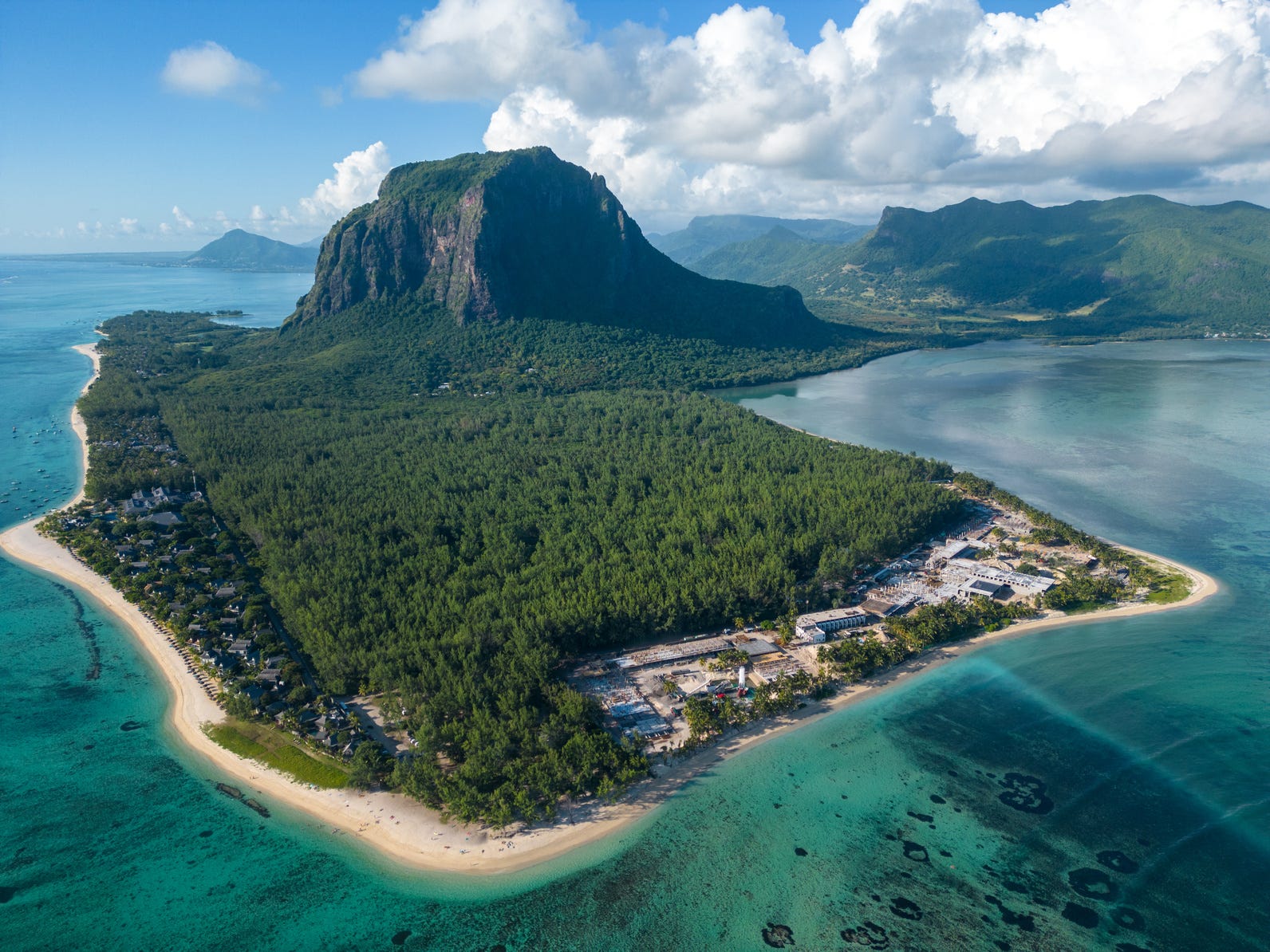
The sea at the end of the road
A house on the west coast where the late light turns the mountain gold. Coffee on the terrace before the heat. A swim before lunch in a lagoon as warm as a bath. A market where you buy lychees by the bag at Christmas, a doctor who speaks English and French, and a neighbor who already knows which road floods when the cyclone warnings go up.
That's the wish people bring to Mauritius. Warmth, safety and calm, on a small island democracy where English works, the taxes are low and the government actually wants retirees to come.
The wish holds up better than most. Mauritius is free and peaceful by any global measure. It scores 87 of 100 with Freedom House, six points above the United States, and ranks 18th of 163 countries for peacefulness, where the US ranks 134th. It also has one of the clearest retirement permits anywhere.
What it doesn't have is a tax treaty with the United States, and that one fact shapes most of the money decisions below. If this were my household, the beach is not what I'd check first. I'd check three things: how the money moves from the US to the island, what Mauritius taxes when it lands, and who inherits the house.
If you've looked at Mauritius, you've probably read the brochures and the forum threads already. As one reader put it, "We've read everything and still don't know what to actually do." This report is the what-to-do: the routes, the money, the order and the mistakes, in the sequence that keeps a good plan from turning into an expensive one.
The life
Where Americans actually land. Most foreign residents settle in one of three places. The north around Grand Baie, with the most restaurants, shops and fellow newcomers. The west coast around Tamarin and Black River, drier and sunnier, with the mountains at your back. And the central plateau around Moka, cooler and greener, closer to the capital, the offices and the schools.
A good week. Picture a retired couple in a rented villa on the west coast. He swims every morning before the heat; she has joined a walking group that climbs Le Morne on Saturdays. Once a week they drive up to the plateau for the doctor, a bookshop and lunch with friends from the walking group. Their daughter's family comes for three weeks at Christmas, which is high summer here, and the grandkids learn to snorkel. Nobody at dinner asks about American politics more than once.
The distance. Getting there from the US takes most of a day and at least one connection. That's the real cost of the island: not the rent, the distance. The households that are happiest plan family visits as long stays, not long weekends, and build a reason for the kids to come: the room, the boat trip, the Christmas that's become a tradition.
What it costs. Local food, help at home and eating out are reasonable by American standards; anything imported costs more. Prices are climbing: the central bank expects inflation around 5.5% this year. The rupee also fell about 5% against the dollar in the first half of the year, which softens the blow for anyone spending dollars. The cost that surprises people is property: a home that brings residence starts at USD 375,000, with 5% registration duty on top.
Health care. Public hospitals are free for Mauritian citizens; on a residence permit you can be billed, so most foreign residents rely on private clinics, where a doctor's visit usually costs Rs 1,000 to 3,000. Most want payment up front. Medicare doesn't cover you there. Carry an international health policy with evacuation cover, and treat it as part of the rent.
People. Mauritius is a society of many faiths and origins that has learned to share a small island. English is the language of government, French the language of the newspapers and much of business, and Kreol the language of the street. The newcomers who settle well pick up some French or Kreol, join something (a dive club, a church or temple, a charity) and stop expecting anything official to move at mainland speed. You can stay entirely American and still belong.
The verdict
Where Mauritius stands: a stable, free and peaceful island democracy that works well for a retired household with dependable income, with prices up and the rupee down this year. Current as of November 13, 2026.
What works. Mauritius is free and getting freer, and one of the most peaceful countries in the world. Power changed hands cleanly in November 2024, when the opposition won 60 of 62 seats and the outgoing prime minister conceded the next day. The retirement permit is clear and leads to permanent residence. There are no exchange controls, no capital gains tax, no inheritance tax and no wealth tax, and foreign income is taxed only when you bring it onto the island.
What doesn't. No US income tax treaty, Social Security agreement or estate tax treaty, so the two tax systems don't coordinate on their own. The rules for foreigners have tightened: the transfer required of retirees rose in 2025, and since August 2026 a 10% levy applies when a home on State land or the coastal strip is sold to a foreigner. And the economy is under cyclical strain: inflation around 5.5%, a weaker rupee, and public debt near 88% of GDP, with Moody's keeping it investment grade on a negative outlook. It squeezes the government's budget, which is why fees on foreigners are rising; it doesn't threaten a resident's safety or rights.
On civil liberties the direction is good: same-sex relations were decriminalized by a Supreme Court ruling in 2023, and marital rape became a crime in July 2026. But Mauritius doesn't recognize same-sex marriages or unions, and abortion is allowed only on health grounds.
Who it fits. A retired couple, 50 or older, with steady pension and investment income, who want warmth, safety and English and are happy to rent before they buy. A remote-working household that wants a Premium Visa year before deciding anything bigger.
Who it doesn't. Families who need the grandkids within a short flight. Same-sex couples, whose marriage the law won't recognize. Anyone for whom access to abortion is non-negotiable. And anyone hoping a village house will bring residence with it.
The bottom line: Mauritius is a calm, sound second base for the household it fits, as long as the money is set up before the move.