


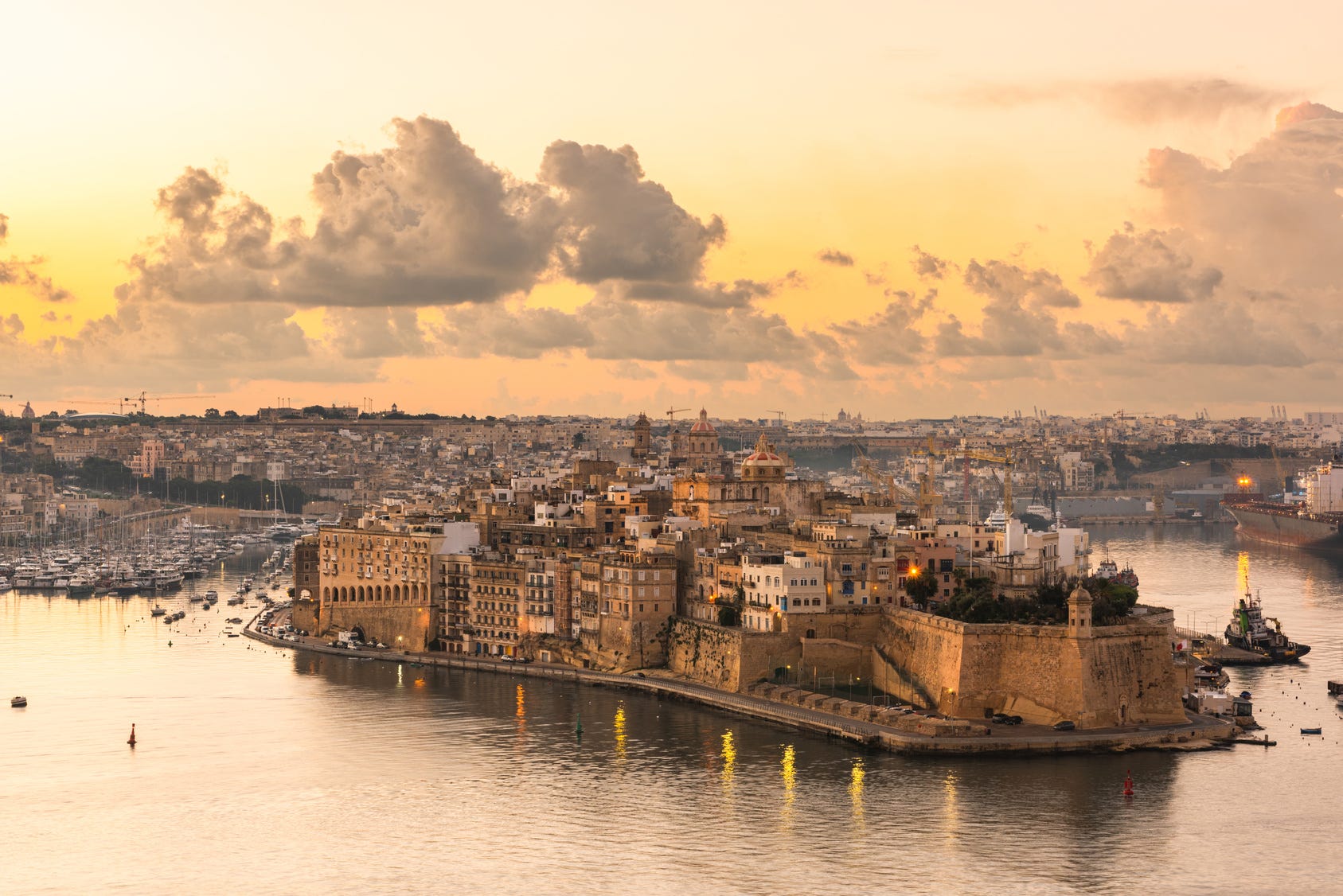
The Mediterranean, without a phrasebook
A stone town house with a roof terrace and the sea at the end of the street. Coffee in a square older than anything back home. A doctor, a bank manager and a landlord who all work in English, so the paperwork of a new life doesn't need a translator. The euro in your account, the rest of Europe a short flight away, and winter afternoons warm enough to sit outside.
That's the wish people bring to Malta: the Mediterranean without the language barrier, inside the European Union, on an island small enough to learn in a season.
Malta also comes with a reputation. For years it has sold residence, and until 2025 it sold citizenship too, so most people who look at it have already read a great deal. They've seen the brochure for one program and the warning about another, and the acronyms pile up. As one reader put it, "We've read everything and still don't know what to actually do."
This report is built to fix that. Malta has more doors than most countries its size, and on January 1, 2027, several of them change. Read slowly, though, and the whole choice comes down to one question: do you need permanence, or a low flat tax? Some households want both, and Malta's own lawyers disagree on whether you can hold both. Know which one you need most, and almost everything else falls into order.
If this were my household, that's the question I'd answer first, before anyone showed me a single apartment.
The life
Where Americans actually land. Most foreign residents settle in one of three kinds of place. Sliema and St Julian's, on the harbor coast, for a walkable seafront promenade, restaurants and the busiest English-speaking social life on the islands. Valletta and the old harbor towns around it for honey-colored stone, history at every corner and quiet evenings once the day visitors leave. And the villages of the south and the sister island of Gozo for space, slower days and lower rents, at the price of a longer drive or a ferry ride.
A good week. Picture a couple in their late sixties in a rented apartment with a terrace, ten minutes' walk from the water. He walks the promenade most mornings and has opinions about which café does the best pastizzi. She joined a choir in the first autumn and now has more invitations than she can accept. Saturday is the ferry to Gozo, a long lunch and the ferry back. In summer, their village throws its festa, with brass bands, fireworks and the whole parish in the street, and they're asked to help. At Christmas the grandkids come, because nobody in the family objects to a December that lets them eat outdoors.
What it costs. Malta isn't cheap where Americans most like to live. Seafront rents in Sliema are city rents, and the island's fast growth has pushed housing up across the board. Inland villages and Gozo cost much less. Day-to-day costs are moderate, and household energy bills are held steady by government subsidy, which the 2027 budget keeps in place. The costs that surprise people are the residence ones: program fees, a licensed agent, private health insurance and, on the flat-tax routes, a minimum tax you pay every year whatever your income turns out to be.
Health care. Plan on private insurance as your health care. Free public care in Malta goes with Maltese social security cover, and every route in this report requires private cover for the same risks the public system covers for Maltese nationals. That policy is what you'll actually use. What I'd check first, if this were my household, is how the policy handles care elsewhere in Europe and how it treats a condition you already have.
People. Language isn't the barrier here; size is. Malta is a small country of close families, full parish calendars and politics people take personally. Newcomers do well when they join something: a band club, a choir, a sailing club, a volunteer group. Everybody knows everybody, which can feel like a lot in the first year and like belonging by the third. Integration, not assimilation, is the test: you can stay entirely American and still be known by name in the village shop.
The verdict
Where Malta stands: a stable, free, English-speaking democracy inside the EU, with a weaker record on corruption than its southern European neighbors and flat-tax terms that get far more expensive on January 1, 2027. Current as of November 13, 2026.
What works. The politics are steady: voters gave the governing Labour Party a fourth straight term on May 30, 2026, on high turnout. Malta is free, scoring above the United States with Freedom House. On rule of law it ranks level with the US. It sits near the top of Europe on LGBTQ+ law, with full marriage equality. The permanent-residence program gives a household permanence from the first year, with no minimum stay. And the economy is among Europe's fastest-growing.
What doesn't. Corruption is the weak spot. Malta scores 49 of 100 on Transparency International's index, below Italy, Spain and Portugal, and well below the US at 64. Press freedom ranks mid-table, a few places behind America's. Abortion is allowed only to save a woman's life. Fast growth has brought traffic, housing pressure and strain on health services and the environment. And from January 1, 2027, the flat-tax routes cost far more: a minimum tax of €35,000 a year for most households and €15,000 for pensioners, and a €700,000 home to qualify by purchase.
The Middle East conflict is pushing up fuel costs for an island that imports its energy: near-term strain the government is subsidizing, not a structural problem.
Malta fits a retired couple who want a European base in English with permanence built in, for themselves, dependent parents and grown children who still rely on them. It fits wealthy households with large foreign incomes, and part-year households who want a Schengen home without moving their whole life.
Malta fits poorly the retiree on a modest pension hoping for a cheap, low-tax island; the new minimums price that plan out. It fits poorly anyone for whom easy access to reproductive care is non-negotiable, anyone who needs open space and quiet roads, and anyone who needs to work locally on arrival.
The bottom line: Malta is a sound second base for a household that can meet its thresholds, as long as you decide whether you need permanence or the flat tax before you choose a home.