


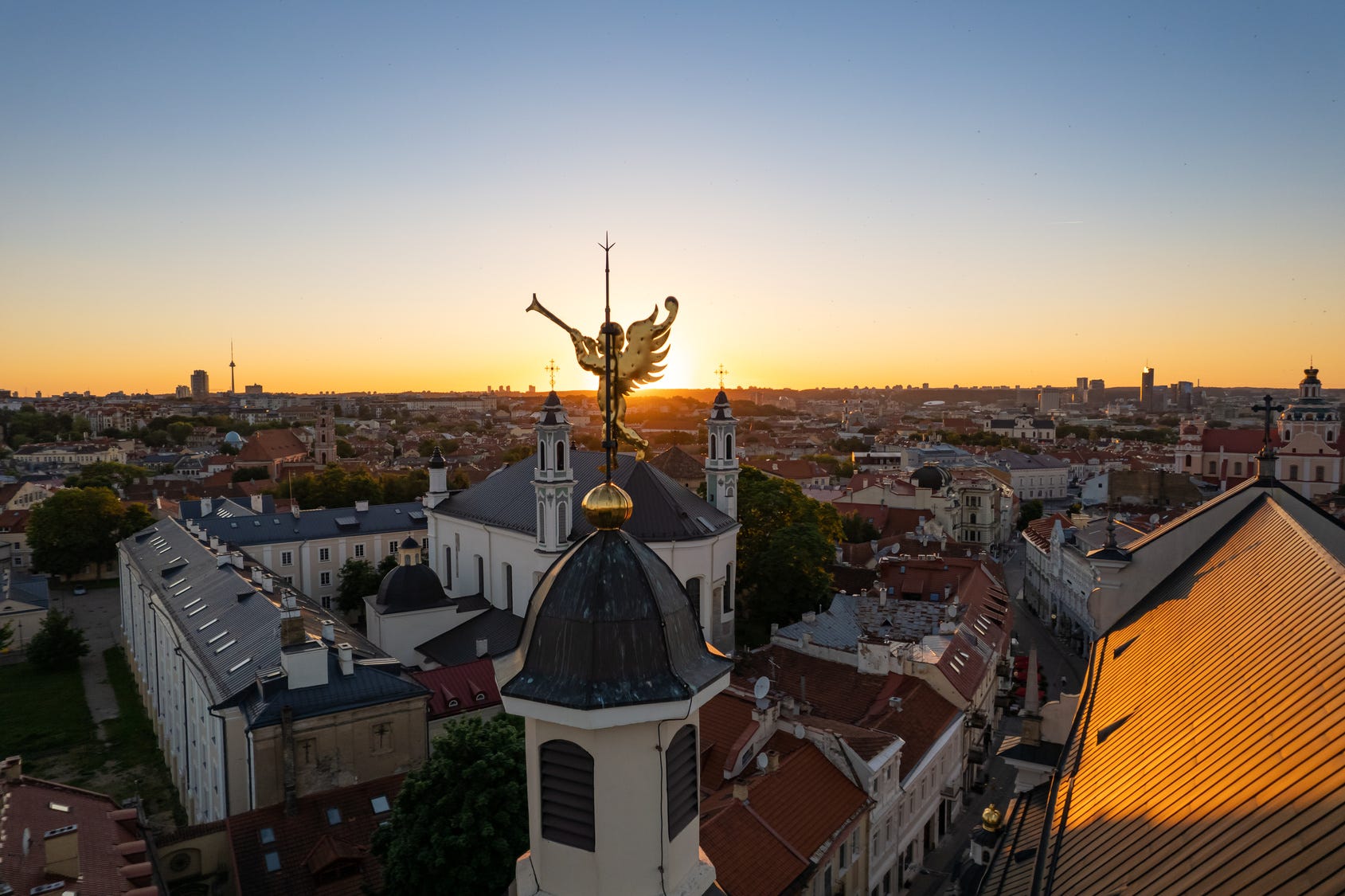
A calm corner of Europe, with roots in it
A flat in Vilnius with tall windows over a cobbled street, a short walk from dinner in the Old Town. A wooden summer house by a lake, or near the dunes on the coast, for the June evenings when it barely gets dark. And, for a lot of American families, a church record or a grandmother's story that says this is where some of us came from.
That's the wish people bring to Lithuania: a calm, modern European base that costs less than the western half of the continent, keeps home a day's travel away, and sometimes reconnects a family with a place it left generations ago.
The fear arrives right behind the wish, and one reader put it better than I can: "What if we're lonely and broke in the wrong country, missing the grandkids, and then it all goes back to normal here?" In Lithuania that fear has three answers. Loneliness is real for anyone who arrives without a community or a word of the language, which is one reason the doors here open mostly through family. The money risk is about doing the tax steps in order, not the cost of a week. And "it all goes back to normal" is the best argument for a second base rather than a one-way move: keep the American life, and add this one beside it.
What I'd check first if this were my household is the door itself. Lithuania has no residence permit built for retirees or for people living on their investments. It is generous to people with Lithuanian roots and to the spouses and parents of Lithuanian citizens, and much less open to everyone else. Almost everything that follows depends on which of those you are, and all of it can be planned.
The life
Where Americans actually land. Vilnius, the capital, for a real city: an airport, the best hospitals and the most English. Kaunas, the second city, for a slower, cheaper version of the same. And the coast and the lake country, from Klaipėda and the beach towns to the lakes east of Vilnius, for people who want the summer house and are happy to spend the winter in town.
A good week. Picture a couple in their sixties with a two-bedroom flat in Vilnius and a rented cottage by a lake for July. Mornings, she takes a Lithuanian lesson she complains about and secretly enjoys. He walks to the market for bread, smoked fish and whatever berries are in season. Twice a week they have lunch with friends, half of them Lithuanian, half from somewhere else. The grandkids come for two weeks in summer, when it stays light until close to eleven. In winter the couple goes home to the States for the holidays and doesn't feel guilty about it.
What it costs. Day to day, Lithuania is noticeably cheaper than Western Europe: rent, restaurants, a cleaner, a taxi across town. The squeeze in 2026 is prices rising fast, and the costs that surprise people are not daily ones. They are a private health policy while you're on a temporary permit, tax filings in two countries, and a good accountant who knows both.
Health care. Lithuania runs a public, insurance-based system, and the hospitals in Vilnius and Kaunas are good. A foreigner on a temporary permit is covered only through work, so a non-working American on a temporary permit buys private cover and pays as they go. Once you hold permanent residence or citizenship, you join the public system and, if you aren't working, pay a monthly contribution of about €80 in 2026.
People. Lithuanians tend to be reserved with strangers and loyal once you're in. English goes a long way in Vilnius and among younger people, much less in villages. The language is old, beautiful and hard; learning enough for the market and the neighbors changes how people treat you more than anything else you can do. The households that are happiest here joined something: a choir, a parish, a hiking club, the local Lithuanian community. And they made peace with the winter, which is long and dark, by planning to be somewhere else for part of it.
The verdict
Where Lithuania stands: a free, stable EU and NATO democracy that works well for the household with a Lithuanian tie, and offers little to the household without one. Current as of November 13, 2026.
What works. For a family with roots, one of the most generous doors in Europe: descendants of people who held Lithuanian citizenship before June 1940 can restore it, and keep their US passport if that ancestor left before March 1990 and not for the Soviet Union. The daily machinery is strong: 16th in the world on rule of law, 15th on press freedom, and 90 of 100 with Freedom House, nine points above the United States. US Social Security is taxed only by the US, and close family inherit free of Lithuanian tax.
What doesn't. Without a family tie there is no comfortable way in: no retiree visa, no passive investor visa, and property earns nothing. A non-working American on a temporary permit buys private health cover. Inflation reached 6.7% in October: a squeeze for 2026 and 2027, not a structural problem.
Security, in proportion. Lithuania is inside NATO and the EU and ranks 24th of 163 countries for peacefulness, where the US ranks 134th. It borders Belarus and Russia's Kaliningrad region, and its allies are adding troops, not leaving: Germany inaugurated a permanent armored brigade here in May 2025, planned at about 5,000 troops by the end of 2027. What residents felt this past year was disruption, not danger. Smugglers' balloons from Belarus closed Vilnius airport repeatedly in late 2025, and the border crossings shut for three weeks. Annoying, expensive and handled.
Civil liberties. When the coalition moved on the public broadcaster, tens of thousands protested and parliament backed down in June 2026. Abortion is available on request to 12 weeks. Same-sex couples have no partnership law yet, though couples can now seek recognition through the courts.
Who it fits: households with a Lithuanian parent, grandparent or great-grandparent; couples where one spouse is or can become a citizen; part-year households who want a calm, affordable European base with family history in it.
Who it doesn't: a household with no tie that wants to live on a pension or investments, anyone who needs winter sun, and same-sex couples who need their partnership recognized by statute today.
The bottom line: for the household with roots, a sound and often moving second base; for the household without them, a narrow door.