


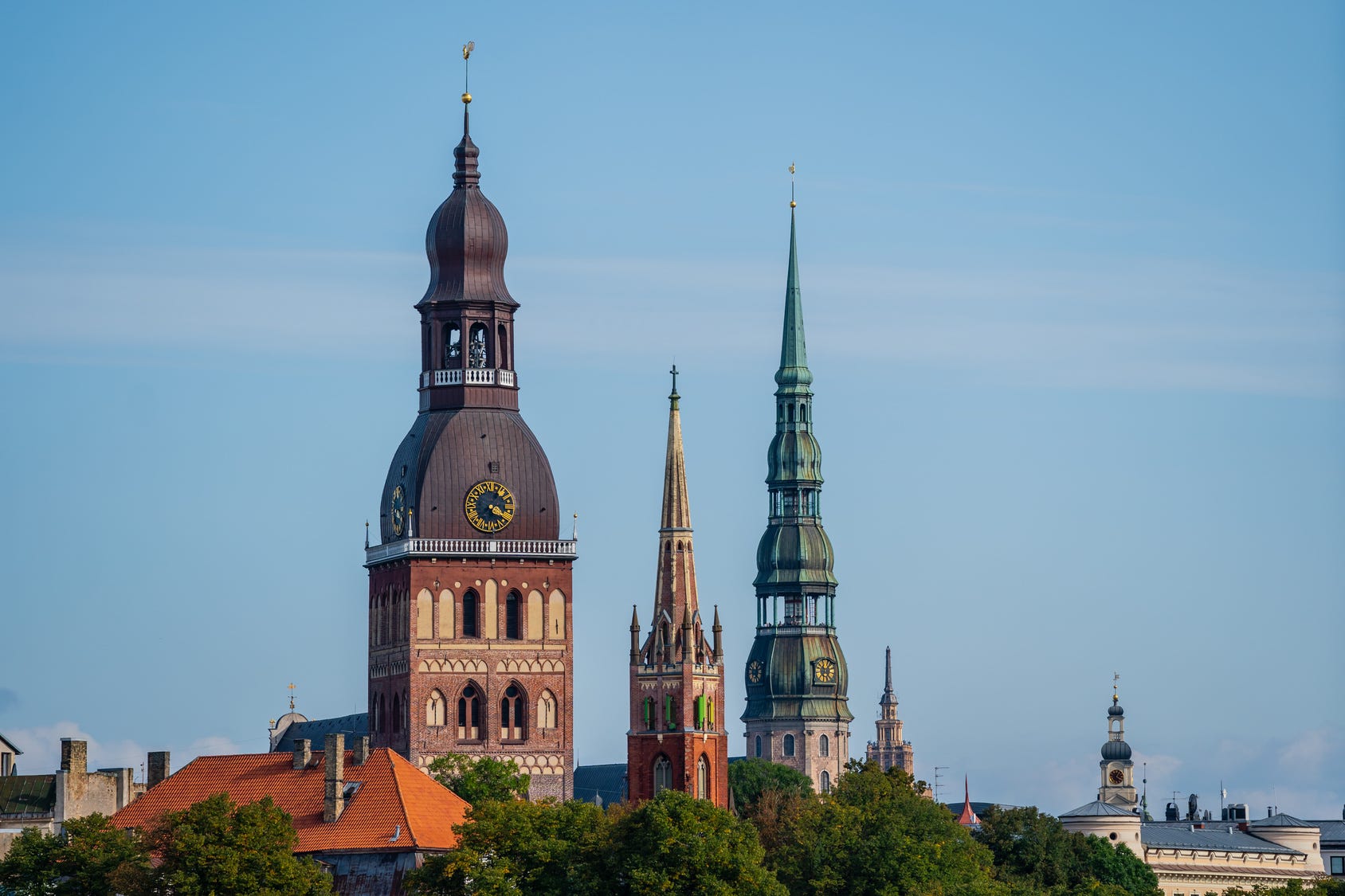
A real capital, at a pace you can keep
An apartment in a building with stone faces carved over the door, on a street where the trams still run. Coffee in a courtyard in July, when the sun barely sets. A concert at the opera on a Tuesday, just because you can. A train to the beach on Saturday, a walk in the pine forest on Sunday, and a city small enough that by spring the baker knows your order.
That's the wish people bring to Latvia. Not escape: a European capital with culture at the door and nature at the edge of town, at a cost that leaves room in the budget for the grandkids' flights. Some come with a grandmother's stories of Riga before the war. Some come because a friend went and never stopped talking about it.
Latvia changed its rules this year, and much of what's been written about moving there is now out of date. One reader put it plainly: "We've read everything and still don't know what to actually do." With Latvia, that's a fair place to be, and this report is built to end it.
What I'd check first if this were my household is simple: which door is actually open to us. Latvia closed its best-known door for foreign buyers in September 2026. It kept a quieter one for retirees, and it keeps a door that has always been open to the families of Latvians who left. If one of those fits your household, Latvia is one of the safest and freest places in Europe to build a second base, and the life it offers is well worth the paperwork.
The life
Where Americans actually land. Most settle in or near Riga, because that's where the hospitals, the airport and the English speakers are. Inside the city, the quiet streets of the Art Nouveau district suit people who want to walk everywhere; the old wooden houses across the river in Pārdaugava suit people who want a little more room. Jūrmala, the long beach town west of the city, draws people who want sand and pine trees and can live with a quiet winter. A smaller number choose a country town (Sigulda or Cēsis in the Gauja valley, Kuldīga in the west) and drive into Riga when they need to.
A good week. Picture a retired couple in a two-bedroom apartment near the park in central Riga. He takes a Latvian class twice a week and is slowly winning over the woman at the market stall who sells smoked fish. She has found a choir, which in Latvia is less a hobby than a national habit. Wednesday is the opera or a concert. Friday they take the train to Jūrmala and walk the beach whatever the weather. In June the whole country stops for Midsummer, and somebody's cousin always has a country house with a sauna and a table that doesn't end. In August the grandkids come, and the beach is warm enough.
What it costs. Day to day, Latvia costs noticeably less than Western Europe, and a pension that feels tight in a US city goes further here. The immigration office's own 2026 benchmark for the national average wage is about €1,815 a month, which tells you where local prices sit. The costs that catch people are winter heating in older buildings, private health care until you qualify for the public system, and the accountant who files for you in two countries.
Health care. Latvia's public system covers citizens and permanent residents. A foreigner on a temporary permit generally isn't covered and pays for care, so you'll carry private insurance and pay clinic prices, which are modest by American standards. Riga has good private clinics with English-speaking doctors. Bring a policy that works from your first day. Once you hold permanent residence, you move into the public system.
People. Latvians are reserved with strangers and generous with friends; the warmth arrives slowly and then stays. Latvian is the national language and the state takes it seriously. Russian is widely spoken in Riga, and English is common among younger people and in business, less so in a government office. The households that do best learn enough Latvian to be polite in a shop, join something, and treat the dark months as a season with its own pleasures: concerts, saunas, long dinners. The summers repay all of it.
The verdict
Where Latvia stands: a free, safe, well-run small democracy that works well for the household it lets in, and lets in fewer kinds of household than it did a year ago. Current as of November 13, 2026.
What works. Latvia scores 89 of 100 with Freedom House, eight points above the United States, and ranks 19th of 163 countries for peacefulness, where the US ranks 134th. It's in the EU and the euro area. A retiree from the United States can still get a residence permit on a modest pension. There's no wealth tax and no inheritance tax, and US Social Security is taxed only by the US.
What doesn't. On September 15, 2026, a new Immigration Law ended residence permits for buying property, the route most foreign buyers knew Latvia for. A household under retirement age, with no Latvian roots and no plan to work or run a business, now has no clean way in. Public health care waits until permanent residence. Language requirements arrive early and keep rising.
On security, in proportion. Latvia is a NATO member with a Canadian-led NATO brigade based on its soil and troops from more than a dozen allies, and it shares a border with Russia. The war next door has reached Latvia as stray drones and political strain: in May 2026 a row over drones that crossed into Latvian airspace brought down the government, and parliament replaced it within two weeks. Voters then returned the governing party with 35.3% on October 3, 2026. That's a democracy handling pressure through its institutions. The exposure is at the border; daily life in Riga is calm.
Who it fits. Retired couples 65 and over living on pensions and investments who want a real city at a gentle cost. Latvian-American families whose parents or grandparents left during the occupation, who can often register as citizens. Spouses of Latvians.
Who it doesn't. Households under 65 who don't want to work or run a company in Latvia. Anyone counting on buying property to get a permit. Part-year households hoping to reach permanent residence, because the clock needs you there most of the year. Couples for whom same-sex marriage, rather than a registered partnership, is non-negotiable.
The bottom line: Latvia is a sound, calm second base for the retiree or the Latvian-American family it fits, as long as you start from the door that's actually open.