


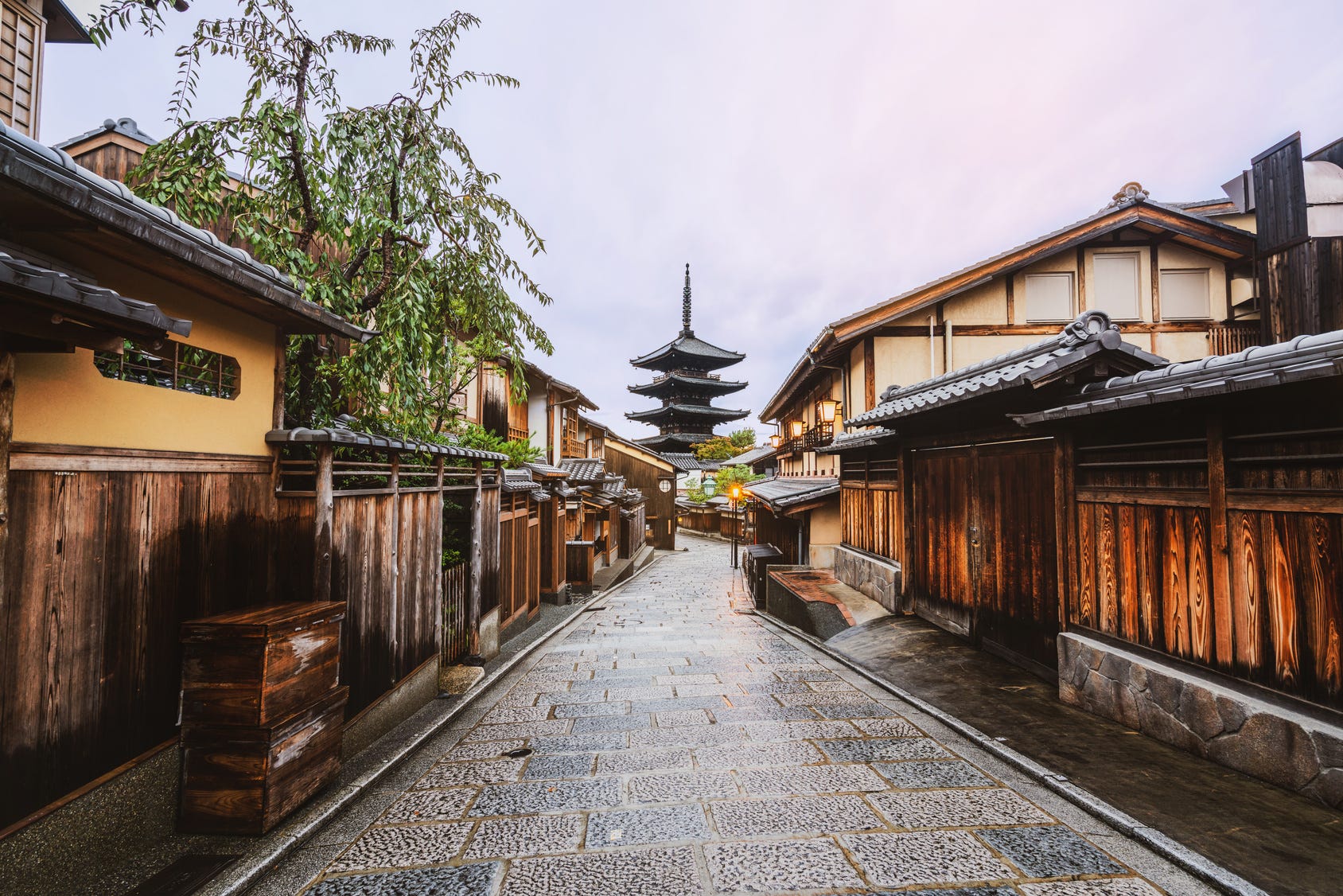
A calm life that runs on time
A train that leaves at 9:04 because the timetable says 9:04. A neighborhood where children walk themselves to school and a lost umbrella turns up at the station office. A bowl of soba at a counter where the cook has made the same dish for thirty years. Autumn leaves in Kyoto, powder snow in Hokkaido, a hot spring at the end of a mountain road. Days that are calm, orderly and beautiful in small ways.
That's the wish people bring to Japan. Not a gap year: a slower, safer, more graceful rhythm, with the grandkids able to fly in and everything working when they land.
What I'd check first, if this were my household, is the one thing travel writing skips: the door. Japan is one of the easiest countries on earth to love and one of the hardest to move to without a job. There's no retirement visa, and the route that once let Americans in by setting up a small company became six times more expensive in October 2025. The rules for permanent residence tighten again in April 2027.
None of that makes Japan the wrong answer. It means the right Japan plan looks different from the move most people picture. For most households it is long stays, done well and repeated, with a home base still in the US. For some it is a real business, run properly. For a few it is a family tie that opens a door the rest of us don't have.
The life Japan offers is real, and a household that plans for the rules Japan actually has can live a good part of every year inside it.
The life
Where Americans actually land. Most land in one of four kinds of place. Tokyo, for people who want what I'd call the world's most livable megacity: quiet residential streets ten minutes from anywhere, and many of the country's best hospitals. Kyoto, for people who want temples, gardens and a smaller scale. Osaka, Kobe and Fukuoka, for people who want a real city that is friendlier and cheaper than the capital. And the countryside, from the ski towns of Hokkaido to small towns by the sea, for people who want space and seasons and are willing to learn more Japanese to get by.
A good week. Here is a sketch, not a real case. Picture a couple in their sixties on a six-month stay in a rented apartment in a quiet Kyoto neighborhood. He might sign up for a Japanese class three mornings a week and slowly, cheerfully fail to master the polite forms. She might find a pottery studio that takes beginners. Most afternoons they would walk, because everything worth seeing is a walk or a short train ride away. In spring the grandkids could fly in for ten days and spend most of them in convenience stores, which are better than they have any right to be. In the fall the couple would fly home and start planning the next stay.
What it costs. Day-to-day life in Japan is reasonable for an American household, and outside central Tokyo it can be surprisingly modest: food, transit and everyday services are good value. The costs that surprise people are structural: furnished rentals for foreigners can carry a premium, and every route in (below) asks for proof of money before it asks for anything else.
Health care. Japan's public health insurance is universal for residents and very good. Once you are a resident, you join the National Health Insurance through your city, or your employer's plan if you work. Under 70 you pay 30% of each bill, and less after that for most people. The catch for the household this report is written for: the long-stay visitor status most of you will use is excluded from the national insurance by name. You buy private cover to get the status, and that private cover is your health care for the whole stay.
People. Japanese courtesy is real, and so is the distance that comes with it. Friendships take time and Japanese language. The households that do best take lessons from the first week, join something (a class, a walking club, a volunteer guide group at a local temple) and accept that they will always be guests, warmly treated. They also have company: more foreigners live in Japan now than ever before.
The verdict
Where Japan stands: one of the safest, freest and best-run countries in the world, easy to live in for long stretches and hard to move to for good without a job, a business or a family tie. Current as of November 13, 2026.
What works. Nearly everything a household depends on day to day. Japan is one of the most peaceful and freest countries in the world, on both counts well above the United States. Courts, civil service and trains run the way people elsewhere wish theirs did. Health care is universal and good. The government is about as stable as governments get: the governing party won a two-thirds majority in the lower house on February 8, 2026.
What doesn't. The doors. There is no retirement visa, the status for well-off visitors caps a stay at a year, and the company route now takes ¥30 million and a Japanese-speaking hire. From April 1, 2027, permanent residence will weigh your Japanese, your household income and your time abroad. The government that won that election is expected to pursue stricter rules for foreign residents, and Sanseito, a newer nationalist party, has gained ground.
Read that in proportion. The tightening is about who gets in and who stays, not how residents are treated once they're there, and the foreign population is at a record high. On personal law Japan trails its peers: there's no national recognition of same-sex couples, though five of six high court rulings have found the marriage ban unconstitutional and the Supreme Court has agreed to rule.
Japan fits the household that wants long, repeated stays rather than one big move: half a year in Japan, half at home. It fits entrepreneurs who will genuinely build and staff a Japanese business, and families with a Japanese spouse or Japanese ancestry.
Japan fits poorly anyone who wants to retire there permanently on savings alone, anyone unwilling to learn Japanese, and anyone who wants two passports: naturalizing means giving up American citizenship. Same-sex couples who need their marriage recognized should know it isn't, yet.
The bottom line: a superb place to spend part of every year, and a demanding place to move to completely. Plan for the version the rules allow.