


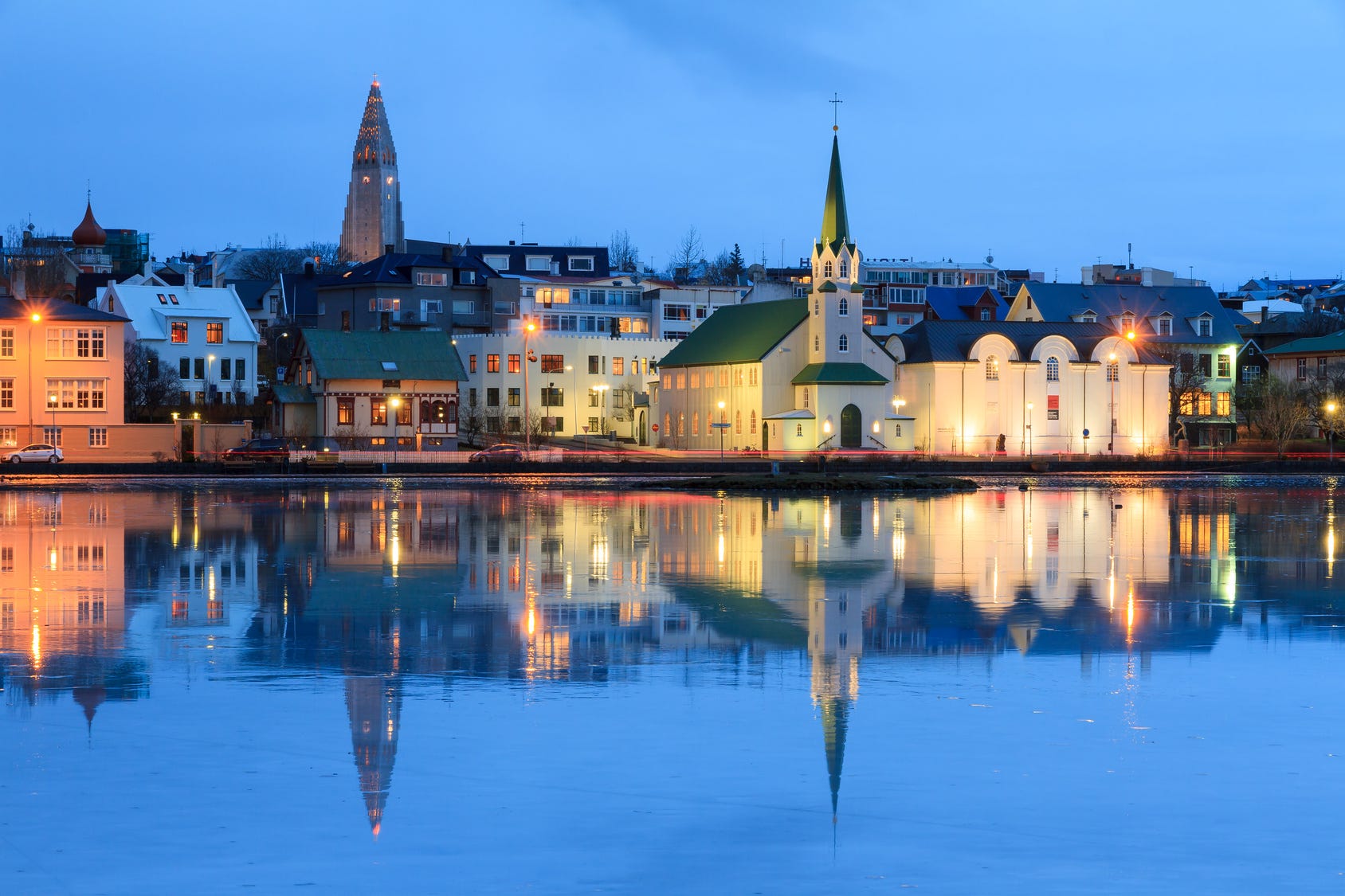
Room to breathe
Air so clean you notice it on the first morning. A flat in Reykjavík with a view of the bay, or a house outside Akureyri where the nearest neighbors are a field of horses. A walk to the heated pool most days, because that's where the town catches up on itself. Summer nights that never quite get dark, and winter afternoons that send you home to light candles and read.
That's the wish people bring to Iceland: space, safety and a country that simply works, with the people they love able to visit and the money still where it should be.
The wish holds up better than almost anywhere. Iceland ranks first in the world for peacefulness and scores 95 of 100 for political freedom, fourteen points above the United States. As one reader put it, "Leaving the US 3 months ago was among the best decisions I've ever made." For the households that can make Iceland home, it can be exactly that kind of decision.
The hard part is the door. Iceland has no retirement visa and no investor visa, and since May 2026 it has no long-stay visa for remote workers either. For an American who doesn't plan to take a job there, the ways in run almost entirely through family. If this were my household, that's what I'd check first: not which town, but which door, if any, is ours.
Even without one, a part-year life in Iceland, done in the right order, still gives you most of what you came for.
The life
Where Americans actually land. Most settle in and around Reykjavík, where the jobs, the hospital, the theaters and most of the country's people are. The towns around the capital, such as Hafnarfjörður and Kópavogur, give you a quieter street and a ten-minute drive into the city. A smaller group goes north to Akureyri, a real town on a long fjord, for people who want snow, mountains and fewer tourists. The countryside is beautiful and thinly served; it suits people who already know someone there.
A good week. Picture a couple in their late sixties whose daughter married an Icelander. They rent a flat ten minutes from her family. Most mornings start at the local pool, where the same group of retirees has been arguing about the weather in the hot tub for twenty years and has finally made room for two Americans. Twice a week they collect the grandkids from school. Tuesday night is Icelandic class, which they started because the residence rules ask for it and kept because the people in it became friends. On Saturday they drive the coast and stop for soup. In December the afternoons go dark by four, and they've discovered, to their own surprise, that they like it.
What it costs. For 2025, Eurostat put the prices of what Iceland's households consume about 84% above the EU average, the highest in Europe. Groceries, eating out and rent in the capital area are where it shows. To get a residence permit you must show income of at least ISK 259,951 a month for one person (about $2,100) or ISK 415,922 for a married couple (about $3,400). That's a legal floor, not a budget: a comfortable household spends well above it.
Health care. Iceland runs a universal public system, and it's good. A newcomer from outside Europe waits three months after registering an address before public cover starts, so the permit rules require private health insurance for those first months with at least ISK 2,000,000 of cover (about $16,000). After that you're in the public system on the same terms as Icelanders, with modest co-payments.
People. Icelanders are direct, practical and, in my reading, slow to invite you in and loyal once they have. English carries you through daily life in Reykjavík. Belonging takes Icelandic: permanent residence asks for 150 lessons of it, and citizenship asks for a test. The households that do best join something early: a choir, a walking group, the pool regulars, the grandkids' school events. In a country this small, the same faces turn up at the pool, the bakery and the concert hall within a month, and a hello in Icelandic, however clumsy, gets noticed. You can stay entirely American and still belong.
The verdict
Where Iceland stands: one of the safest, freest and best-run countries in the world, with a narrow door for an American who isn't moving for family or a job. Current as of November 13, 2026.
What works. Nearly everything a household relies on once it's there. Iceland is first in the world on the Global Peace Index, where the United States is 134th. It scores 95 of 100 with Freedom House and sits 10th in the world on Transparency International's corruption index. The family routes are clear, published and lead to permanent residence. A US tax treaty and a Social Security agreement are both in force. On August 29, 2026, voters declined to reopen talks on joining the EU, 52.8% to 47.2%, so Iceland's European ties stay exactly as they were.
What doesn't. The door, first. There is no visa for retirees or passive income, no investor route, and the remote-work visa was repealed in May 2026. Iceland is also expensive, and its income tax is high for residents. The economy is under near-term pressure: inflation has run at 5.9% since September and the central bank's rate sits at 8%, a squeeze for 2026 and 2027 rather than a structural problem. Volcanic activity on the Reykjanes peninsula is a local hazard for one area, not for the country.
On immigration, 2026 brought tighter rules on asylum and student permits, and a nationalist-leaning party polls in the teens. In proportion: none of it has touched the family routes an American household would use.
Iceland fits a household with an Icelandic spouse or partner; a parent aged 67 or older whose adult son or daughter lives there as a citizen or permanent resident; and a part-year household that wants long summers in Iceland and is content to rent.
Iceland fits poorly a retired couple with no family tie who want to live there full-time, a household for whom cost of living is a deciding factor, and anyone who wants to buy a home before living there.
The bottom line: with a family tie, Iceland is one of the finest second bases in the world. Without one, it's a superb place to spend part of the year and not a place to plan on living full-time.