


A world city, with the family close
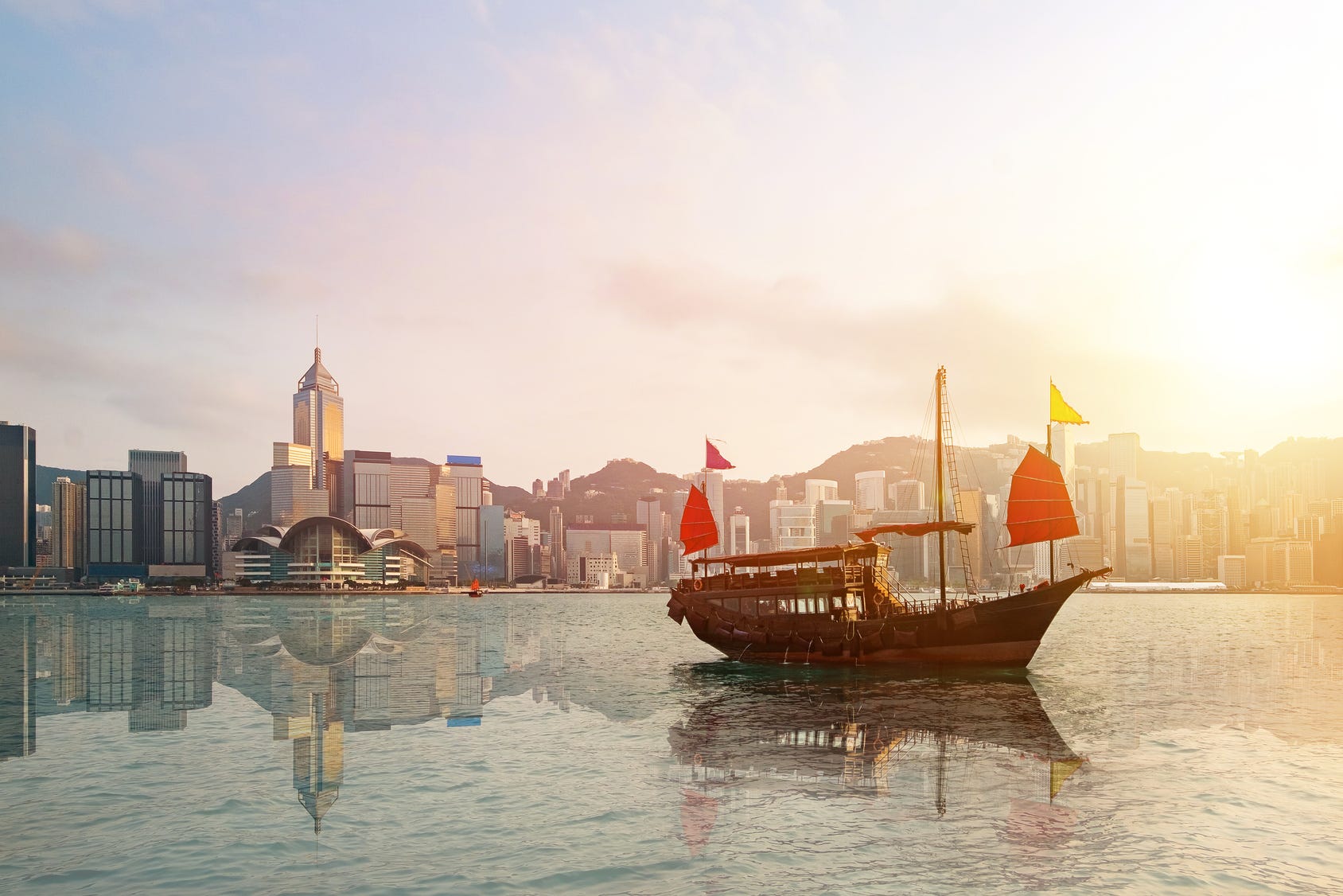
An apartment high enough to see the harbor. A ferry to an outlying island on Saturday, dim sum with the grandkids on Sunday, and a trip to Tokyo or Bangkok that costs a few hours instead of a day. Trains that come when the board says they will, streets you can walk at midnight, and a tax bill on your American income of nothing at all.
That's the wish people bring to Hong Kong. Often a son or daughter built a career there and the grandchildren are growing up Cantonese-fluent; sometimes the household simply wants a base in Asia that runs like clockwork. Either way, the people around them have opinions. As one reader put it, "Everyone we know thinks we're crazy."
They aren't crazy, and they aren't naive either. Hong Kong is one of the safest, most efficient and lowest-taxed places on earth to live. It is also a city whose political freedoms have been cut back sharply since 2020, under security laws that reach speech, publishing and protest. A foreign household's daily life sits mostly inside the first fact. The plan has to account for the second.
What I'd check first if this were my household isn't the apartment or the neighborhood. It's which door we actually qualify for, what it costs to keep it open for seven years, and whether we could live comfortably with rules on public speech that are tighter than anything we're used to at home.
Most of what can go wrong in Hong Kong is a money or paperwork mistake, not a political one, and every one of them has a fix.
The life
Where Americans actually land. Americans in Hong Kong tend to cluster in three kinds of place. The Mid-Levels and the Peak, above Central, for people who want to walk to work and dinner. The south side of Hong Kong Island, Repulse Bay, Stanley and Pok Fu Lam, for space, sea air and the international schools. And the greener edges, Sai Kung, Discovery Bay and Lantau, for households that will trade a longer commute for hiking trails, beaches and a slower pace. Grandparents usually choose by one rule: how many minutes to the grandchildren.
A good week. Picture a couple in their late sixties in a rented apartment on the south side, fifteen minutes from their daughter's family. Monday he walks the trail above the reservoir before the heat builds. Tuesday and Thursday they collect the grandchildren from school, and Wednesday she takes a Cantonese class she's sure she's failing. Friday is a long lunch in Central with friends from the American community; Saturday the whole family takes the ferry to Lamma for seafood. Nothing in their week requires a car.
What it costs. Housing is the budget: apartments are small for the money, so most households rent before they buy and trade space against location. Almost everything else is reasonable: public transit is cheap and excellent, eating out ranges from street stalls to white tablecloths, and there is no sales tax. Many families employ a live-in domestic helper, a real help for older residents.
Health care. Public hospitals are good and heavily subsidized. Once you hold a Hong Kong identity card, you pay resident rates, and a yearly cap limits your total public charges. Without the card, you pay many times more. The catch is the wait for public specialists, so most expatriate households keep private insurance for speed and choice, with the public system as the safety net. Together, the two cover almost everything a household needs.
People. English is an official language alongside Chinese, and in the neighborhoods where Americans live you can run a whole life in it: banks, doctors, courts, government forms. Daily Hong Kong runs in Cantonese, though, and the households who are happiest learn enough to be greeted rather than served. Community comes through churches, clubs and the schools. The international community is large enough that nobody needs to be lonely, and small enough that you keep running into the same friendly faces.
What it doesn't feel like. For most foreign residents, the security laws show up as absences: the opposition parties, the independent newspapers, the protest vigils. Day to day, the city feels orderly, busy and safe: trails full of hikers on a Sunday morning, restaurants full at lunch, ferries full on the weekend.
The verdict
Where Hong Kong stands: a safe, efficient, low-tax city that works very well day to day for a foreign household, inside a political system that has narrowed sharply since 2020. Current as of November 13, 2026.
What works. Hong Kong ranks 24th of 143 on the World Justice Project's rule-of-law index, ahead of the United States at 30th. It is among the safest places measured: 7th on the same index for order and security. The investment route is open and has mostly been getting easier. Your US pension, Social Security, dividends and gains are not taxed in Hong Kong at all, and there is no estate tax. Health care is good and cheap once you're a resident.
What doesn't. Political and press freedom, plainly. Freedom House scores Hong Kong 41 of 100, Partly Free, where the US scores 81. Press freedom ranks 140th of 180. The 2020 National Security Law and a second security ordinance in March 2024 cover speech, publishing and contact with "external" organizations in broad terms, and in February 2026 the publisher Jimmy Lai was sentenced to 20 years. The US State Department's advisory sits at Level 2, "Exercise Increased Caution," because of arbitrary enforcement of local laws. That is a real constraint on what you say and publish. It has not, so far, reached a residence permit, a bank account or a tax bill for an ordinary foreign household.
The other gap is the price of entry: the main route asks you to commit HK$30 million, roughly $3.8 to $3.9 million, for seven years.
Hong Kong fits the well-capitalized household that wants to be near family already working there, values safety and efficiency over open politics, and is comfortable keeping its political views private. It's especially strong for retirees whose income is all American, because Hong Kong taxes none of it.
Hong Kong fits poorly households below the investment threshold without a child who is a permanent resident there; journalists, activists and China-policy advocates; same-sex couples who need their partnership recognized under local law; and anyone who wants a second passport.
The bottom line: Hong Kong is a sound second base for a quiet, well-funded household that chooses it with open eyes.