


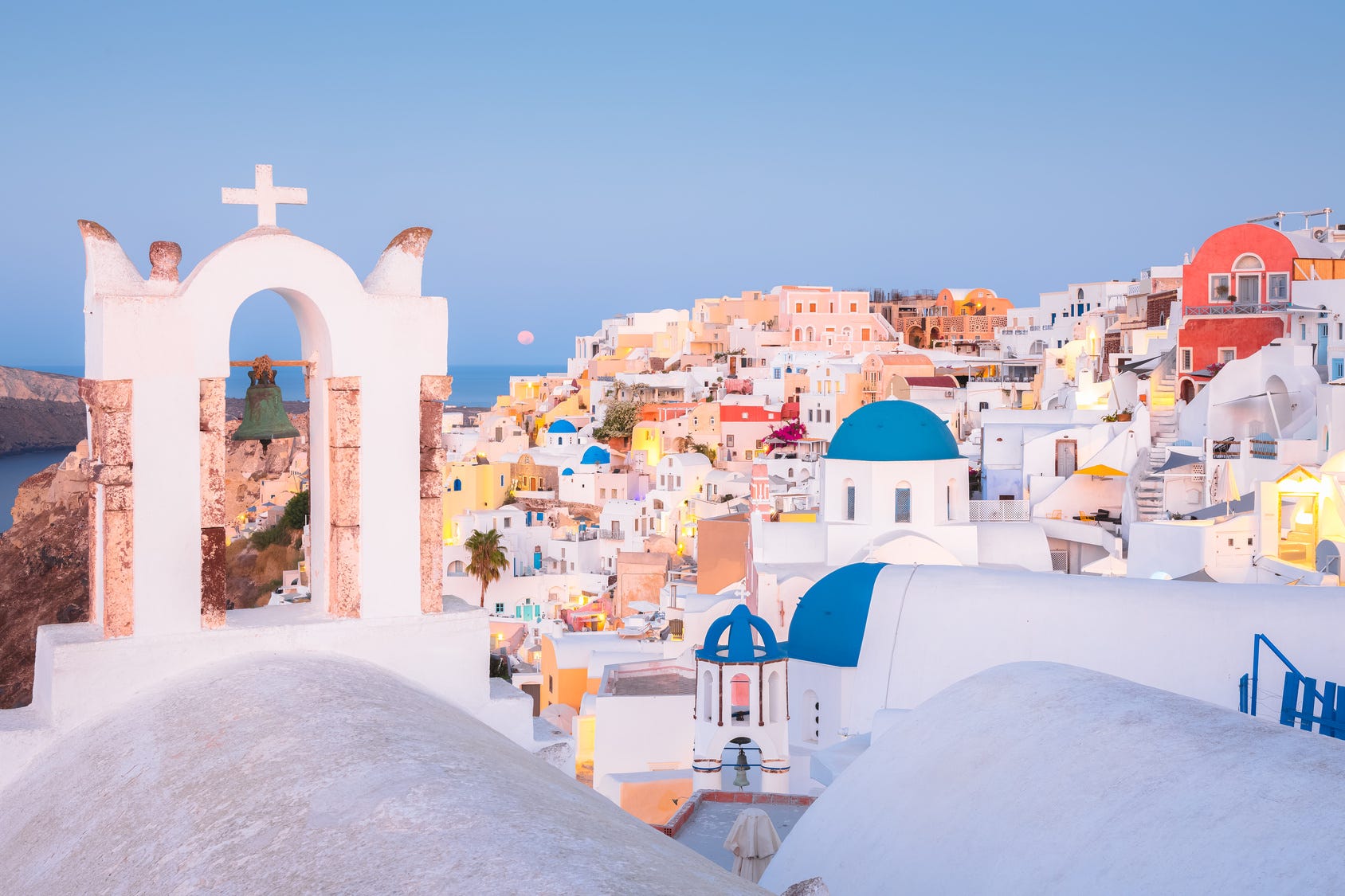
The light, the water, the long table
A whitewashed house above a harbor, or an apartment in an old town with a fortress on the hill behind it. Coffee that takes an hour because the conversation does. A swim in October. A taverna where they stop bringing you the menu. Summer evenings with the grandkids at the end of a long table and the sea doing what it has done for three thousand years.
That's the wish people bring to Greece. Not a vacation that stretches on forever: a second home where the light is better and the week is slower, with the life back home still standing when they return.
Most Americans come to Greece without a family claim: through a residence permit, with the paperwork done in order. If this were my household, the first thing I'd check is which of Greece's two main doors fits the life we actually want. One is built for people who live there. The other is built for people who own something there. They lead to different places, and the brochures rarely say so.
Greece has some of the friendliest tax rules in Europe for retirees, and has spent three years tightening its most famous residence program. As one reader put it, "Everyone we know thinks we're crazy." Done right, it's anything but. Here is what to do, and in what order.
The life
Where Americans actually land. Most land in one of four kinds of place. Athens and the Riviera coast south of it, for a real city, the strongest hospitals and an international airport. Crete, especially around Chania, for an island big enough to have a year-round life of its own. The Peloponnese, around towns like Nafplio, for history and quiet within a few hours' drive of the capital. And the smaller islands, Naxos, Paros and the rest, for the postcard, accepting that February is very quiet.
A good week. Picture a couple in their sixties in a rented apartment in a harbor town on the mainland. He walks to the bakery before the heat and comes back with more gossip than bread. She has finally started Greek lessons, and the teacher no longer lets her get away with English. Wednesday is the farmers' market. Friday dinner is with the Dutch couple from the next street and the retired schoolteacher who adopted all four of them. In May their daughter flies in with the kids, before the tourists, and the beach is empty. Nobody at the table is in a hurry, which turns out to be the point.
What it costs. Daily life outside central Athens and the famous islands is very reasonable by American standards. The costs that catch people are on paper: private health insurance, an accountant who files in both countries, and, if you buy, the transfer and property taxes. Choose where you'll live in February, not where you vacationed in July.
Health care. Greece has a national health system, strongest in Athens, Thessaloniki and the larger cities, thinner on small islands, where an ambulance may come by boat or helicopter. Holders of the retiree's permit generally can't join it: public cover is built around paying into Greek social security through work. Plan on a private policy from day one: the visas require one, and it buys shorter waits and English-speaking doctors at the private hospitals most expatriates use.
People. Greeks are famously warm, and the warmth is real. Belonging takes longer than a welcome. The households that settle best learn some Greek early, show up to the same café at the same time, and let a neighbor teach them how things work. You don't have to stop being American to belong; you just have to stay long enough for people to know you'll be back next year.
The verdict
Where Greece stands: a free, safe country that works well for the retiree who will actually live there, and less well than it used to for the buyer who wants a permit through property. Energy prices are pushing inflation up this year. Current as of November 6, 2026.
What works. The everyday life. Greece is safe, ranking 53rd of 163 countries for peacefulness, where the United States ranks 134th. It is free, scoring 85 of 100 with Freedom House, ahead of the United States. The passive-income permit is steady, the 7% regime for foreign pensioners is one of Europe's most generous, and income tax came down for most brackets in 2026. Same-sex marriage has been legal since 2024.
What doesn't. The bureaucracy is slow, and health care leans on private cover for anyone not paying in through work. The golden visa has been tightened twice since 2023 and now carries a €50,000 fine for short-term rentals. New applications have fallen sharply. Inflation reached 5.6% in October, driven mostly by energy: a squeeze for 2026 and 2027, not a structural problem.
On institutions, read the scale before the slope. Greece ranks 86th of 180 for press freedom, the lowest in the EU, and V-Dem has listed it for several years as a democracy in slow decline. Those are real weaknesses, but they sit in courts and newsrooms, not on a resident's permit, pension or title: Greece trails its neighbors and is on no frightening road.
Greece fits the retired household with steady passive income that wants to live there most of the year, values sea and community over efficiency, and can carry private health insurance. The 7% regime helps most where income is pensions and investments: with the US tax credited, many Americans owe little Greek tax on it.
Greece fits poorly anyone who needs to work locally on arrival, anyone wanting a golden visa property that pays for itself as a vacation rental, households counting on public health care, and anyone wanting a quick passport with little time on the ground.
The bottom line: Greece is a sound second base for the household that will live in it, as long as the residence route and the tax regime are chosen together and in the right order.