


A year to try the life
A flat in an old Tbilisi building, up a staircase to a carved wooden balcony that looks out over tin roofs to the hills. Bread from the clay oven down the street, too hot to hold. Weekends in wine country, where the wine is still made in clay jars buried in the ground and the host refills your glass before you notice it's empty. A dinner that runs four hours because the man at the head of the table keeps standing to toast: the guests, the dead, the children, peace. And a monthly budget that leaves room to say yes to most of it.
That's the wish people bring to Georgia. Not usually a forever move. A place to try a second life before committing to one, somewhere an American can simply land, unpack and stay for a year without asking anyone's permission first.
Georgia is very good at that first stretch. As one reader put it, "Leaving the US 3 months ago was among the best decisions I've ever made." That is the feeling Georgia tends to produce early, and it's real. The question this report answers is what it takes to keep it.
If this were my household, the first thing I'd check wouldn't be the wine or the rent. It would be which parts of Georgia's welcome are written into law, and which depend on a government that has spent the last two years at odds with its own streets and with Europe. Most of what a household relies on day to day hasn't moved, and the parts that have can be planned around.
The life
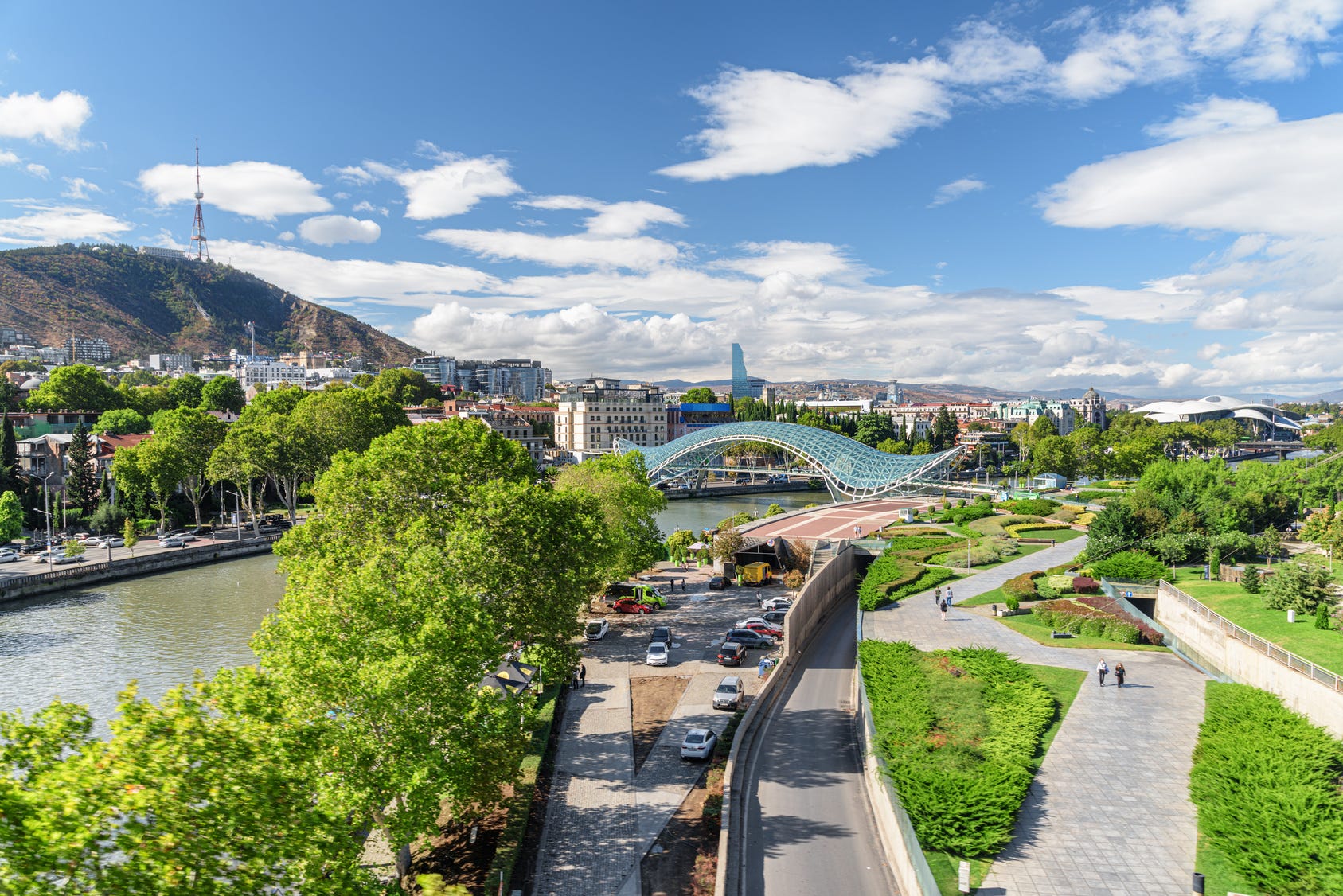
Where Americans actually land. Most land in Tbilisi, the capital, in the leafy streets of Vake and Vera or the old quarter of Sololaki, where the cafés, the clinics and the other foreigners are. A smaller number choose Batumi on the Black Sea, a resort city of new towers and a long seafront promenade. The ones who came for the wine end up in Kakheti, the wine region east of the capital, in towns like Telavi and Sighnaghi. A few spend their summers up in the Caucasus, where the villages sit under snow peaks all year.
A good week. Picture a couple in their late fifties in a rented flat in Vera. He still does consulting for clients back home, mornings, on a laptop by the balcony door; the afternoons are theirs. Tuesday is the market for herbs, cheese and whatever is in season. Thursday is their Georgian lesson, which is humbling: the language has its own alphabet and a grammar unlike anything they studied in school. Saturday is wine country with friends they met at a supra, the Georgian feast, where they learned that nobody drinks until the toastmaster says so. Once a season they fly home to see the grandkids, and once a year the grandkids come to them and are fed until they can't move.
What it costs. Day to day, Georgia costs a fraction of what most American cities do: rent, restaurants, taxis, a doctor's visit. The costs that surprise people are real health insurance (below), the occasional trip to a bigger medical center, and prices that have been climbing: annual inflation was 5.9% in October 2026.
Health care. Georgia's hospitals are mostly private, and the best of them in Tbilisi are modern and reasonably priced. The state's universal program is built for citizens; a foreign resident pays or insures. Since January 1, 2026, every foreigner entering Georgia as a visitor must carry health and accident insurance with at least 30,000 lari of cover, about $11,500. Treat that as the entry ticket, not the plan. The households that do well carry an international policy that includes medical evacuation, which the US State Department also recommends, because complex care thins out quickly beyond the capital.
People. Georgian hospitality is not a brochure line: a stranger's invitation to dinner is meant, and the table will be fuller than you expect. Getting from guest to friend takes longer, and the language is the door. Younger people in Tbilisi often speak English; many older people speak Russian. The happiest households take the lessons, join something (a choir, a hiking group, a church) and let the supra do its work.
Since late 2024, anti-government protests have been a regular part of life in central Tbilisi. Steer around them, as the State Department advises; a few streets away, the bakeries open and life goes on as usual.
The verdict
Where Georgia stands: a safe, low-tax, easy-to-enter country whose government has turned hard against its opposition and press since 2024. Daily life for a foreign resident is calm; the politics are not. Current as of November 13, 2026.
The baseline first. Georgia was never a Western European democracy, and what has slipped since 2024 is political freedom, not street safety. Freedom House rates it Partly Free, 51 of 100, beside neighboring Armenia at 54; the United States scores 81. On peacefulness it ranks 94th of 163, ahead of the US at 134th. The State Department's advice is to exercise normal precautions everywhere except the two Russian-occupied regions, Abkhazia and South Ossetia.
What works. The welcome. Americans can live here up to 365 days without a visa, and since April 2026 the law says plainly that working for clients or employers outside Georgia needs no work permit. A resident pays no Georgian tax on income from abroad. The economy grew 8.4% in 2025. Costs are low, the streets are safe, and the food and wine are extraordinary.
What doesn't. The politics. In November 2024 the governing party announced a four-year pause in EU accession talks, and the protests that followed were met with mass arrests; in June 2026 Amnesty International counted more than 150 people held in protest-related cases. Press freedom fell 21 places this year, to 135th of 180. Since October 2026 the Constitutional Court has been hearing the governing party's case to ban five opposition parties. None of this has touched a residence permit, a pension or a property title. It does mean rules can change quickly, and in 2026 several did.
On rights, plainly: a 2024 law bars any legal recognition of same-sex couples, and abortion is legal on request through 12 weeks. Rising prices are near-term pressure, not a structural problem.
Georgia fits the remote earner or early retiree who wants to try a second life cheaply and legally before committing; the part-year household that wants a low-cost base with mountains and wine; and the investor comfortable with a frontier market.
Georgia fits poorly LGBTQ+ couples who need their marriage recognized; households that need advanced specialist care close by; anyone hoping for a second passport; and anyone who needs political calm to sleep well.
The bottom line: Georgia is a good place to try the life and a riskier place to anchor all of it. Rent first, keep the American base, and let the next two years show you which way the country is going.