


The market, the table, the train
A walk to the bakery before the town is fully awake. A Saturday market where you buy too many peaches and the man at the cheese counter wants to know what you're cooking tonight. A train that gets you to Paris for lunch and home in time for dinner. A doctor you can see this week. Long tables, late light, and a bottle of something local that cost less than it had any right to.
That's the wish people bring to France. Not a postcard: a fuller week, lived properly, with the people they love able to visit and the money arranged so that nothing ugly arrives in the mail.
I've read France the way I read every country: what I'd check first if this were my household, and in what order.
For a retired American living on Social Security, US pensions and US investments, France is one of the kindest places in Europe to be a taxpayer, because of a treaty most people have never read. It also has serious paperwork, a demanding language test for anyone staying for good, and an inheritance law that doesn't much care what your American will says.
As one reader put it, "Leaving the US 3 months ago was among the best decisions I've ever made." With France, the order is most of it. Every trap it sets has a way around it, and nearly all of them are settled before you sign a lease.
The life
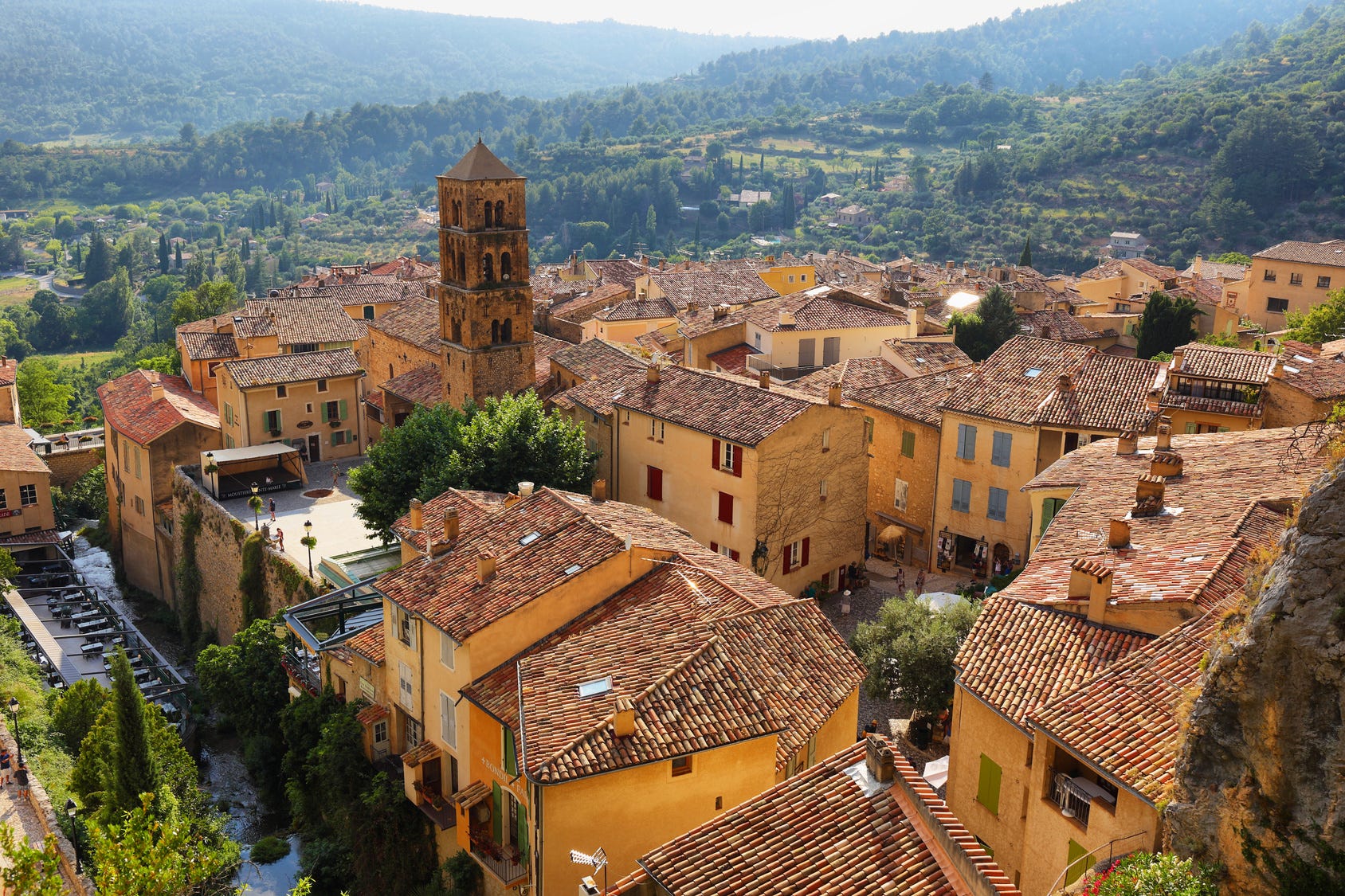
Where Americans actually land. Four kinds of place, mostly. Paris, for a great city lived on foot, if you can pay for the space. The southwest, the Dordogne and the country around Bordeaux, for the stone house, the river and a slower pace. Provence and the Riviera, for light and markets, at a price. And a quieter fourth group in Brittany, Normandy and the Loire, where the weather is softer than its reputation and houses cost far less than in the south.
A good week. Picture a couple in their sixties in a rented house on the edge of a market town in the southwest. She has French class on Tuesdays and is now dangerous at the pharmacy counter; he has taken up cycling and talks about it more than anyone would like. Wednesday is the market, and Sunday lunch runs until it's nearly time for dinner. Friends from the States come in May, and in July the grandkids fill the spare rooms and learn to order a croissant on their own. Their doctor is ten minutes away and knows them by name.
What it costs. Paris and the Riviera are expensive; much of the rest of France is moderate, and rural France is good value. The costs that catch people come with being a resident: tax filings in two countries, a good bilingual accountant, private health cover for the first months. Budget for the paperwork the way you'd budget for the movers.
Health care. France's universal public health system is one of the main reasons people come. A resident who doesn't work in France can generally join after three months of stable, legal residence; until then, private cover. Almost everyone adds a top-up policy, a mutuelle, for the rest.
People. French reserve is real and it isn't coldness. The rules are simple: say bonjour before anything else, every time, to everyone. Learn the language: outside Paris you'll need it, and France will ask you to prove it if you stay. Join something, a walking club, a choir, the village association that runs the summer fête: the Americans happiest in France stopped waiting to be invited and started showing up. It takes a couple of years, and the second year is always easier than the first. Then one day the woman at the bakery puts your usual aside before you ask.
The verdict
Where France stands: a free, stable democracy that works very well for a retired American household, with a deadlocked parliament and a tight budget worth watching, neither of which touches the routes in. Current as of November 6, 2026.
What works. The things a household lives on. The visitor visa is unchanged and modest in what it asks. The public health system is universal and good. The tax treaty leaves US Social Security and US pensions to the US alone, and credits American citizens for French tax on most US-source investment income. France is free by every measure we use: 89 of 100 with Freedom House and 25th of 180 in world press freedom, both well ahead of the United States. Same-sex marriage is law; abortion is available on request to 16 weeks.
What doesn't. The money is tight and the politics are stuck. The 2026 finance law only became law on February 19, 2026, weeks into the year it governs, and the social charges on most investment income went up. On October 30, 2026, Fitch kept France at A+, still well inside investment grade, but moved its outlook to negative, citing weaker growth, higher borrowing costs and a wider deficit. Expect more budget fights before the 2027 presidential election, aimed first at the wealthy and at investment income.
On safety, read the numbers in proportion. France ranks 99th of 163 on the Global Peace Index, the lowest in Western and Central Europe, mostly for street protest and fear of crime; the United States ranks 134th. This is a country with loud streets, not a dangerous one.
France fits the retired or retiring household living on Social Security, US pensions and US investments that wants great health care, a deep culture and Europe on the doorstep, and will learn the language. It also fits couples planning a part-year life, and households with a business to build.
France fits poorly anyone who must earn locally on arrival, anyone who wants a passport in a few years without becoming fluent, and households whose wealth sits mainly in non-US funds or a family business, where the treaty helps far less.
The bottom line: France is one of the strongest second bases in Europe for an American retiree, provided the investments, the route and the will are settled before the move.