


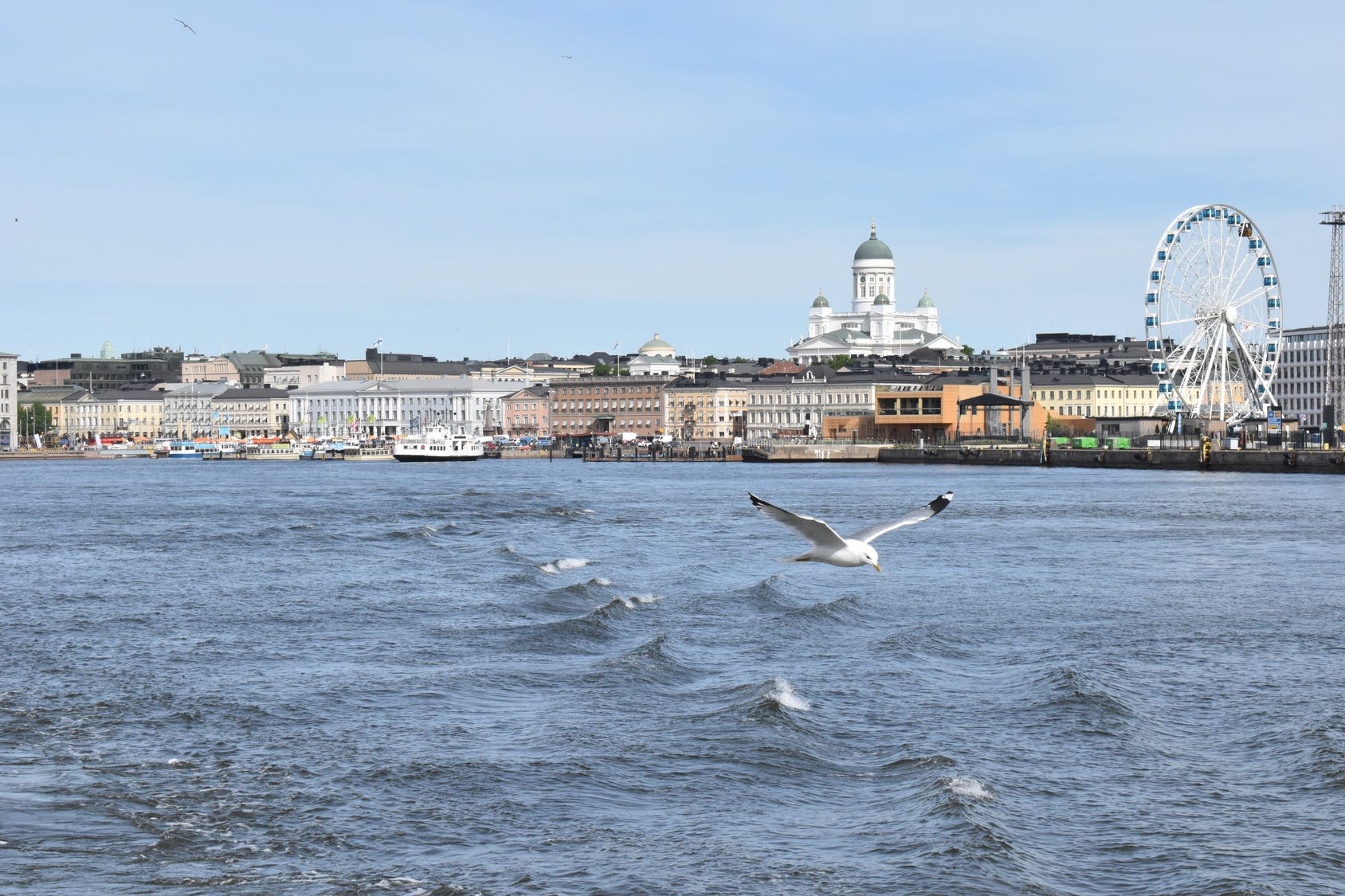
A calm life that simply works
A lake you can swim in from the end of the dock. A city where the bus comes when the timetable says it will and the tap water is better than the bottled kind. Long summer evenings that never quite get dark, a sauna, then the lake again. Neighbors who leave you alone and would help you in a heartbeat. A government that mostly does what it says.
That's the wish people bring to Finland: an honest, quiet, well-run place, with nature at the edge of town and the grandkids able to visit every summer.
The worry travels right alongside it. As one reader put it, "What if we're lonely and broke in the wrong country, missing the grandkids, and then it all goes back to normal here?" In Finland that question deserves a straight answer, because the country is reserved, the winters are long and dark, and its residence rules were written for people who come to work or to join family, not for Americans who come to retire.
So what I'd check first if this were my household isn't the tax rate or the weather. It's the door. Which permit would we hold, and does it lead to staying for good? Finland has three doors that matter for a household living on its own money, and they open onto very different futures. One of them may already be yours without your knowing it.
Get that one decision right and the rest of this report is ordinary planning, the kind Finland rewards. Get it wrong and you can spend years in a country you love without ever being allowed to call it home. Both outcomes are avoidable, and the way through is below.
The life
Where Americans actually land. Most settle in one of three kinds of place. Helsinki and its neighbors, Espoo and Kauniainen, for a real city on the sea, the best hospitals and an airport with long-haul flights. Turku and Tampere for a smaller city with a university, a lake or an archipelago at the door, and lower rents. And the coast and lake country, where many households rent or buy a summer cottage and spend the winter in town. Finland has two official languages, Finnish and Swedish, and the Swedish-speaking coast around Porvoo and Ostrobothnia is its own gentle world.
A good week. Picture a couple in their sixties in a two-bedroom apartment near the water in Turku. In winter he walks to the public library most mornings, because it's warm and bright and nobody minds if he stays till lunch. She has joined a choir that rehearses on Tuesdays and goes for coffee after. Friday is sauna night at a lakeside club they found in the first autumn. The days are short from November to February, so they plan around the light: a walk at noon, a lit ski trail after dark. In June the sun barely sets, the grandkids come for three weeks, and everyone sleeps badly and happily at the cottage.
What it costs. Helsinki is priced like the northern European capital it is; Tampere, Turku and the smaller towns cost noticeably less. Sales tax is high, and you feel it at the register more than in the rent. The bills that surprise people are the dark-season ones: heating, a good coat, and the flights home.
Health care. Finland's public system is universal and run by regional wellbeing services counties. Your right to use it follows a municipality of residence, which the population register records only for people who live in Finland permanently. Someone here temporarily is usually entitled to urgent care only. Most newcomers on their own money carry private international insurance at first, and many keep a private clinic for speed even after they join the public system.
People. Finns are reserved, honest and slow to small talk, and English is widely spoken, especially by younger Finns. Friendship comes through doing things together: the choir, the sauna club, a hiking group, volunteering at the church bazaar. The households that thrive join something in the first six months and learn enough Finnish or Swedish to be polite. The quiet contentment is real. It just isn't loud.
The loneliness fear is worth taking seriously here, and it has an answer. Winter isolation is the risk; a weekly commitment outside the house, booked before the first November, is the fix.
The verdict
Where Finland stands: one of the freest, safest and best-run countries in the world, and one of the harder places in Western Europe for a retired American with no Finnish tie to stay in permanently. Unemployment is high this year, and the rules for permanence have tightened. Current as of November 13, 2026.
What works. Nearly everything a household lives on. Finland scores a perfect 100 of 100 with Freedom House, where the United States scores 81, and it sits near the top of the world on rule of law and on peacefulness. Deposits are protected to €100,000 per bank. Health care is universal and good once you're in it. Same-sex couples marry, abortion is available on request in early pregnancy, and rape has been defined by lack of consent since 2023. US Social Security reaches Finland normally and the tax treaty keeps Finland from taxing it.
What doesn't. The door, first. Finland has no retiree visa, and the permit for people living on their own money is discretionary and temporary, so its years don't count toward staying for good. The road to permanent residence was rebuilt on January 8, 2026 around work history, income and language, and citizenship now takes eight years, or five with the required Finnish or Swedish, with a civics test coming in 2027. Second, the economy: trend unemployment was 10.5% in September 2026, a cyclical strain on public budgets rather than a threat to a resident's savings. Third, the dark months and a hard language.
On security, read it in proportion. Finland joined NATO in 2023 and has kept its land border with Russia closed since December 2023. That is a country guarding a long frontier carefully, not a country in danger.
Finland fits the Finnish-American household with a parent or grandparent who was born a Finnish citizen, the American married to a Finn, and the part-year household that wants summers at the lake and winters at home. It also fits the household with no tie that is content to renew a temporary permit year by year and doesn't need Finland to become permanent.
It fits poorly the retiree with no tie who wants permanence, anyone looking for a low-tax base, and anyone who already dreads a Minnesota February.
The bottom line: Finland is a superb second base for the household that holds the right door, and a frustrating one for the household that doesn't. Check the door first.