


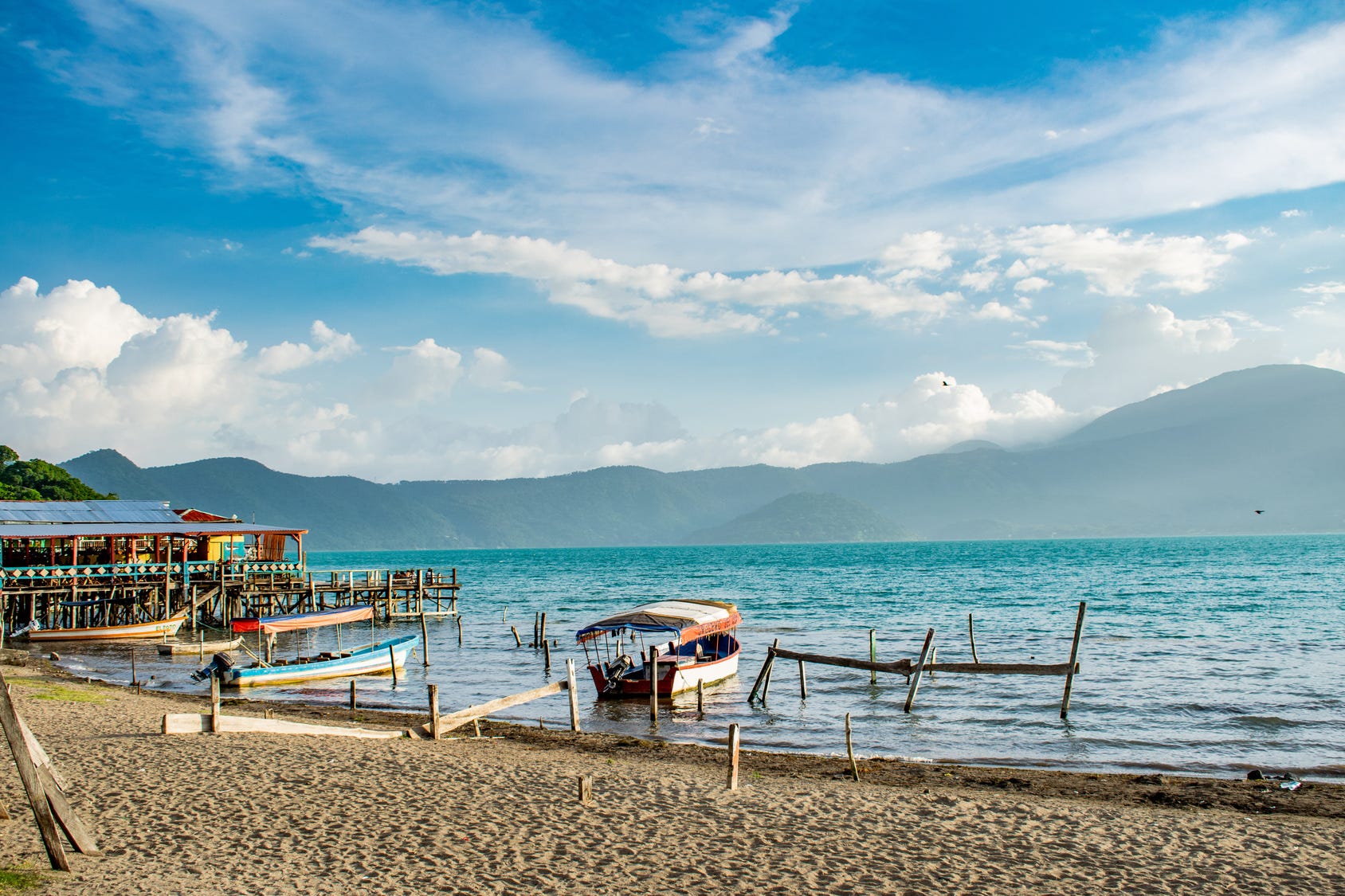
Warm, close and within reach
Morning coffee on a terrace above the Pacific, or up in a cool hill town where the coffee is grown. A house with a view you could never afford on the California coast. Money that needs no converting, because the country runs on the US dollar. A short flight home when there's a graduation or a new grandchild, and the family able to come down for Christmas without a passport-and-jet-lag ordeal.
That's the wish people bring to El Salvador: a warm, unhurried life, close to the people they love, at a cost that leaves room to breathe.
Then they tell the people they love. As one reader put it, "Everyone we know thinks we're crazy." For El Salvador that line lands harder than for most places, because the picture most Americans carry is ten years out of date. In 2015 the country recorded 6,656 homicides. In 2025 the government counted 82. Daily life for a foreign resident is now calmer than almost anyone back home would guess.
How that happened carries a cost, and this report names it plainly. The calm came with a state of exception that has suspended basic legal protections since March 2022, and with a government that has removed most of the checks on its own power. Neither is likely to touch a retired American's lease, pension or morning coffee. Both are worth understanding before you sign anything.
So this report is written the way I'd work it if this were my household. El Salvador rewards the household that goes in clear-eyed and does things in the right order. The people who think you're crazy can visit and see for themselves.
The life
Where Americans actually land. El Salvador is small enough to drive from beach to capital to mountains in a day, and Americans settle in three kinds of place. The coast west of the port of La Libertad, marketed as Surf City, draws surfers, beach people and the bitcoin crowd to towns like El Tunco and El Zonte. San Salvador's western neighborhoods (Escalón, San Benito) and the suburbs of Antiguo Cuscatlán and Santa Tecla draw people who want the private hospitals and the airport close. The cooler highlands draw people who want mountains and cobblestones: coffee towns on the Ruta de las Flores such as Juayúa and Ataco, and colonial Suchitoto above its lake.
A good week. Picture a couple in their late sixties renting a house in the hills above the coast, where the evenings cool off and the ocean is twenty minutes down the road. He walks the beach most mornings and has made friends with the men who fix the fishing boats. She tutors English twice a week at a local school. Tuesday they drive into San Salvador for the dentist and the big grocery run. Friday is fish from the market at the pier. Sunday is pupusas with the neighbors, which is how their Spanish got good enough to argue about soccer. At Christmas the kids and grandkids fly down, and nobody needs to exchange a single dollar.
What it costs. Day to day, noticeably less than most of the US: local food, help in the house and eating out are all cheap, and the dollar means no currency risk on a US pension. What can surprise you is the other side of the ledger: imported goods, air conditioning on the power bill, rents in the best neighborhoods of San Salvador, and private health insurance. The income a residence permit requires is a legal floor, not a household budget.
Health care. El Salvador runs three systems: a public network under the Ministry of Health, a social-security network for people with Salvadoran employers, and private care. A retiree with no local employer is outside social security, and the public network is short of resources. In practice, foreign residents use private doctors and hospitals in San Salvador, such as Hospital Diagnóstico Escalón and Hospital Centro Médico Escalón, and pay in dollars. Plan on international health insurance that includes medical evacuation, and choose your hospital and family doctor before you need them. The coast and the highlands are an hour or more from serious care.
People. Spanish is the price of a full life here, and Salvadorans reward the effort with real warmth. So many families have relatives in the United States that you'll meet someone with a cousin in Houston or Los Angeles in your first week. The expat community is lively on the coast and thin in the highlands. The households that settle happily join something (a church, a volunteer program, a Spanish class, a surf club) and let the neighbors in.
The verdict
Where El Salvador stands: a country that has become safe in daily life under a government with few limits on its own power. It works well for the household that wants warmth, the dollar and low taxes close to home, and that accepts that trade with open eyes. Current as of November 13, 2026.
What works. Daily life. Homicides fell from 6,656 in 2015 to 1,147 in 2021, the year before the state of exception, and to an official 82 in 2025, a rate of 1.3 per 100,000. The US State Department moved El Salvador to its lowest travel-risk level in April 2025 and keeps it there. The money is simple: the currency is the US dollar, and since March 2024 El Salvador doesn't tax income from abroad, so a US pension, Social Security and a US portfolio owe it nothing. The residence routes are short, cheap and clear, and home is a short flight away.
What doesn't. The guardrails. Freedom House scores El Salvador 42 of 100, Partly Free, where Costa Rica scores 91 and the United States 81. In July 2025 the constitution was changed to let a president run again indefinitely. The state of exception, credited with finishing off the gangs, also suspended due process: more than 90,000 people detained, many without sufficient evidence according to rights groups, and about 470 deaths in custody. On overall peacefulness the Global Peace Index ranks the country 121st of 163, held down by militarization and the emergency regime, yet still ahead of the United States at 134th. Abortion is banned in every circumstance, and same-sex couples have no legal recognition.
For a retiree living quietly the daily risk is low, though not zero: the emergency rules allow detention on thin evidence. What it means is that the protections you'd lean on if something went wrong (an independent court, a free press) are weaker than at home, and you plan accordingly.
El Salvador fits retired couples on a US pension and Social Security who want warmth and family within easy reach; part-year households escaping northern winters; Spanish speakers; and households with a Salvadoran spouse, who have a faster road to citizenship.
El Salvador fits poorly households for whom a free press and independent courts are non-negotiable; LGBTQ+ couples who need their marriage recognized; anyone who may need reproductive care or top specialists nearby; and anyone planning to earn money locally on a retiree's permit.
The bottom line: a sound second base for the household it fits, held with the US base intact and the paperwork done in the right order.