


Spring every day, in dollars
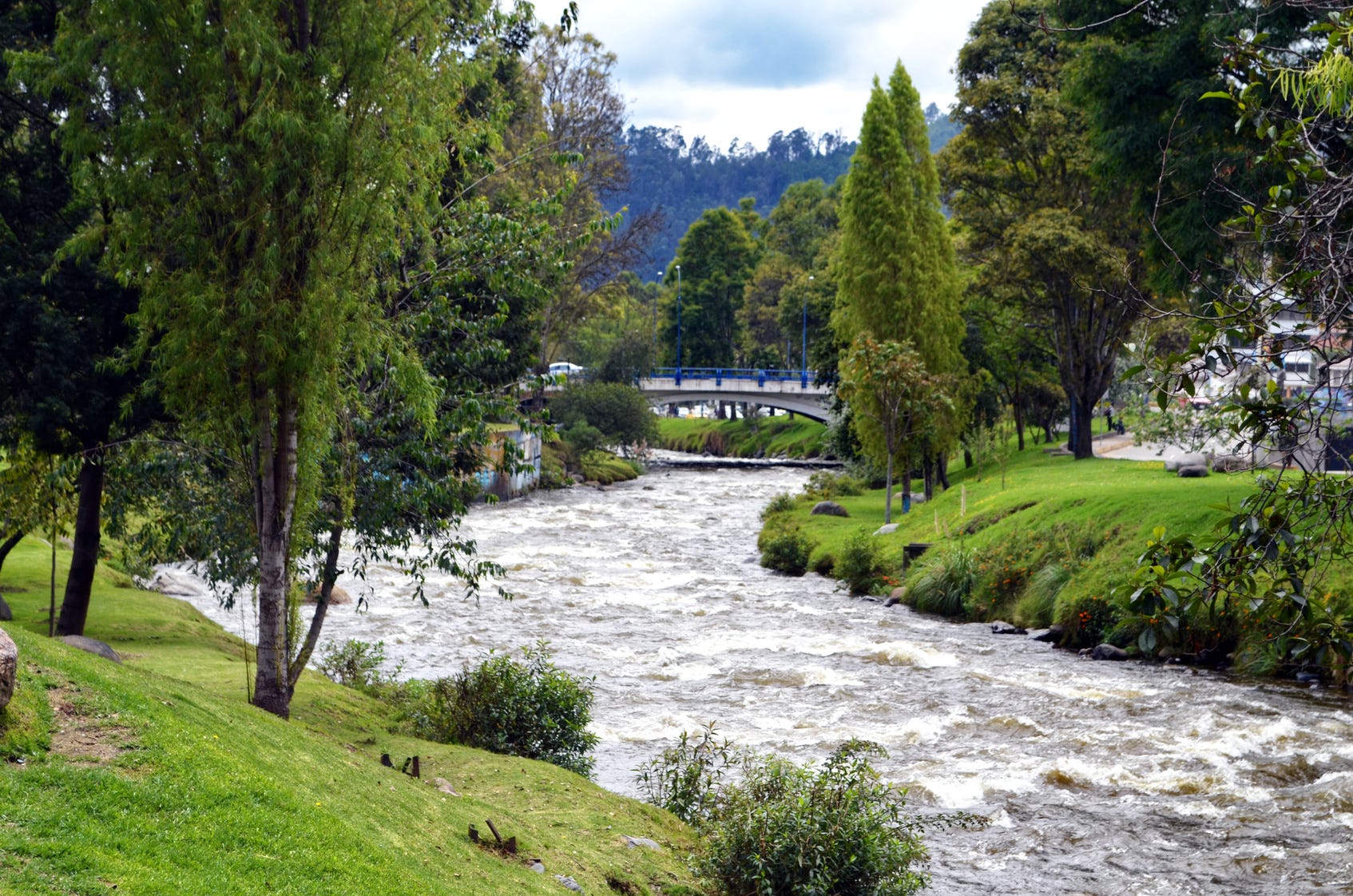
An apartment over a river in an old colonial city, with church domes in the window. Mornings that start cool and turn warm, every month of the year, so the closet holds one season of clothes. A market where the fruit is cheap enough that you stop counting. Dinner out on a Tuesday because there's no reason not to. A flight home to the grandkids that doesn't cross an ocean, and money that never has to be converted, because the currency in your wallet is the one in your US account.
That's the wish people bring to Ecuador, and it's a real one. Ecuador has used the US dollar since 2000. It has a retirement visa built on a modest pension, and a road from that visa to permanent residence in under two years. For most American households, a pension simply goes further here than at home.
It also has a security story. The violence of the past three years is real, and concentrated on the coast, around the ports and the drug corridors; the highland city most Americans choose sits far from most of it.
As one reader put it, "We have money, but not enough to survive a massive mistake." Ecuador's mistakes are mostly mistakes of geography and sequence: the wrong town chosen from a vacation, money moved in the wrong direction, a clock allowed to run out. Every one of them can be avoided.
If this were my household, the first thing I'd check wouldn't be the visa. It would be the map.
The life
Where Americans actually land. Most land in the highlands. Cuenca is the best known: a walkable colonial city high in the southern Andes, with four rivers, a university, good private clinics and a well-established community of American retirees. Quito, the capital, suits people who want a bigger city, an international airport and embassies close by. The rest go to the coast, to beach towns in Santa Elena and Manabí, for warm water and fresh fish. That split, highlands or coast, is the most important decision in this report.
A good week. Picture a retired couple renting an apartment in Cuenca's old center. She has Spanish class twice a week and is finally past the stage of rehearsing sentences before she says them. He walks to the market most mornings and has opinions about which stall has the best avocados. Thursday is lunch with friends, half Ecuadorian, half from home. Saturday they drive up to the high lakes of the national park above the city and come back cold, happy and sunburned. Sunday night they video-call the grandkids, who keep asking when they can come down.
What it costs. Day to day, much less than at home: rent, food, transport and help in the house. The costs that surprise people are structural: health insurance, an accountant for two countries' returns, apostilled documents, and a 5% tax on money sent back out of the country. Some households winter in the Andes and summer near family at home, which fits a visitor or a resident past the first 21 months. The flight is long but not brutal, and nothing about the money changes at the border.
Health care. To get a residence visa you need a health policy that covers you in Ecuador for the life of the visa. Once you hold a residence card, you can also join the national social security system as a voluntary member, paying 17.6% of the income you declare, with a minimum of about $85 a month in 2026. Many Americans hold on to the private policy too, mainly to see a specialist quickly. Cuenca and Quito both have good private hospitals; smaller towns mean a drive for anything serious.
People. Ecuadorians are courteous and family-centered, and they'll meet you more than halfway if you make the effort in Spanish. The households that settle best take Spanish seriously, sign up for something local (a hiking club, a volunteer program, a church choir) and keep friends on both sides of the expat line. Cuenca's American community means you'll never be lonely; the trap is living entirely inside it.
The verdict
Where Ecuador stands: a partly free democracy with a serious crime problem concentrated on its coast. For a household that settles in the highlands, the residence routes, the dollar and daily life work well. Current as of November 13, 2026.
What works. The routes in are among the most accessible anywhere: a retiree needs a pension of about $1,446 a month, and permanent residence follows after 21 months. The dollar removes currency risk. A regime for new residents can keep foreign income out of Ecuadorian tax for five years. And voters still say no: in November 2025 they rejected all four of the president's referendum questions, a new constitution among them.
What doesn't. Security, read in proportion. On the Global Peace Index, Ecuador ranks 135th of 163 countries, one place behind the United States, on an index that counts militarization and wars abroad as well as crime. The national figure hides a regional split. Ecuador recorded 9,216 homicides in 2025, a record rate of 50.9 per 100,000, and 44.5% of them were in Guayas, the province around Guayaquil. Azuay, Cuenca's province, recorded 38, down from 91, the steepest fall in the country. Nationally, 2026 is running lower: 6,285 homicides through September, 8.1% below the same months of 2025.
The State Department's advisory, reissued August 18, 2026, draws the same map: Level 2, "exercise increased caution," for the country, Cuenca and Quito included; Level 4, "do not travel," for parts of Guayaquil and several coastal cantons; Level 3, "reconsider travel," for the beach provinces of Manabí and Santa Elena.
On civil liberties, Ecuador is rated Partly Free and uses curfews as a security tool, mostly on the coast. Same-sex marriage is legal; abortion is tightly restricted.
Two near-term pressures sit apart: an El Niño forecast to be very strong into 2027, worst on the coast, and a power grid that depends on rain-fed dams.
Ecuador fits the household living on a pension, Social Security or investment income that wants a lower-cost life in a mild climate, will learn Spanish and is happy in the highlands, part-year households included, if they plan the residence clock around their travel.
Ecuador fits poorly households set on a beach house who aren't ready for a Level 3 rating; anyone moving large sums in and out; businesses that need dependable courts; and households for whom full reproductive rights are non-negotiable.
The bottom line: Ecuador works as a second base for the right household, built in the right region and in the right order.