


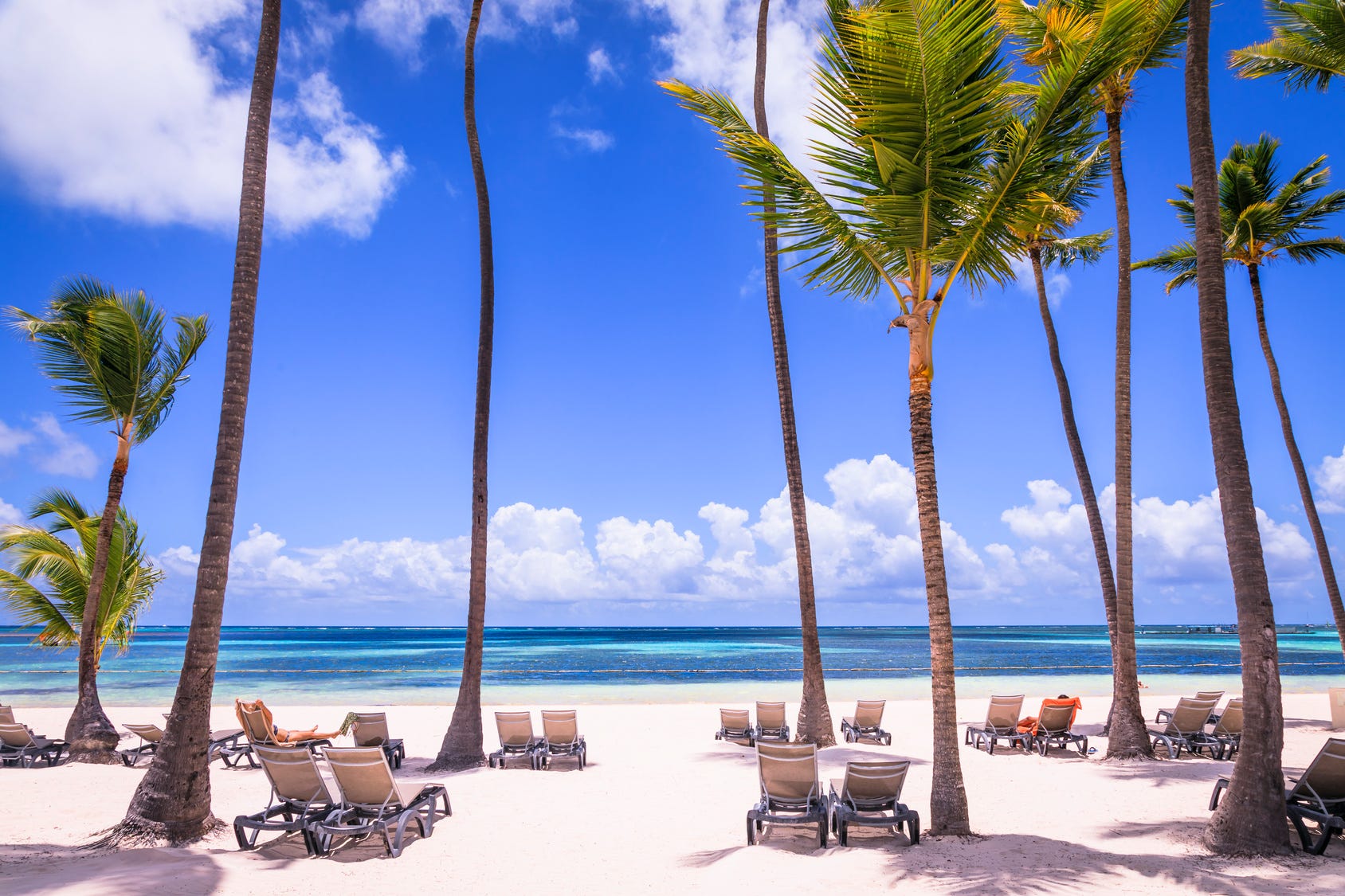
Warm winters, close to home
A house a few streets back from the water, where the morning starts with coffee on the terrace and the sound of someone sweeping a patio next door. A town where the bakery knows your order by the second week. Merengue drifting out of the corner store at dusk. Grandkids who can fly down for a long weekend without losing two days to travel. And a winter that never once asks you to scrape a windshield.
That's the wish people bring to the Dominican Republic. Not an escape from America so much as a warmer second address close to it: the Caribbean life, with the people you love a short flight away and your pension doing more work than it does at home.
The country makes that wish unusually easy to start. It has written down, in a single law, what it offers a retiree or someone living on investment income: a residence card on a steady foreign pension, and a list of tax breaks on the house, the car and the boxes you ship. Few countries spell it out so plainly.
The harder part is everything nobody spells out. Which route, in which order, with which papers translated by whom, and what this year's tax law changed for people who live off a portfolio. As one reader put it, "We've read everything and still don't know what to actually do." This report is built to answer that, for this one country.
If this were my household, the first thing I'd check is the order. Several of the best benefits here apply only to what you do after your residence is approved, so a house bought a month too early costs real money. Get the sequence right and the rest is mostly paperwork, done once, by people who do it every week.
The life
Where Americans settle. Four kinds of place. The east-coast resort belt around Punta Cana, Bávaro and Cap Cana, built around the international airport, the golf courses and the gated communities. Casa de Campo and La Romana, a little further west, quieter and long favored by retirees. The north coast (Puerto Plata, Sosúa, Cabarete) and the Samaná peninsula around Las Terrenas, where the foreign communities are older and the pace is slower. And Santo Domingo, for people who want a real capital: the stone streets of the Colonial Zone, the best hospitals, the embassies, the theater. Santiago, in the green middle of the country, suits people who would rather live among Dominicans than among other foreigners.
A good week. Picture a hypothetical couple in their late sixties renting a two-bedroom apartment in Sosúa. He walks the beach before the heat comes up. She takes Spanish twice a week and now volunteers at a school reading program. Tuesday they drive to Puerto Plata for a doctor's appointment and a long lunch on the Malecón. Friday the neighbors come over, and dinner runs half in English and half in Spanish, which is progress. In February the grandkids come down for a week of school vacation and refuse to leave the pool. The pension lands in a dollar account in town, the backup battery in the closet carries the house through the occasional power cut, and nobody mentions it anymore.
What it costs. Outside the resort enclaves, a good life costs less than in most of the United States. Imported groceries, electricity, cars and anything inside a Punta Cana gate cost more than people expect. The fixed costs that surprise newcomers are the structural ones: private health insurance, a backup power system, certified translations and legalizations for every document, and a local lawyer and accountant you trust. Property tax is light for most households.
Health care. The best care is private, concentrated in Santo Domingo and Santiago, with good clinics in Punta Cana and Puerto Plata. The public health insurance system is funded mainly through payroll contributions and is built around people in formal work, so most foreign retirees buy private cover, local or international, and keep a plan for the serious case. Check what Medicare will and won't pay abroad before you count on it. Pick your town partly by its distance to a hospital you've already visited.
People. Dominicans are warm, quick to talk, and organized around family. The foreign communities in Sosúa, Cabarete, Las Terrenas and Punta Cana make the first year easy, down to a bar where everyone knows the plumber. The households happiest by year three are the ones who learned enough Spanish to argue about baseball with the neighbor. You can stay entirely American and still belong; you just have to show up.
The verdict
Where the Dominican Republic stands: a steady, peaceful democracy with one of the clearest retirement routes in the hemisphere, real gaps in the rule of law you plan around, and a tax system in the middle of a rewrite. Current as of November 13, 2026.
What works. The front door, first: a foreign pension of US$1,500 a month qualifies, and the same law cuts the purchase taxes on a first home. Citizenship comes on a short clock, with dual nationality allowed. A 2024 constitutional reform locked in the limit on presidential reelection, so the 2028 election will choose a new president. The country ranks 89th of 163 on the Global Peace Index, where the United States ranks 134th, and ahead of the US on press freedom. Inflation sits a little above target on the global energy shock: a cost-of-living squeeze, not a structural problem.
What doesn't. Corruption and slow courts are the structural weak spot, with a corruption score of 37 of 100 and a rule-of-law ranking in the bottom half of the world. For a buyer, that means title risk. The power grid still fails often enough that most households keep backup power, and hurricane season is real.
On rights, read it in proportion. Freedom House rates the country Partly Free, 67 of 100 against 81 for the United States, mostly for corruption, police abuses and discrimination against people of Haitian descent. V-Dem counts it an electoral democracy moving in the right direction. Two gaps are hard ones: same-sex couples have no legal recognition, and abortion is banned even after rape, with only a narrow defense when doctors act to save a life, a ban the new Penal Code kept when it took effect in August 2026.
The Dominican Republic fits the retiree or near-retiree household living on a US pension and Social Security that wants warm winters close to home, full time or part of the year, and will learn some Spanish.
It fits poorly same-sex couples who need their marriage recognized, households for whom reproductive care is non-negotiable, anyone who needs first-rate hospitals minutes away, and households living off foreign gains or consulting income without a written tax position.
The bottom line: for the household it fits, the Dominican Republic is an easy, affordable second base, as long as the papers come before the purchase and the title is checked twice.