


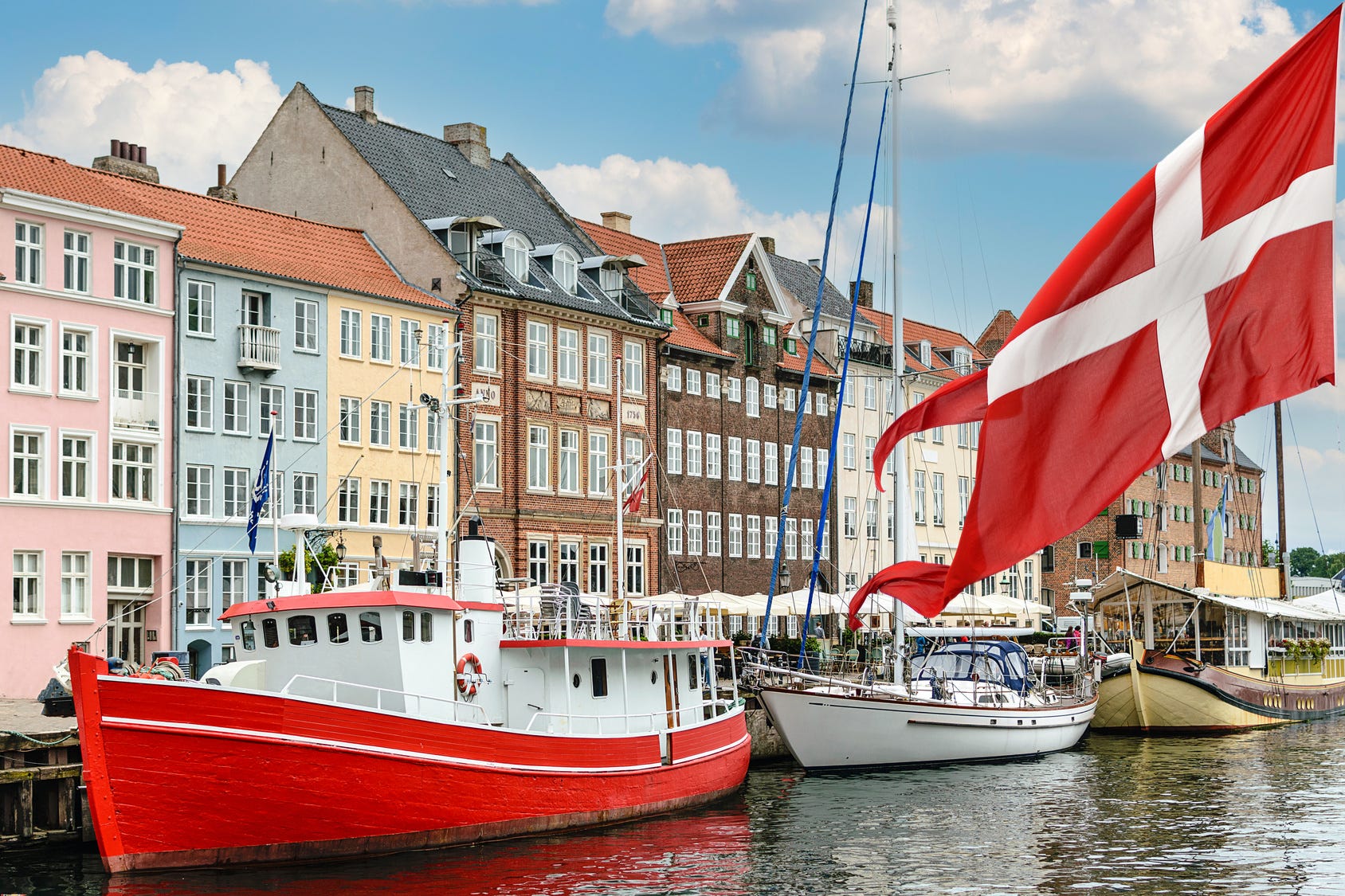
A country that works
A Saturday bike ride to the bakery, past a harbor where people still swim in October. A doctor's office that answers the phone and doesn't send a bill. Trains that leave when the board says they will. Winter afternoons when the candles go on at four because it's already dark, and nobody minds, because the house is warm and friends are coming over.
That's the wish people bring to Denmark. Not adventure. Calm: a country where the systems work, people trust each other, and a household can stop bracing for the next surprise.
Denmark delivers more of that than almost anywhere on earth. On every index of free, clean, well-run government we track, it sits at or near the top of the world.
What Denmark doesn't do is make it easy for an American household to move in. There's no permit for living on savings. Taxes are high, and the rules on investment funds catch many Americans out. Citizenship, for now, is on hold for everyone.
If this were my household, the first thing I'd check wouldn't be the neighborhood. It would be the door: which route into Denmark, if any, we actually qualify for. Everything else follows from that answer. As one reader put it, "We have money, but not enough to survive a massive mistake." Denmark's mistakes are mostly about doors, portfolios and paperwork, and every one of them can be avoided by doing things in the right order.
The life
Where Americans land. Most Americans in Denmark arrive with a reason: a job, a Danish spouse, or Danish parents and grandparents. They settle in one of three kinds of place. Copenhagen and the towns along the coast to its north, for people who want a capital city, an international airport and the sea at the end of the street. Aarhus and Odense, for people who want a real city at a gentler price and pace. And the small towns of Funen and Jutland, for families with roots there, or a summer house that slowly became the main house.
A good week. Picture a couple in their late fifties in a rented row house twenty minutes north of Copenhagen. She took a senior job with a Danish company, which is how they got in. As her accompanying spouse he's allowed to work, so he kept a part-time role with his American firm, a few hours a day, and has quietly become the household's expert on Danish bureaucracy, which turns out to be a short subject because almost everything is online. Most mornings he cycles to the harbor. Tuesday is Danish class. Friday the neighbors come over, and someone always brings too much cheese. In July the grandkids fly in, spend a week on the beach, and go home asking why American trains don't work like that.
What it costs. Denmark is expensive, and nobody pretends otherwise. Restaurants, cars and anything imported cost more than at home, and a high sales tax is built into almost every price. Copenhagen rents are high; the rest of the country is noticeably gentler. What the taxes buy is visible every day: health care, transit, safe streets, public services that work. The honest arithmetic: you pay more and worry less.
Health care. Denmark's health system is public and tax-funded. Once you're registered as a resident with a CPR number, you get the yellow health card, choose a family doctor, and visits to your doctor, the emergency room and public hospitals are free. Medicines, adult dentistry and physical therapy are subsidized, not free. Until registration comes through, and while a permit is processed, plan on private cover.
People. Danes are polite, private and slow to invite you home, and once they do, it's for keeps. Most will switch to English the moment they hear your accent, which is kind and also the trap: the households that are happiest learned Danish anyway, joined something (a rowing club, a choir, a winter-swimming group) and stopped expecting friendship at American speed. Denmark is a nation of clubs and associations. Join one and the country opens. The first winter is the real test, and the households that do well plan for it: a club night, a sauna habit, a trip south in February. You can stay fully American and still belong.
The verdict
Where Denmark stands: one of the freest, safest and best-run countries in the world, and one of the hardest for an American household without a job, a Danish spouse or Danish roots to move to. Current as of November 13, 2026.
What works. Nearly everything a household relies on once it's there. Denmark scores 97 of 100 with Freedom House, where the United States scores 81. Courts are independent and officials are clean. Health care is public and free at the point of use. And the US tax treaty is unusually kind to retirees: American pensions, IRAs and Social Security are taxed only by the United States.
What doesn't. The doors, first. There is no route for a household living on pensions and investments; you get in through work, a Danish partner, Danish parents or grandparents, or an EU passport. Taxes on earned and investment income are among the highest in the world, and Denmark taxes most investment funds every year on gains you haven't sold. Naturalization has been frozen since March 2026, and the governing party's citizenship spokesperson doesn't expect processing to resume before late 2027.
None of that is a slide. Denmark's immigration rules have been strict for years, and the government formed after the March 2026 election has pledged to keep them that way. A country can be closed at the front door and excellent once you're inside. Denmark is both.
Denmark fits the household with a real door: a spouse with a Danish job offer at the salary threshold, a Danish partner, Danish parents or grandparents, or an EU passport in the family. It fits households whose income is mostly US pensions and Social Security, which the treaty leaves with the US. And it fits part-year households who want a few calm months a year and are careful never to become tax resident.
Denmark fits poorly the retired couple with no Danish ties who wants a full-time base on savings alone, the household whose wealth sits in mutual funds and ETFs it doesn't want to restructure, and anyone choosing a country to lower their tax bill.
The bottom line: if you have a door, Denmark is one of the best second bases an American household can build. If you don't, it's a superb place to spend part of the year, done carefully.