


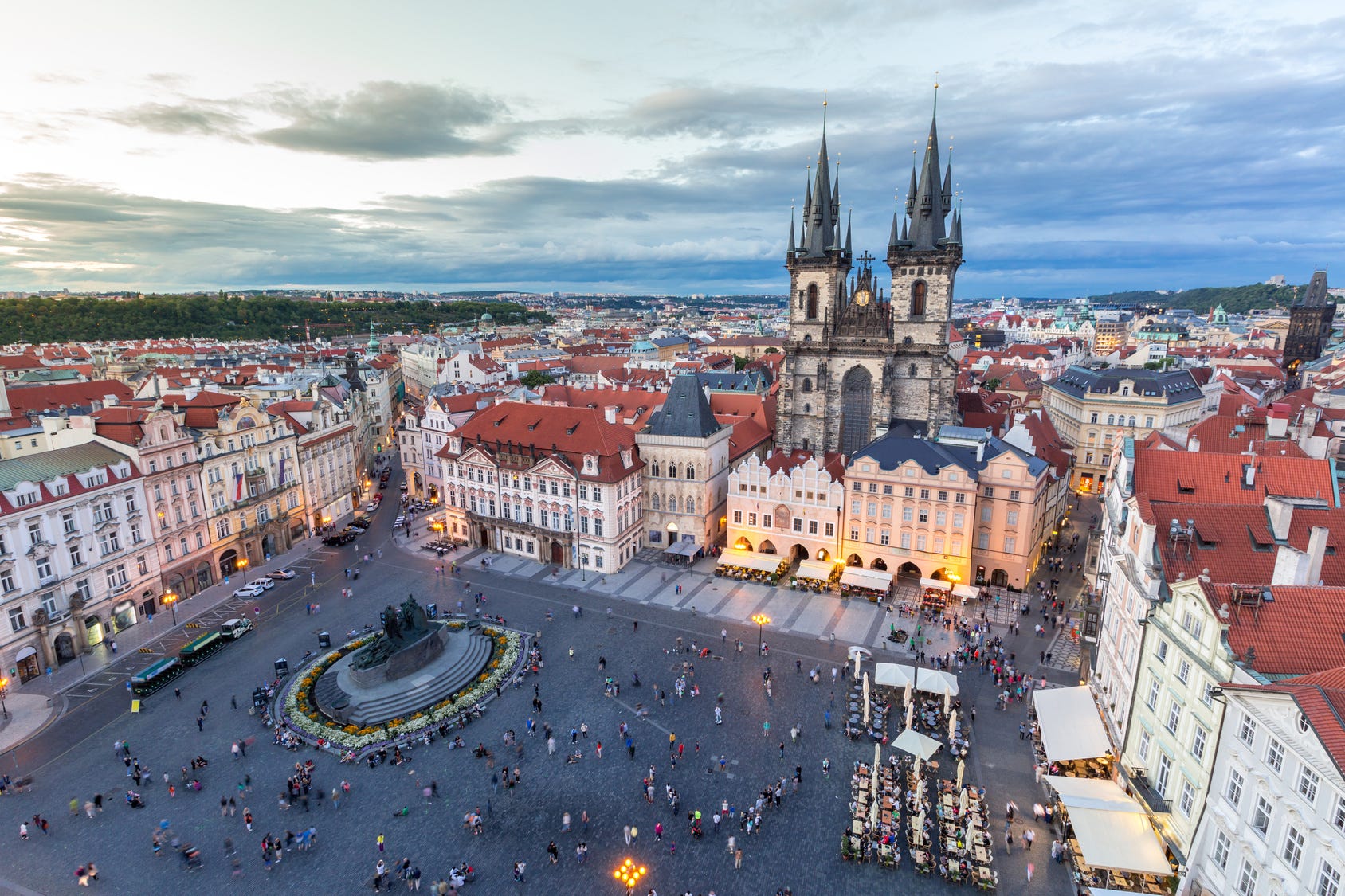
A calm base in the middle of Europe
An apartment in an old building with tall windows and a tram stop at the corner. A café you walk to every morning, where they stop asking what you'd like by the second week. A Saturday train to Vienna or Dresden, back in time for dinner. A concert in a gilded hall that costs less than parking at a ballgame at home. A city where you walk home at midnight and never think about it.
That's the wish people bring to Czechia. Not a beach and not a brochure retirement: a real European city life, safe and well run, at the crossroads of the continent, with the house in the States still there when you want it.
For a lot of American families there's a second pull. A grandmother who left Bohemia or Moravia, a surname on a parish register in a town you've never seen. In Czechia that line can still become a passport, as long as it runs through a parent or a grandparent.
What I'd check first if this were my household is the part most people skip: how you're allowed to stay. Czechia is among the safest and freest countries on earth, and it has no visa built for a retiree living on savings. That gap is why, as one reader put it, "We've read everything and still don't know what to actually do."
There's an answer. Czechia has four real doors, and which one fits depends on who you are and what you do, not on how much you have. Find your door first and the rest of the plan falls into place behind it.
The life
Where Americans actually land. Most land in Prague, and most of those in a handful of neighborhoods with old apartment buildings, parks and trams: Vinohrady, Žižkov, Letná, Karlín. Brno, the second city, draws people who want a university town with a lower rent and a shorter commute to Vienna. A smaller number choose a regional city such as Olomouc or České Budějovice, or one of the old spa towns in the west, for a slower pace and a lower bill.
A good week. Picture a couple in their late fifties in a rented apartment in Vinohrady. He still consults for two American clients, three mornings a week, under a Czech trade license. She has a Czech lesson on Tuesdays and Thursdays and is fiercely proud of ordering at the bakery without switching to English. Wednesday is the farmers' market on the riverbank. Friday night is a concert. One weekend a month they take the train somewhere: Vienna, Kraków, the hills of South Bohemia. In July the grandkids come, and the family borrows a friend's country cottage, which is how a great many Czech families spend their summer weekends anyway.
What it costs. Prague is no longer the bargain of old guidebooks, and rents in the popular neighborhoods have climbed. Daily life (transit, groceries, eating out, culture) still runs well below a comparable American city, and everything gets cheaper outside the capital. The costs that surprise people are the fixed ones: private health insurance until you qualify for the public system, a Czech accountant, and certified translations of almost every document you file.
Health care. Czechia has a universal public health insurance system, and the care is good. The catch for a newcomer is that holders of a long-term visa or residence permit can't join it. Until you hold permanent residence or a Czech employment contract, you must carry comprehensive commercial insurance from a Czech-authorized insurer, with a limit of at least €400,000. Many newcomers in Prague also use a private clinic with English-speaking doctors, at least for the first years.
People. Czechs are reserved with strangers and loyal once they know you, with a dry humor that rewards patience. The language is hard, and it matters: the households that settle in learn enough to get through a pharmacy and a landlord. Public opinion is skeptical about migration in general and noticeably warmer toward people who arrive legally, pay their way and try with the language, which describes the reader of this report. Prague and Brno both have sizable international communities, so you'll have company while you learn.
The verdict
Where Czechia stands: a stable, free and unusually safe country that works very well for the household that can find a way in. The ground is solid; the door is narrow. Current as of November 13, 2026.
What works. Nearly everything a resident household lives on. Czechia ranks 13th in the world for peacefulness, where the United States ranks 134th. It scores 95 of 100 with Freedom House, fourteen points above the United States, and sits 11th in the world for press freedom. Its courts and institutions rank 21st in the world for rule of law, ahead of the United States at 30th, and the main democracy researchers class it as a liberal democracy with no sign of backsliding. Taxes are plain and moderate, with no wealth or inheritance tax, and a tax treaty and a Social Security agreement with the US are both in force.
What doesn't. The way in. There is no passive-income or retirement visa, and no golden visa: the only investment permit asks for CZK 75 million and twenty new jobs. Newcomers buy private health insurance for years before the public system opens to them. Czech is hard, and the permanent-residence test requires it. On corruption it scores 59 of 100, a little behind the United States. And the rules for foreigners are being rewritten: a new Foreigners Act, signed on November 4, 2026, takes effect in January 2029, and foreign spouses of Czech citizens face tighter rules under it. None of it touches safety, freedom or property.
Who it fits. Americans with a Czech-born parent or grandparent who lost citizenship, because that line can become citizenship outright. Consultants, freelancers and remote professionals who will keep working, because the self-employment and remote-work routes are built for them. Households where one spouse holds Czech or other EU citizenship. And part-year households who want a European base for shorter stays.
Who it doesn't. Retirees on pensions and portfolios, with no Czech line, who want to live here full time: no residence route is built for them, though they can spend up to 90 days in any 180 without a visa. Anyone who needs public health care from the first month. And households for whom same-sex marriage is non-negotiable: Czechia offers registered partnership, not marriage.
The bottom line: one of the best-run places in Europe to live, for the household whose door is open. Check the door first.