


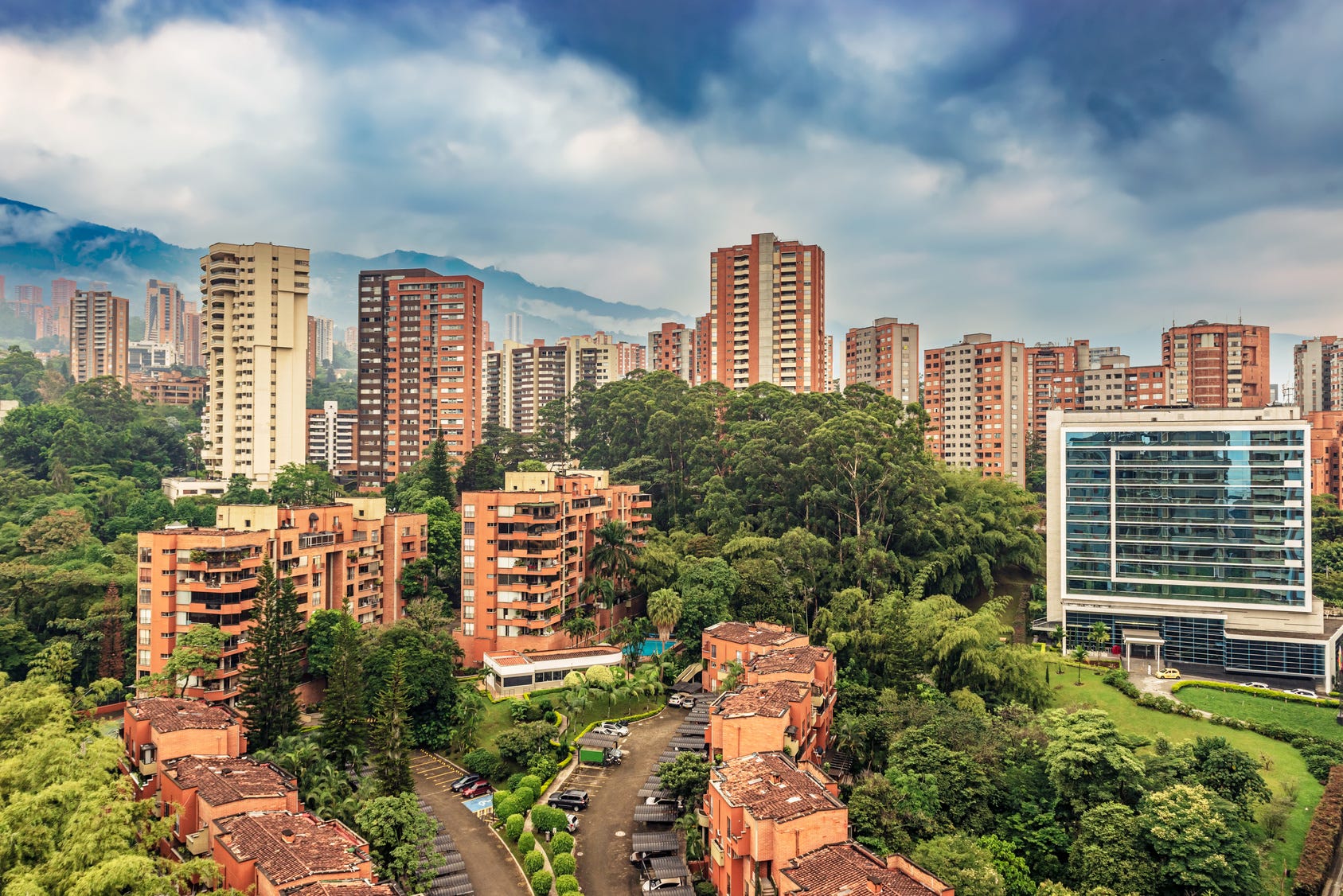
Spring all year, a short flight home
An apartment on a green hillside with the windows open in February, because it is never cold and rarely hot. Coffee grown an hour's drive away. A Spanish class on Tuesdays, a Sunday morning when the main avenue closes to cars and half the city comes out on bicycles. And the people you love a short flight away, close enough that a long weekend actually works.
That's the wish people bring to Colombia. Not a hideaway and not a bargain hunt: a fuller, warmer week in a mild climate, close to East Coast time, with the family still within reach and the money still where it should be.
As one reader put it, "Leaving the US 3 months ago was among the best decisions I've ever made." Colombia can be that kind of decision. I'd put it among the more welcoming countries in the hemisphere for an American with a pension, and it's a place where buying a home can also get you a residence visa.
It also asks more of a household than most places Americans retire to. Its safety record is uneven by region, its tax system reaches further than most Americans expect, and its visa rules are written in pesos that move every year. None of that is a reason not to go. It's a reason to go in the right order. If this were my household, I'd settle three things before I signed a lease: which city, which visa, and what Colombia's wealth tax would cost us.
The life
Where Americans actually land. Most settle in one of five places. Medellín, for the spring climate, the metro and plenty of foreign neighbors, mostly in El Poblado, Laureles and neighboring Envigado. Bogotá, for a real capital: cooler, higher, with major hospitals, universities and museums. Cartagena and Santa Marta, for the Caribbean, the heat and the old walled streets. The coffee region around Pereira, Manizales and Armenia, for small-city life in green hills. And Cali, for warmth and salsa.
A good week. Picture a couple in their sixties renting a third-floor apartment in Laureles, a leafy, walkable part of Medellín. Mornings are a Spanish class or a walk to the market for fruit they couldn't name the first month. Lunch is the set menu at the corner place, soup included. He has joined a Thursday hiking group; she volunteers with an English conversation club. Every few weeks they take the bus up into coffee country for a long weekend. At Christmas the grandkids fly down, and the youngest learns to dance in a week.
What it costs. Day to day, a good life in Colombia costs well under what the same life costs in an American city, and less again outside Bogotá and Medellín. One thing moved this year: the peso strengthened sharply against the dollar, so your dollar income covers less than it did a year ago.
Health care. The big private hospitals and clinics in Bogotá and Medellín are where most foreign residents go, and most carry private cover, either an international policy or a Colombian prepaid plan (medicina prepagada). The visa itself requires an all-risk policy valid across Colombia, including repatriation, for the whole term of the visa; travel insurance gets turned away. The pensioner visa's own rules bar its holders from joining Colombia's social security system, public health insurance included, so on that visa private cover is the whole plan. On the property or spouse visas, once you hold your resident ID card, you can join the public system through an insurer called an EPS, paying a share of your declared income. That system is under real financial strain, so even then treat private cover as the backbone.
People. Colombians are warm, curious and quick to invite you in. Spanish is the price of entry outside the expat blocks of Medellín; the households that are happiest take lessons for real, join something (a hiking group, a church, a volunteer project) and say yes to the birthday party. A few safety habits become second nature and then stop feeling like anything: booked cars rather than street taxis, cash machines inside banks or malls by day, and real caution with dating apps, where the State Department warns that criminals posing as dates have drugged, robbed and even killed Americans. Do those things and the life above is the life you get.
The verdict
Where Colombia stands: a free, lively democracy that works well for a household settled in its main cities, with its worst violence concentrated in regions most Americans never visit, and a tax system that reaches further than most Americans expect. Current as of November 13, 2026.
What works. The routes in are clear and affordable: a lifetime pension of about $1,600 to $1,700 a month qualifies, and it leads to permanent residence and citizenship without giving up your American passport. Pensions from abroad are largely untaxed. And the institutions held through a hard year. Abelardo de la Espriella won a runoff decided by one point. The outgoing president alleged fraud; the losing candidate conceded after a recount, international observers reported no irregularities, the electoral authorities and the Council of State upheld the result, and power changed hands on August 7, 2026. Freedom House scores Colombia 69 of 100, Free; the United States scores 81.
What doesn't. Safety, read in proportion. Colombia ranks 141st of 163 on the Global Peace Index, near Mexico (139th) and below the United States (134th). The State Department's advisory, last reissued March 31, 2026, rates it Level 3, "Reconsider travel," with four departments and the strip along the Venezuelan border at Level 4, "Do not travel"; Medellín, Bogotá, Cartagena, the coffee region and the Caribbean coast sit outside those zones. In the cities the risk is mostly crime aimed at visitors, and the habits that avoid it can be learned. Beyond safety: a wealth tax on residents' worldwide net worth above roughly $1.1 to $1.2 million, and slow courts with real corruption (96th of 143 on rule of law). Two pressures are near-term, not structural: rebuilding after the August 10, 2026 earthquake, and a tax bill now before Congress.
Colombia fits the retired household with Social Security or a defined-benefit pension that clears the visa's bar and wants a city life in Spanish. It fits part-year households that stay under the tax line, and couples whose wealth sits near or below the wealth-tax line.
Colombia fits poorly households whose retirement income is mostly IRA withdrawals, anyone set on rural life in the Level 4 departments, and households far above the wealth-tax line who want full residence without running the numbers.
The bottom line: Colombia is a rewarding second base for the household it fits, as long as the city is chosen with care and the wealth tax is modeled before your first January 1 as a resident.