


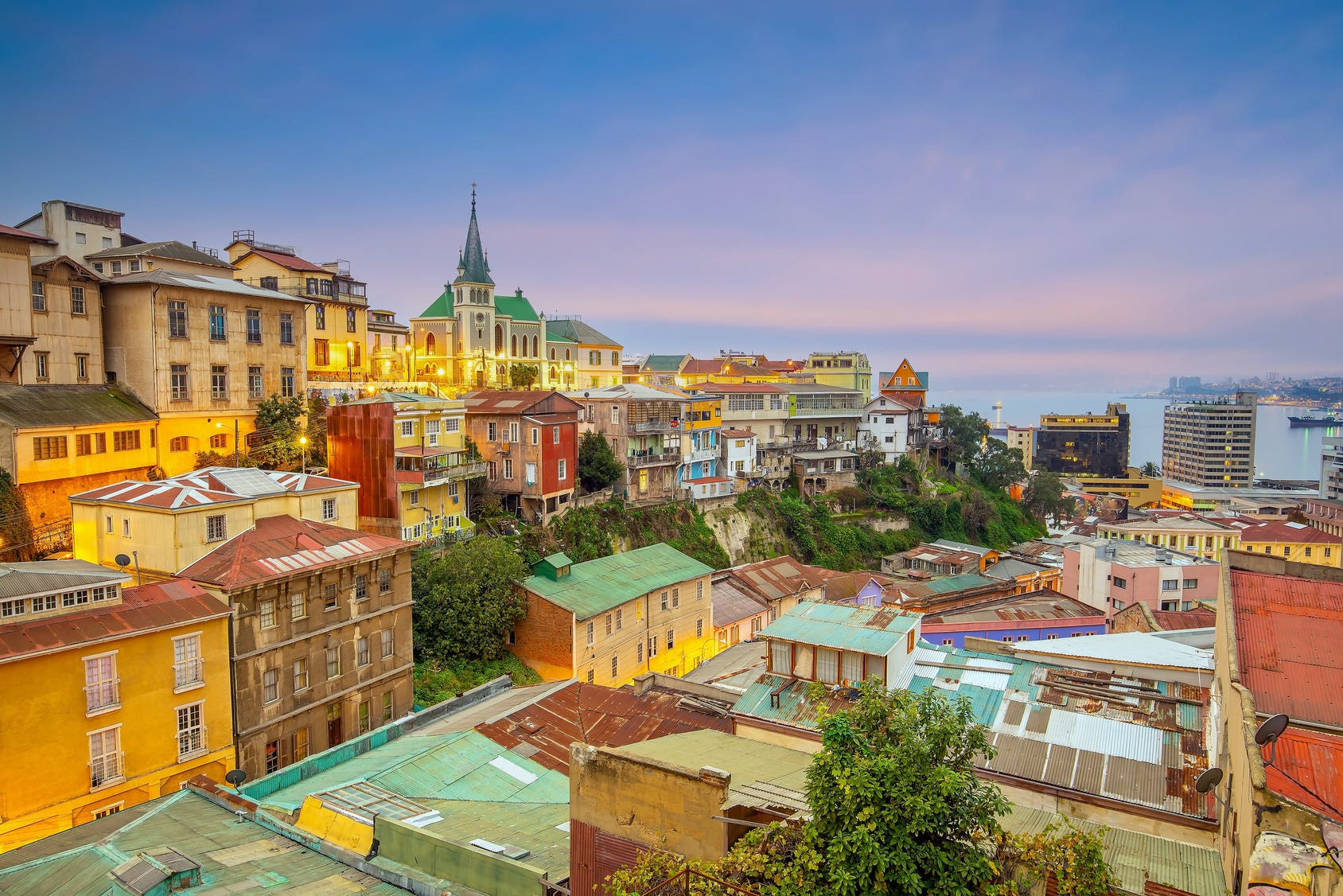
Mountains in the morning, the sea by lunch
Coffee on a terrace with snow on the Andes behind the city. A weekend house on the coast, or a lake in the south with a volcano standing in it. Wine country an hour's drive away. A well-run city with good hospitals and an airport that connects to the world, and seasons that run the other way, so the dark weeks of a northern January become a long Chilean summer.
That's the wish people bring to Chile. What they want isn't adventure. It's an orderly, comfortable life at the far end of the hemisphere, with the mountains and the ocean close enough to use every week.
It's also the wish that draws the strangest looks at home. As one reader put it, "Everyone we know thinks we're crazy." Chile is a long flight away, and most Americans know it from a wine label. What fewer know is that it's one of the steadiest democracies in the Americas. Freedom House scores it 95 out of 100, fourteen points above the United States.
So the doubters have the geography right and the country wrong. If this were my household, the first thing I'd check wouldn't be the view. It would be the order. Chile gives a new resident something few countries offer, three years in which only Chilean income is taxed, and then a short list of rules on day counts, bank deposits and estates that catch the household that assumes Chile works like home. None of them is hard to handle. All of them are easier handled before you go.
The life
Where Americans actually land. Four places draw most of them. The leafy eastern neighborhoods of Santiago, Providencia, Las Condes and Vitacura, for people who want the best hospitals, the international airport and a real city's restaurants and concerts. Viña del Mar and the central coast for people who want the Pacific outside the window and Santiago within reach for appointments. The Lake District around Puerto Varas and Pucón for people who want lakes, volcanoes, wood stoves and a slower town. And the wine valleys, where a farmhouse among the vines is a realistic thing to want rather than a fantasy.
A good week. Picture a couple in their sixties renting an apartment in Viña that looks over the water. Mornings, he walks the coastal promenade and she takes a Spanish class that has turned into a standing lunch with three classmates. Thursday is the street market, the feria, where the fish came out of the ocean that morning. Saturday they drive to a vineyard in the Casablanca valley. Once a month they go into Santiago for a doctor's appointment and a concert. At Christmas, which falls in midsummer, the grandkids come down for two weeks of beach, and nobody back home believes the photos.
What it costs. Santiago's best neighborhoods cost about what a good American city does. The coast is cheaper, and the south and the smaller towns cheaper still. The surprises are the fixed costs: private health insurance, an accountant who files in both countries, and getting your money to work across two banking systems.
Health care. Chile runs two systems side by side. FONASA is the public insurer; ISAPREs are private insurers that pay for care in private clinics, and Santiago's best private clinics are among the strongest in Latin America. Pensioners from countries with a social security agreement with Chile, the United States among them, can join FONASA through a certificate from the pensions regulator; confirm that your US pension qualifies first. Many American households keep private or international cover and use the private clinics. The rule that matters: have cover from the first day, and settle which system you'll use before you choose a town, because the best care is concentrated in Santiago and the larger cities.
The ground itself. Chile is earthquake country, and it builds for it: modern Chilean buildings are made to move. Ask when a building went up before you sign for it. Wildfires are the other hazard, especially around the central coast in the dry summer, and they shape where a careful household rents.
People. Chileans tend to be reserved at first and generous once you're in. The Spanish is fast and full of local slang. The households that settle best take classes, join something (a hiking club, a choir, a parish, a wine society) and accept that a residence permit runs on Chilean time. English-speaking circles in Santiago and the Lake District help in the first year.
The verdict
Where Chile stands: a free, stable democracy, one of the strongest in the Americas, with a new government that is tough at the border and friendly to investment. Current as of November 13, 2026.
What works. Chile is free, scoring 95 of 100 with Freedom House, where the United States scores 81, and it ranks 52nd of 163 countries for peacefulness, where the United States ranks 134th. A new resident pays Chilean tax only on Chilean income for the first three years. Under the US treaty, Chile can't tax your Social Security at all. Same-sex couples can marry. And the government changed hands peacefully: José Antonio Kast won the December 2025 runoff with 58% of the vote and took office on March 11, 2026.
What doesn't. The migration service is slow, carrying a backlog of 185,250 residence applications when the new government arrived. Chile's state guarantee on savings and term deposits is thin, about $8,400 per bank, so the household's money belongs mostly at home. Chilean succession law follows your domicile and reserves most of an estate for close family, whatever an American will says. Abortion is legal only on three narrow grounds. And Chile is far: the grandkids' visit is a long-haul flight, not a weekend.
The new government, in proportion. Kast campaigned on crime and irregular migration. His government canceled a planned mass regularization of migrants who entered irregularly and won a law in October 2026 that speeds expulsions. None of it changes the permits a retiree or an investor uses, and with the Senate almost evenly divided, nothing moves without negotiation. That's a sharper border, not a closed door.
Chile fits the retired or semi-retired household living on pensions and investment income that wants a real city and serious nature in the same week and is willing to learn Spanish. It's also an unusually good fit for a part-year plan: Chile's summer is the northern winter.
Chile fits poorly a household that needs the grandkids within a short flight, anyone for whom easy access to abortion care is non-negotiable, and anyone who plans to keep serious savings in a local bank.
The bottom line: Chile is a sound second base for the household it fits, if you plan the tax years and the estate before you arrive.