


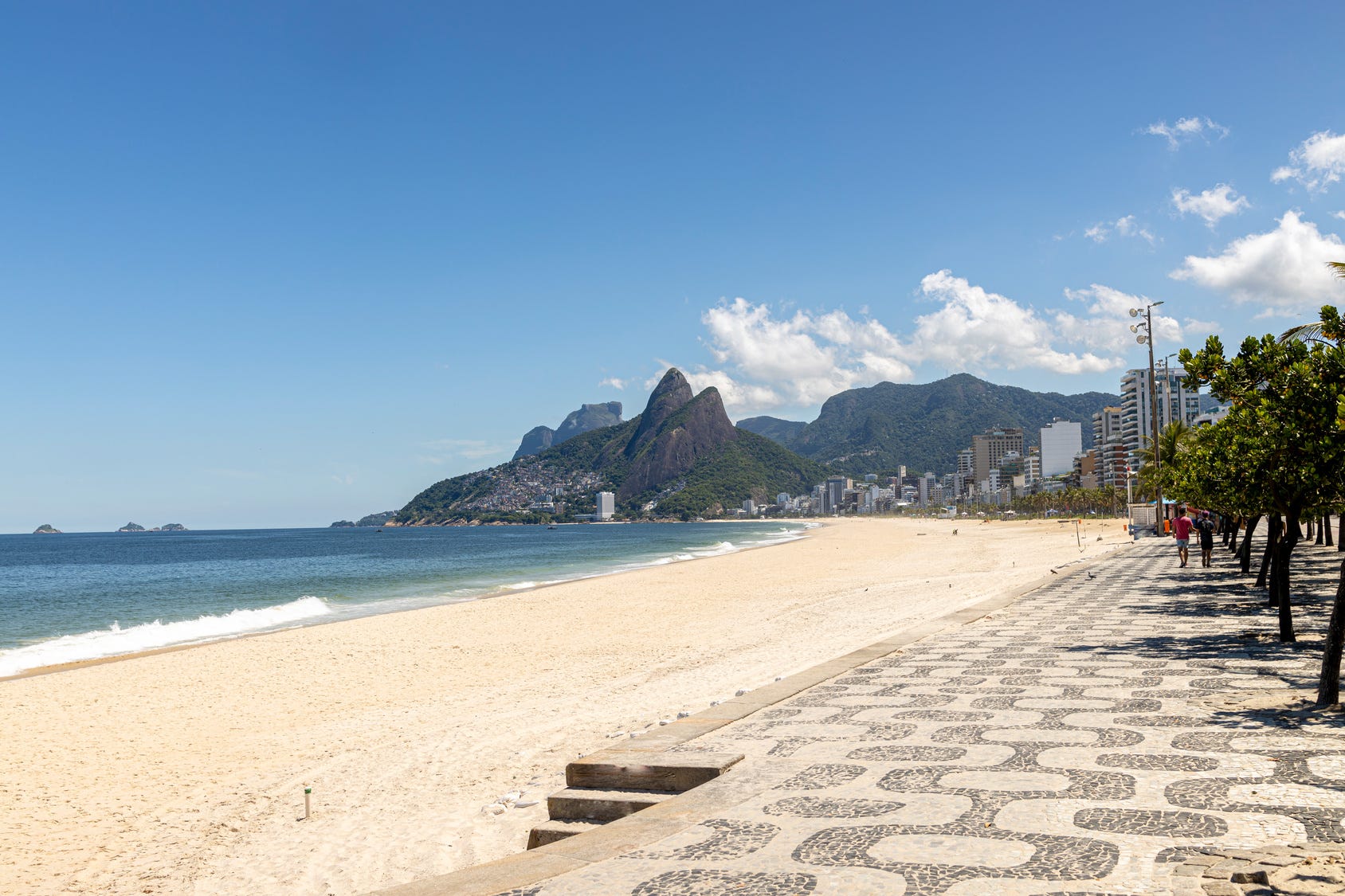
Warm weather, warmer people
A balcony in the morning, half a papaya on the plate and the sea already the temperature of bathwater. A walk on the sand before the heat comes up. The man at the padaria who has your coffee ready before you ask. A Sunday lunch that starts at one and ends at six, at the table of neighbors who invited you the second time you met. In January, when the house back home is under snow, you're in sandals.
That's the wish people bring to Brazil. Not a resort week, but warmth in both senses: the climate and the people. A bigger, more sociable life than the one you have now, at a cost that goes further, with the way home left open.
Then the doubts arrive, and they're fair. Brazil is far, the language isn't Spanish, and its reputation for crime walks in ahead of it. As one reader put it, "What if we're lonely and broke in the wrong country, missing the grandkids, and then it all goes back to normal here?"
Each part of that question has a specific answer in Brazil, and most of the answers are settled before you sign a lease.
If this were my household, the first thing I'd check wouldn't be the visa. Brazil's residence routes are simple and settled. What I'd check first is the map: which state, which city, which neighborhood. Brazil is a free democracy; its main risk for a newcomer is street crime, falling but very uneven by region. Choose the place well and the rest of this report is paperwork, done in the right order.
The life
Where Americans actually land. In my reading, households that settle well choose one of four kinds of place. São Paulo, for people who want a real city: the deepest bench of private hospitals and English-speaking doctors in the country, and flights home every night. Florianópolis and the coast of Santa Catarina in the south, for people who want island beaches, a calmer pace and the safest numbers in the country. Rio de Janeiro, for people who want the scenery and are willing to choose their neighborhood with care. And the Northeast coast, from Bahia up through Pernambuco, Rio Grande do Norte and Ceará: warm water all year, beach villages, the lowest prices, and the most variation in safety from one town to the next.
A good week. Picture a couple in their sixties in a rented apartment two blocks from the beach in Florianópolis. He walks the shoreline every morning and now has opinions about coconut water. She takes Portuguese twice a week and has started to get the jokes at the neighbors' Thursday dinner. They drive into the hills on Saturday for a farm lunch. In December the grandkids come for three weeks of summer while it's winter at home, and nobody wants to leave.
What it costs. Dollar income goes a long way in most of Brazil, and further in the Northeast than in the south. The exceptions are the best neighborhoods of São Paulo and Rio, and anything imported: cars, electronics and wine cost more than at home. The fixed costs people forget: a private health plan, an accountant (contador) for the monthly tax payments, and sworn translations of every document.
Health care. Brazil's public system, the SUS, is free at the point of use for everyone, foreign residents included; you register at your local health post. It's strong on emergencies and weak on waiting times for anything elective. Most American households also keep a private plan, for speed and for English-speaking doctors.
People. Brazilians are quick to invite a newcomer to the table, which answers the loneliness half of the reader's question. The catch is Portuguese. Outside tourist circles, English thins out fast, and the happiest households learned the language early, joined something (a beach volleyball group, a choir, a church, a running club) and let themselves be adopted. Life runs on WhatsApp, the doctor's office included. And the clock helps: Brazil sits close to East Coast time, so calls to the grandkids happen at normal hours.
The verdict
Where Brazil stands: a free, warm democracy whose institutions just held through a hard election, and whose real risk for a newcomer is street crime that is falling but uneven from region to region. Current as of November 13, 2026.
What works. Getting in. A retiree with a pension or Social Security of US$2,000 a month qualifies for residence, and a visitor's e-visa allows up to 180 days a year, so a winter season needs no residence at all. Brazil is free: Freedom House scores it 73 of 100, rated Free, eight points behind the United States. Its elections work: on October 25, 2026, President Lula won a fourth term, 51.79% to 48.21%, and the electoral court's count stood. Same-sex couples have had full marriage rights since 2013.
What doesn't. Crime, read in proportion. Brazil's rate of violent deaths fell to 19.1 per 100,000 people in 2025, the lowest since the national series began in 2012. But the range is wide: 7.6 in Santa Catarina and 7.8 in São Paulo state, against 42.5 in Amapá and 36.8 in Bahia. This is a choose-your-place problem, not a country-wide one. Corruption scores are low, the paperwork is heavy, and Portuguese isn't optional. Brazil taxes a resident's worldwide income, and there is no income tax treaty with the United States. Abortion is legal only in narrow cases.
The near-term pressure is political, not structural: a re-elected president facing the most right-wing Congress in recent memory. A bank failure in November 2025, Banco Master, was covered by the deposit guarantee as designed.
Brazil fits the retired household with steady pension and Social Security income that wants warmth and sociability and will learn the language; the snowbird couple who want December to March by the sea without becoming residents; same-sex couples; and remote workers, who have a permit of their own.
Brazil fits poorly the household that won't learn Portuguese, anyone for whom easy access to reproductive care is non-negotiable, and the household with most of its wealth in taxable US brokerage accounts that won't restructure before living there year-round.
The bottom line: Brazil is a rewarding second base for the household it fits, as long as the place is chosen as carefully as the permit.