


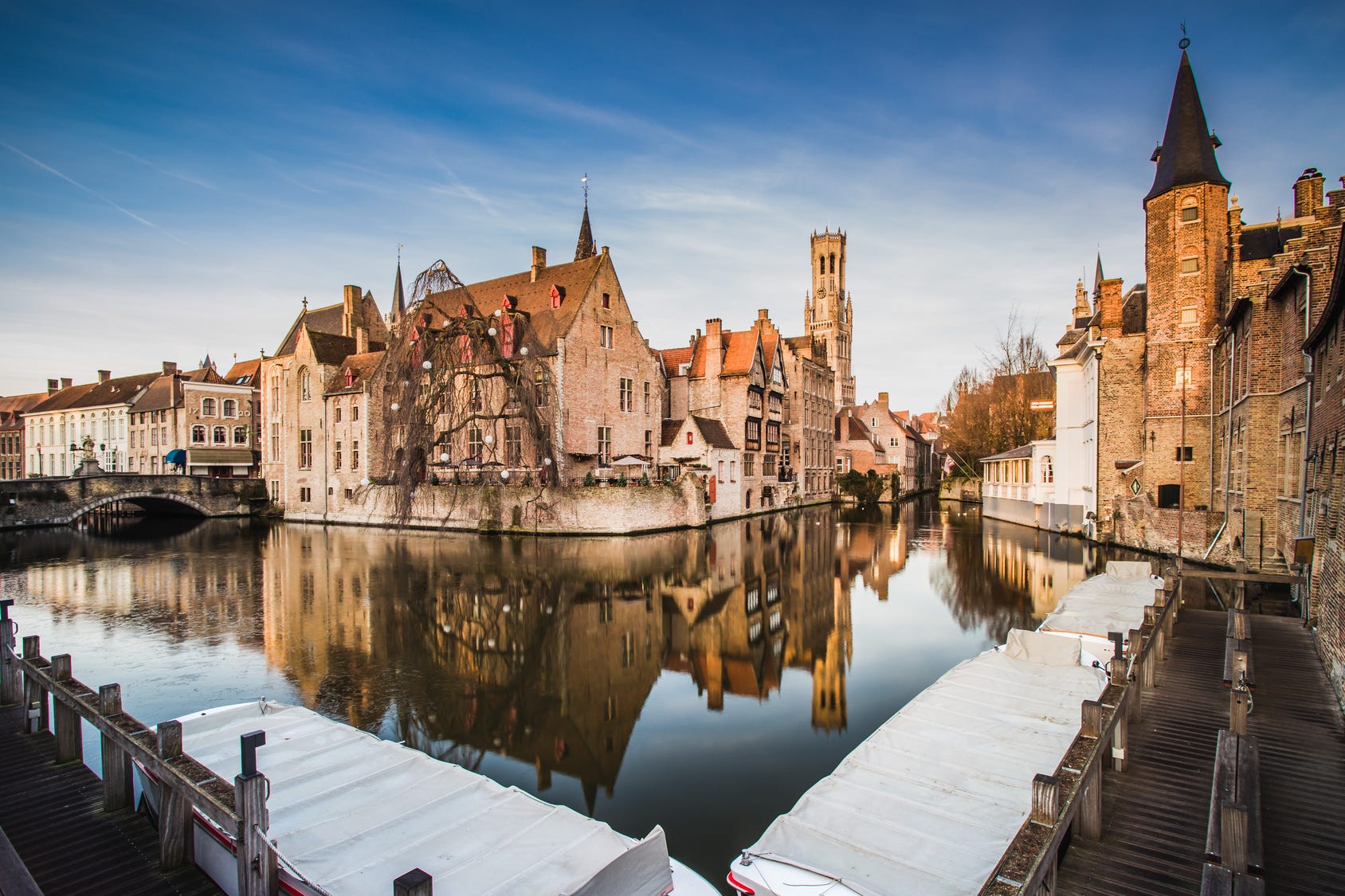
Europe on your doorstep
A tall brick townhouse on a canal in Ghent, or a flat with high ceilings in a leafy corner of Brussels. Coffee on the square on Saturday, a train to Paris or Amsterdam for lunch when you feel like it, and back home the same evening. A doctor who sees you this week, not next quarter. Neighbors from all over the world, many of them as new as you are. And a direct flight home when the grandkids have a recital.
That's the wish people bring to Belgium. Not the sunny retirement on a coast: a city life in the middle of Europe, close enough to everything that the move feels like a second base rather than a disappearance.
It's a wish that answers one of the hardest questions in any move. As one reader put it, "What if we're lonely and broke in the wrong country, missing the grandkids, and then it all goes back to normal here?" Belgium is a strong answer to most of that sentence. Brussels is one of the most international cities on earth, so lonely is optional. The flights home are short by European standards, and nothing about a Belgian plan stops you from keeping the American house and a way back.
The part Belgium doesn't answer on its own is "broke." It is one of the more heavily taxed countries in Europe, and its only special regime for newcomers is for people hired to work there, not for retirees or investors. The households that do well here build the plan around that fact from the first step. This report shows how, and what I'd check first if this were my household.
The life
Where Americans actually land. Most land in or around Brussels, where the European Union, NATO and a long list of companies and associations have built an English-speaking international world inside a French- and Dutch-speaking city. People who want a smaller, older, prettier city choose Ghent, Leuven or Bruges, in the Dutch-speaking north.
A good week. Picture a couple in their sixties in a rented townhouse in Ghent. He walks to the same corner bakery every morning and has learned enough Dutch to be teased about it. She takes a painting class on Tuesdays and volunteers at an English-language library in Brussels on Thursdays, a short train ride away. Friday night is dinner with two other couples, one Belgian, one Canadian. Twice a year they take the train to Paris for a long weekend, simply because they can. At Christmas their daughter's family flies in, and the grandkids decide the canal boats are the best thing in Europe.
What it costs. Belgium costs about what a comfortable American city costs: housing in Brussels and Ghent is the big line, food is good and not cheap, and public transport means many households drop to one car or none. The costs that surprise people are the fixed ones: income tax at European rates, a commune surcharge on top, and an accountant who knows both systems.
Health care. Belgium's health care is very good, and appointments usually come quickly. It runs through health funds called mutualités or ziekenfondsen: once you've been registered and legally resident for more than three months you join one, pay a contribution set by your income (up to about €930 a quarter each in 2026), and most of your doctor, hospital and prescription costs are reimbursed. Expect to need private cover for the visa and the first months, until the fund membership is in place. Many residents keep a top-up policy for private rooms and specialists.
People. Belgians are reserved at first and loyal once you're in. Brussels makes the first year easy: the international community runs clubs, choirs, walking groups, churches and charities in English, and many newcomers have friends before they have furniture. The loneliness people fear is usually a first-winter problem, and one club or class is the cure. Outside Brussels, learning some Dutch or French is what turns politeness into friendship. The households who do best pick the language of the place they live, join one thing that isn't for expats, and stop expecting anything official to happen in a single visit.
The verdict
Where Belgium stands: one of the freest, safest and best-governed countries in the world, with high taxes and no easy door for a retiree who has no ties there. Current as of November 13, 2026.
What works. Nearly everything a resident household relies on. Belgium scores 95 of 100 with Freedom House, where the United States scores 81. It ranks 21st of 163 countries for peacefulness, where the US ranks 134th, and 17th in the world on rule of law. Health care is very good, the banks are protected by the EU's deposit guarantee, and US Social Security arrives normally.
What doesn't. Three things. First, tax: income above about €51,000 a year is taxed at 50%, plus a commune surcharge; since January 1, 2026, gains on investments are taxed too; and the yearly tax on large securities accounts doubled in June 2026. Second, the door: the retirement visa has no published income line and is decided case by case, and the consulate asks you to show your ties to Belgium. Third, the machinery: three regions and three official languages make the paperwork slow.
The current pressure is political, not structural. The government is cutting spending, unions staged national strikes against it in October and November 2025, and the coalition has tightened family reunification and raised the citizenship fee. None of that has touched the retirement visa, a pension or a property title. Belgium remains a country where same-sex couples marry, abortion is available on request, and the courts and press are independent.
Belgium fits households with a real tie to the country: family, close friends, a past posting, or a Belgian employer or client. It fits a household where one of you holds another EU passport, because that spouse's free-movement rights carry the other in. It fits people who want a city life in Europe and would rather pay for good public services than chase a low-tax address.
Belgium fits poorly households whose main goal is a lower tax bill, retirees with no Belgian connections who need a predictable visa, and anyone who wants sunshine more than trains.
The bottom line: Belgium is an excellent second base for the household that can get in and budgets for the tax, and the order you do things in decides how much that tax costs.