


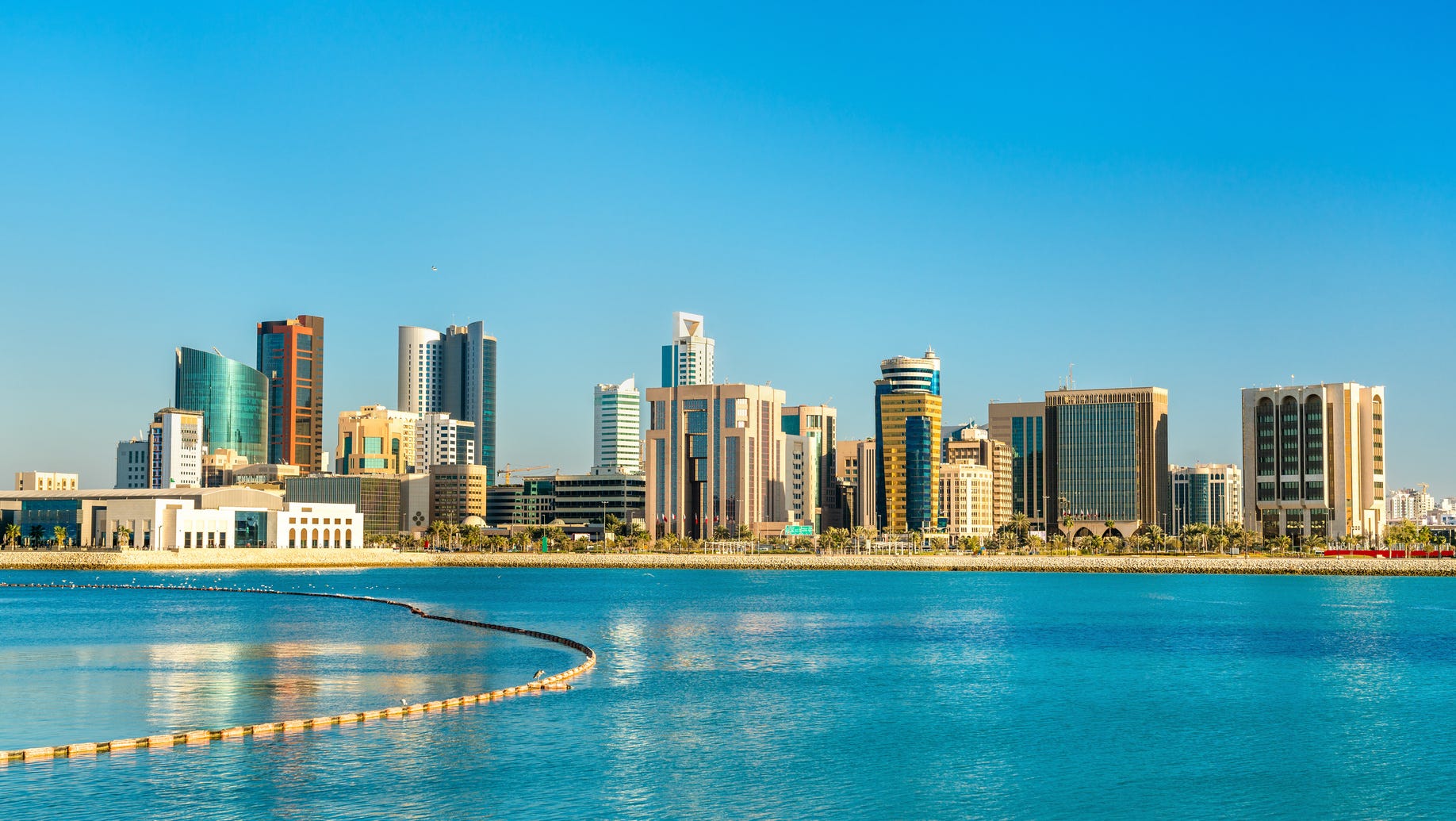
An easy island life, close to everything
A January morning warm enough for breakfast on a terrace over the water. A small island where nothing is far, the paperwork moves in days, and English works in the shops, the clinics and most offices. A short flight to anywhere in the Gulf, and a causeway to Saudi Arabia for a weekend drive. On the local side, an income tax bill of zero.
That's the wish people bring to Bahrain. Not escape, mostly: ease. A smaller, gentler version of Gulf life, and a ten-year residence permit for the price of a good apartment.
As one reader put it, "We've read everything and still don't know what to actually do." That fits Bahrain better than most places, because what you read about it depends on when it was written. Until February 2026 it was a quiet, comfortable posting that Americans had known for decades. Since then it has been on the front line of the war between the United States and Iran, and its public finances are under real strain. Both are true at once, and the decision turns on which of them your household can live with.
What I'd check first if this were my household is three things, in this order. Whether the security picture lets us sleep at night. Whether any money we hold in Bahrain is money we could watch move without losing sleep either. And whether the rules on speech and private life fit the life we would actually live there.
If all three come out right, Bahrain is one of the simplest second bases in the world to set up, and this report shows how to do it in the right order. If one comes out wrong, that is a perfectly good answer too, and far better reached now than after the deed is signed.
The life
Where Americans actually land. For decades the American community clustered in Juffair, the district of towers and restaurants around the US naval base; about 8,300 Americans lived near it before the war. Many left in March. Households choosing Bahrain for themselves tend to look elsewhere: the Amwaj Islands off the northeast coast, the towers of Seef and Bahrain Bay in Manama, the villa streets of Saar and Budaiya on the greener north and west, and gated developments such as Riffa Views and Durrat Al Bahrain. Where you buy matters: foreigners from outside the Gulf can own freehold only in designated zones.
A good week. Picture a couple in their late sixties in an apartment on the water. He walks the waterfront before the heat. She has a standing coffee with two women she met at church, one Indian and one British. On Thursday evening they drive to a friend's villa in Saar for dinner; on Friday the island slows down and so do they. Twice a winter they fly somewhere in the region, and in March the grandchildren come for spring break. From May to September the heat runs the week, so many households spend the summer elsewhere, which is the part-year plan by another name.
What it costs. A comfortable life here doesn't require a large income, and there is no income tax to subtract from anything. VAT is 10%. The costs that surprise people are new ones: compulsory health insurance, and the habit of keeping a cushion outside the country.
Health care. Bahrain's private hospitals are modern and English-speaking, and that is where a foreign resident will be treated. Since October 31, 2026, a national insurance program for residents ties health cover to residence permits, and from November 1 expatriates moved from the main public hospital, Salmaniya, to private providers.
People. The foreign community is large, the churches, clubs and sports leagues are well established, and friendships form quickly among people who all arrived from somewhere. The households that do best treat it as a small town: they join something in the first month, learn a few words of Arabic for courtesy, and keep their opinions about local politics to themselves.
The war, in daily life. In the first weeks after February 28, 2026, Iranian drones and missiles struck the island, including apartment towers in Manama and fuel tanks in Muharraq, and civilians died. Most residents, Bahraini and foreign, stayed. Remote work and home schooling carried people through, and by late May many visible signs of the war were gone. Attacks came back in June, July and early September, mostly intercepted. Life since has been normal, with an unsettled war behind it.
The verdict
Where Bahrain stands: an easy, tax-free place for a foreign resident to live, under a government that tolerates little dissent, now carrying real strain from the regional war and a heavy public debt. Current as of November 13, 2026.
Start with the baseline. Bahrain is a monarchy and doesn't claim to be a democracy: Freedom House rates it Not Free, at 12 of 100, as it does the UAE, Qatar, Oman and Saudi Arabia. That is the starting point, not a new slide; what changed in 2026 is the war.
What works. Getting in, and daily life. Golden Residency is one of the simplest long-stay routes anywhere: a home worth about $345,000 or a large pension buys a ten-year permit that covers your family and lets you work. No income, wealth or capital gains tax. English works almost everywhere. On the Global Peace Index it ranks 108th of 163 countries: behind its larger Gulf neighbors, ahead of the United States at 134th.
What doesn't. Security: hosting the US Navy's Fifth Fleet made Bahrain a target. It has been struck repeatedly, the ceasefire has broken more than once, and the US advises Americans to reconsider travel. Money: public debt runs between about 120% and 150% of the economy, and Bahrain is the only Gulf country rated below investment grade. Its neighbors are backing it and the peg is holding; the household rule is plain: live in Bahrain, keep your wealth elsewhere. Rights: speech is closely policed, more so since the war, and parliament's term was extended a year, delaying this year's election. Same-sex relations between adults are legal, but couples go unrecognized and indecency laws are used against LGBTQ+ people. Abortion is allowed only to save the woman's life.
The war is near-term pressure that a settlement would ease; the debt and the political system are structural.
Who it fits. Retired or semi-retired couples on US income who want warmth and ease, will keep savings outside the country, and are comfortable living quietly by local rules. Families with a work tie to the Gulf. Households wanting a winter base.
Who it doesn't. LGBTQ+ couples. Anyone for whom speaking freely online is part of who they are. Households that want a second passport. Anyone who would keep most of their money in a local bank, or whom the war news would keep awake.
The bottom line: Bahrain is a workable second base for the household it fits, if you go in clear-eyed about the war, keep your wealth outside, and live by its rules.