


A place that takes you in
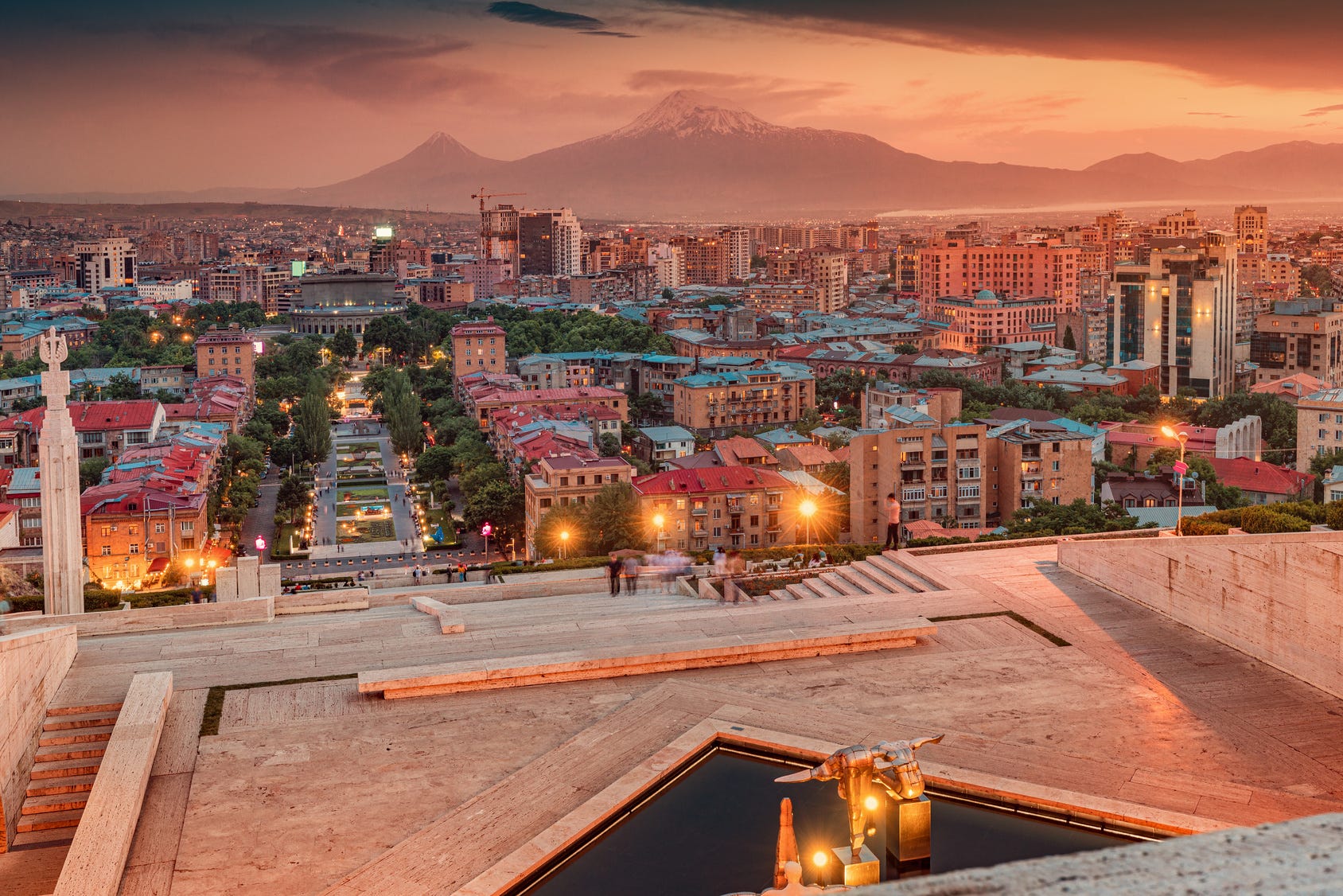
A long table under a grape arbor, and a host who keeps refilling your glass because you are a guest and that settles it. Morning coffee in a Yerevan café, the city's pink stone warming in the sun, Ararat floating on the horizon when the air is clear. Apricots in July. A walk to the market where, by the third week, someone starts calling you by name.
That's the wish people bring to Armenia. For some it's a return: a grandmother's village, a family name that finally sounds ordinary. For others it's discovery, an old country that hasn't been packaged for visitors yet and still treats a stranger as company. Either way, it's a fuller life for less money, with the people they love able to come and stay.
And almost always, the wish arrives with a worry attached. As one reader put it, "What if we're lonely and broke in the wrong country, missing the grandkids, and then it all goes back to normal here?"
Armenia has an unusually kind answer to that question. Americans can live there for half of every year without applying for anything. You can try the life season by season, with your American home still standing behind you. If it fits, there are ways to stay longer. If it doesn't, you've lost nothing but some airfare and gained a few friends.
The country also changed its residence law on November 1, 2026, and the change matters most to the people most drawn to it: families of Armenian descent. If this were my household, that's where I'd start reading. Everything below is written so you can try Armenia safely, and stay only if it earns it.
The life
Where Americans land. Most start in Yerevan, and many stay there. The center is walkable, full of cafés, wine bars, galleries and long evenings outdoors. It's where the private hospitals, the international flights and most of the English speakers are. Beyond the capital, people look at Dilijan, a forested hill town with cooler summers; at Gyumri, the old second city with its black-stone streets and its own sense of humor; and at Lake Sevan, where Yerevan goes to escape the August heat. Families of Armenian descent sometimes add a village with a family name attached to it.
A good week. Picture a couple in their early sixties renting a flat with a balcony in central Yerevan from late April to mid-October. He has taken up the duduk, badly. She volunteers two mornings a week with a diaspora organization and has a standing Thursday lunch with three women who adopted her in the first month. Saturday is the market, then a long dinner that started as "just a quick bite." Twice a season they drive out to a monastery on a hillside and come back quiet. In June the grandkids fly over for two weeks, eat their weight in apricots, and ask why everyone keeps feeding them.
What it costs. Daily life costs noticeably less than in most American cities, and less again outside Yerevan. The surprises are private health cover, an Armenian accountant once you file there, translations and apostilles for every official document, and, under the new residence law, a fresh application fee each year instead of a cheap renewal.
Health care. Armenia is phasing in universal public health insurance, which started on January 1, 2026 and rolls out through 2028; the standard package is priced at 129,600 dram a year, about $360. It reaches citizens first and, later, only some foreign residents, mostly those working there; I would not plan on a foreign retiree being able to join. The practical answer for an American is a private international policy plus Yerevan's private clinics, which are good for routine and much specialist care. Outside the capital, care thins out quickly. Serious, complex treatment is where you'd want your international policy to fly you somewhere else, or home.
People. Armenian is the language of daily life, Russian is widely spoken by older people, and many younger Armenians speak good English. Learning even fifty words changes how you're received, because hospitality here is not a performance; it's an obligation people take seriously. The households that settle fastest join something: a church community, a choir, a diaspora volunteer program, a language class full of other newcomers. Loneliness, the fear in that reader's question, is rarely the problem in Armenia. Getting home before midnight from someone's dinner table is.
The verdict
Where Armenia stands: a safe, welcoming, partly free democracy that works very well for a part-year household and less easily for a full-time one under its newly rewritten residence rules. Current as of November 13, 2026.
What works. The front door: Americans can stay up to 180 days a year with no visa. Armenia is safe, 51st of 163 countries for peacefulness to America's 134th, and it ranks ahead of the United States on press freedom, 50th to 64th. Tax is a flat 20%, with no wealth or inheritance tax, and Armenian law leaves pensions, foreign ones included, out of taxable income. The conflict with Azerbaijan has moved toward peace since the two leaders initialed an agreement at the White House on August 8, 2025.
What doesn't. There is no retirement or passive-income visa. Without Armenian roots or family, staying past the half-year takes a real business, a job, or an investor route whose terms aren't published, and temporary residence must be applied for again each year, under a quota. Health care for a foreign resident means private cover. The only US tax treaty is a narrow Soviet-era one.
The politics need proportion. Freedom House scores Armenia 54 of 100, Partly Free, against 81 for the United States. The ruling party won the June 7, 2026 election with 49.7% of the vote; the opposition disputes the result. The peace treaty is unsigned because Azerbaijan wants Armenia's constitution changed first, and Russia is applying pressure through its trade bloc. The State Department keeps Armenia at Level 2 of 4, exercise increased caution, with a do-not-travel warning for the border with Azerbaijan. None of this has touched a visa-free stay, a pension or a property title. This is a young democracy under pressure from a large neighbor, not a country turning on its guests. Inflation, 4.3% in October, is a near-term squeeze.
Who it fits. Families of Armenian descent who want a real second home and, in time, a second passport. Part-year households of any background who want six warm, sociable months abroad and a full American life the rest of the year. Founders who will actually run something there.
Who it fits poorly. Retirees with no Armenian ties who want to live there full time on pensions alone; the law gives them no direct route. Anyone who needs advanced medical care close at hand. Households for whom LGBTQ+ legal recognition is non-negotiable.
The bottom line: a warm, safe second base for half the year, and a full second home for families with Armenian roots, with the route chosen to fit the new law.