


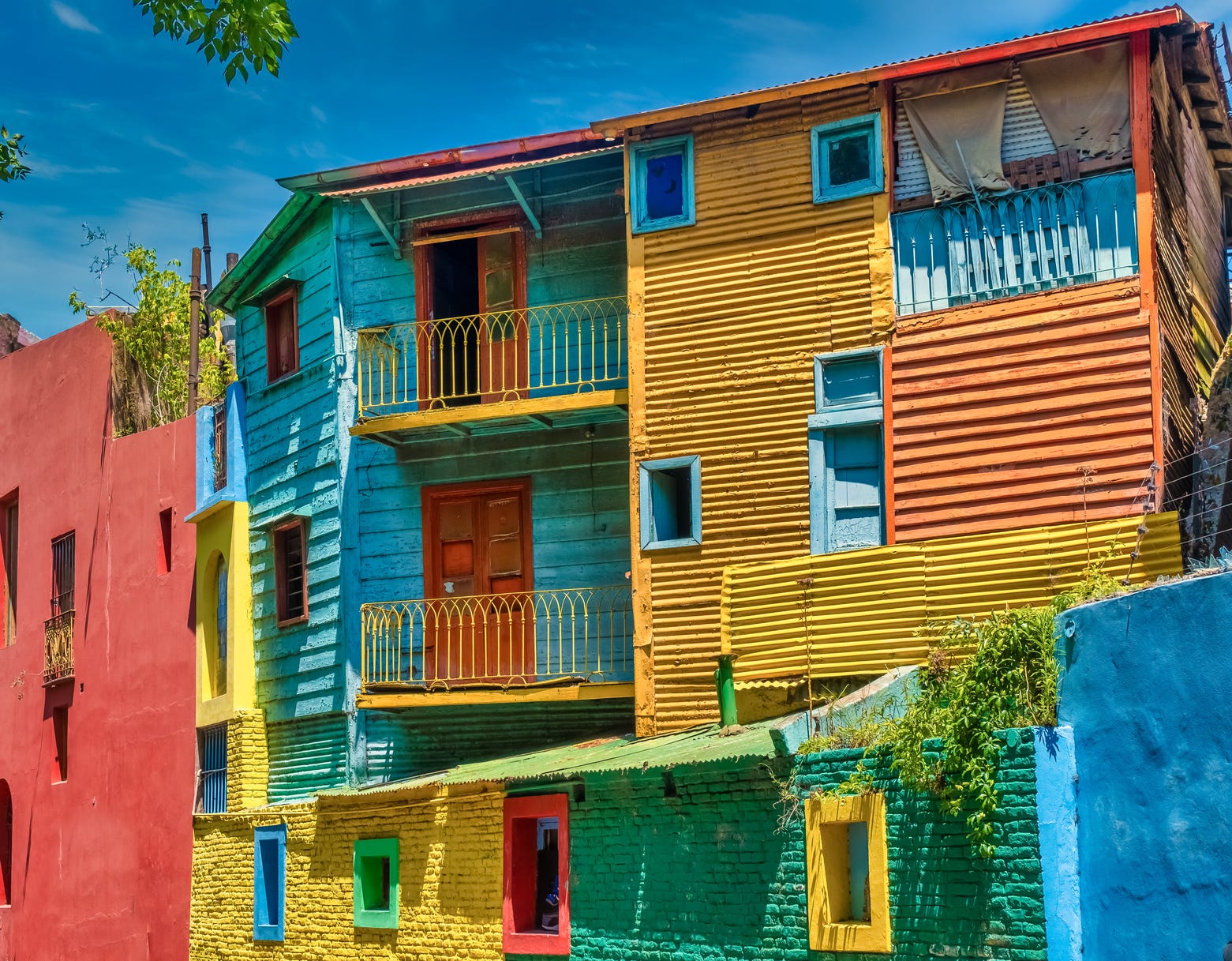
A bigger life, in the other summer
A tall-ceilinged apartment in Buenos Aires, with a balcony over a street lined with jacarandas. Coffee and a croissant at a café that was already old when your parents were young. A bookshop in a converted theater. Dinner at ten, because that's when the city eats, and a slow walk home with half the neighborhood still out. Or a house among the vines in Mendoza with the Andes standing over it, or a cabin on a Patagonian lake where the light at eleven at night looks like a painting.
That's the wish people bring to Argentina: a big, warm, cultured life, with summer arriving in December, at a cost that leaves room for the people they love to come and stay.
Argentina is one of the easiest countries in the world for an American to become a resident of, one of the friendliest once you're there, and one of the few places where a household can choose between a world city, wine country and wilderness without changing passports.
It is also a country whose money has surprised people for generations. The peso, the rules on moving dollars in and out, and the tax on what you own have all changed more in the last two years than in the decade before, mostly in a direction that helps a foreign resident. That's good news, and why this report spends as long on money as on visas.
As one reader put it, "We have money, but not enough to survive a massive mistake." Argentina's mistakes are nearly all about money and the order of the paperwork, and nearly all of them can be avoided. What follows is what I'd check first if this were my household, and in what order.
The life
Where Americans actually land. Most land in Buenos Aires: Palermo and Recoleta for the cafés, parks and walkable streets, Belgrano and the riverside suburbs north of the city for more space and quieter evenings. A second group goes west to Mendoza, for the vineyards, the mountains and a smaller city's pace. A third chooses Córdoba, a university city with hills nearby and a lower cost of living. And a happy few take the lakes of Patagonia around Bariloche, trading big hospitals for the view.
A good week. Picture a couple in their early sixties in a rented apartment in Palermo. He takes a Spanish class three mornings a week and has started to understand the jokes. She has found a walking group that meets in the botanical garden. Lunch is light and late; dinner is later. On Thursday there's a concert at the old opera house, on Saturday a market, and on Sunday someone's asado that starts at two and ends after dark. In January, when Chicago or Boston is at its coldest, it's summer, and the grandkids come down for two weeks of it.
What it costs. Daily life in pesos is reasonable by American big-city standards, but Argentina is no longer the dollar bargain it was: prices have risen faster than the dollar, so dollars buy a little less each year. The costs that surprise people are the ones on paper: a local accountant, a private health plan, and the time it takes to get anything official done.
Health care. Argentina has a large public hospital system, very good private clinics in the bigger cities, and private health plans, called prepagas, that most foreign residents use. The public side changed this year for newcomers. Since August 12, 2026, foreigners without permanent residence who use a national public hospital must show insurance or pay, except in an emergency, which is still treated first and billed afterward. Once you hold permanent residence, you use the public system on the same terms as an Argentine. Either way, plan on a prepaga from the day you arrive.
People. This is the part that wins people over. Argentines are warm, direct, curious about where you're from and generous with their time once they know you. The social life runs late and runs through friends of friends, so the first invitation matters more than the first apartment. Spanish isn't optional outside a few Buenos Aires circles, and the accent takes a few months to tune into. The households that settle happiest take lessons before they land, join something with a regular schedule (a choir, a tango class, a running club, a parish), and say yes to the second asado even when they're tired. Belonging here doesn't ask you to stop being American. It asks you to show up.
The verdict
Where Argentina stands: a free, peaceful democracy with easy ways in, an economy still mending, and money rules that have moved in a foreign resident's favor over the past two years. Current as of November 13, 2026.
What works. The routes in are among the simplest anywhere: a pension or passive-income permit asks for about $1,300 a month. Argentina is free, scoring 85 of 100 with Freedom House, four points above the United States, and far more peaceful. The dollar controls of recent years were largely lifted for individuals in April 2025, and there's no national inheritance tax. The governing party won the October 2025 midterms with more than 40% of the vote, so today's rules carry a mandate.
What doesn't. Prices, first: annual inflation was 33.4% in September 2026, a little above where it stood a year earlier. That's a budgeting problem for anyone spending dollars, not a threat to a permit. Second, a resident pays tax on worldwide wealth as well as worldwide income, and there's no US income tax treaty. Third, much of the recent change came by presidential decree, and the courts are unpicking parts of it.
Read the institutional slide in proportion. Argentina is a free democracy, scoring above the US and below its neighbors Chile and Uruguay. V-Dem lists it among countries drifting in an authoritarian direction since 2024, and it ranks 98th of 180 for press freedom. That's a democracy under strain, with courts checking the executive, not one heading anywhere frightening.
Who it fits. Retired and passive-income households who want a big city's culture in Spanish, can budget in dollars and want summer in January. It's especially strong for part-year households who spend the northern winter there without ever becoming Argentine tax residents.
Who it doesn't. Households with large portfolios planning a full-time move, for whom the wealth tax and the missing treaty add real cost. Anyone who must work locally on arrival. Anyone who wants citizenship quickly but travels often.
The bottom line: Argentina is a warm, sound second base for the household it fits, as long as the money is arranged before the move rather than after it.