


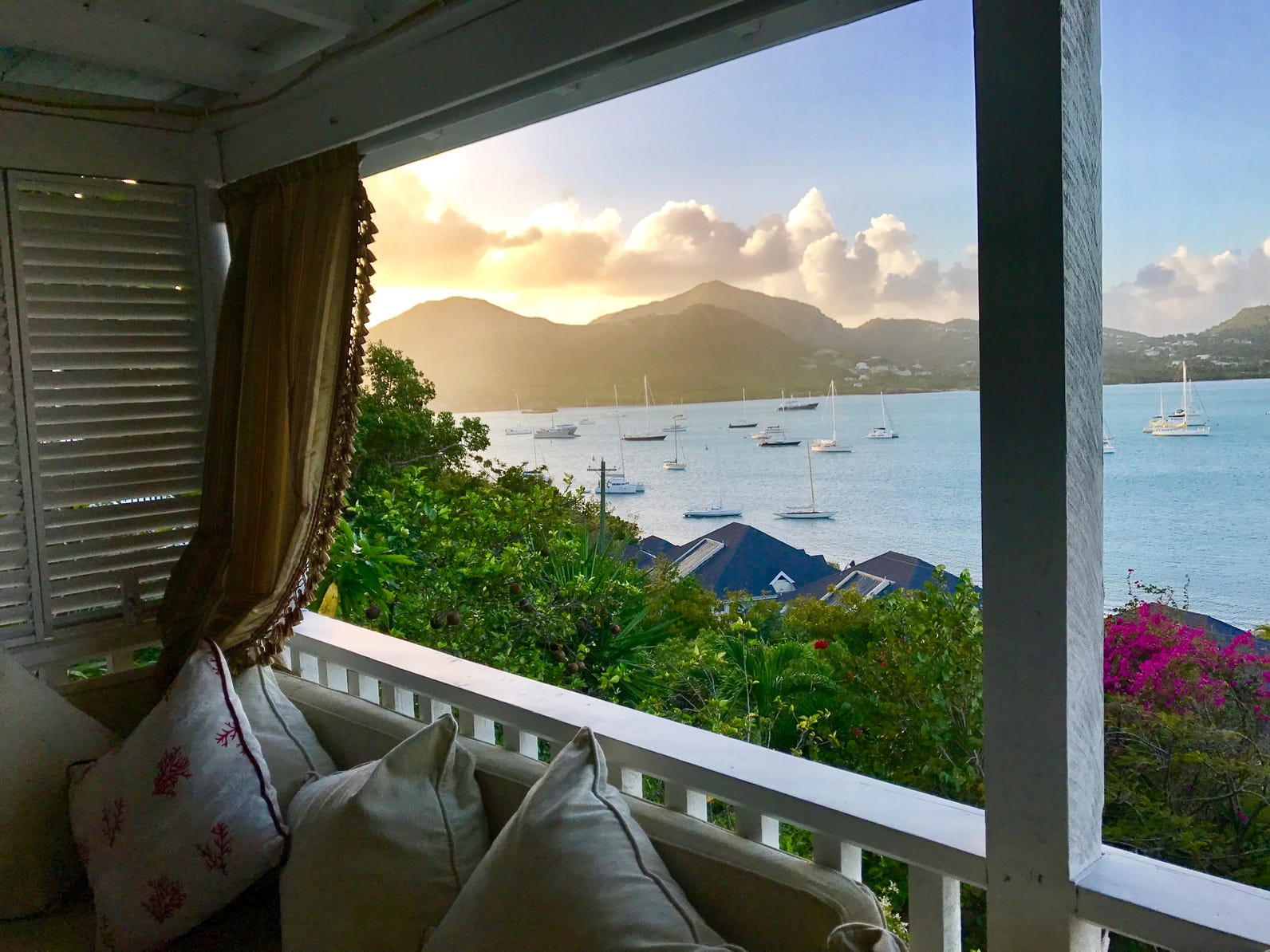
Winter by the water, close to home
A swim before breakfast, while the water is still glass. A porch that faces the bay, a boat you share with friends, a market where the woman selling mangoes knows you by your second visit. Prices in a currency that hasn't moved against the dollar in fifty years. A short flight home when a grandchild has a recital, and back again before the snow melts.
That's the wish people bring to Antigua and Barbuda. Not an emigration: a warm second base on English-speaking islands, close enough to the United States that the people you love can visit, and the life you built at home stays where it is. For some households there's a second wish folded inside the first, a second citizenship held quietly, in case.
Here the advertising is louder than the facts: page after page sells the passport, and almost nothing explains how a household lives there or what the United States still expects of you. As one reader put it, "We've read everything and still don't know what to actually do."
If this were my household, the first thing I'd check is which of three things we actually want from the islands, because the answer decides almost everything else. A winter base, a legal residence and a second citizenship are three different projects here, with three different clocks, and one of those clocks is running down.
The good news: the first two are simple, steady and well within reach, and the handful of mistakes Antigua punishes can all be avoided.
The life
Where Americans actually land. Almost everyone settles on Antigua, the larger island, where the hospital, the airport and the shops are. Sailors gravitate to the south, around English Harbour and Falmouth, where the old naval dockyard and the marinas set the rhythm of the year. Beach people look at the west and northwest coasts, around Jolly Harbour and Dickenson Bay. Households who want privacy and a gate look at the planned communities on the north and east coasts. Barbuda, a ferry ride north, is beautiful and nearly empty; it is still rebuilding from Hurricane Irma, which damaged almost every building on the island in 2017, and who may own its land is a live political fight. Visit it; think hard before you plan to live there. Wherever you settle, authorities reported more robberies and gun crime in 2024; take the care you would in any American city.
A good week. Picture a couple in their sixties who rent a cottage near English Harbour from November to April. He races on a friend's boat on Thursdays and comes home sunburned and pleased with himself. She has joined a garden club and a book group that meets on a veranda. Saturday is the market in St. John's, for fish, greens and whatever fruit is in season. Their daughter's family flies down for a week in February and the grandchildren learn to snorkel. By May they're back in the States, ahead of the heart of hurricane season.
What it costs. More than the brochures suggest, because almost everything arrives by ship and a sales tax sits on top. Electricity is the bill people notice: in November 2026 the utilities minister said the state utility's fuel bill had more than doubled since January, and some of it has reached customers. That's a fuel spike, not a permanent change, but budget for it.
Health care. Routine care is good and personal. There's one main government hospital, the Sir Lester Bird Medical Centre in St. John's (Mount St. John's until 2021), public clinics around the island and private doctors. The limit is complex care: the hospital provides primary and secondary care, and serious cases may need an emergency flight off the island. So the most important health decision here is the insurance: an international plan with medical evacuation, bought before your first full season.
People. English is the language of daily life, and Antiguans are friendly, direct and used to foreigners. The households that are happiest here joined something early: a sailing club, a church, a volunteer group, the crowd at a cricket match. The citizenship program is a live debate at home, not just in Brussels. You can stay entirely American and still belong.
The verdict
Where Antigua and Barbuda stands: a free, peaceful, English-speaking island democracy that works well as a part-year base, while its fast route to a passport is being wound down under European and American pressure. Current as of November 13, 2026.
What works. Freedom House scores the country 83 of 100, Free, unchanged from last year and two points above the United States. It ranks 39th of 143 countries on the rule of law. The currency has been pegged to the dollar since 1976, there is no personal income tax, and the resident permit for retirees is unchanged.
What doesn't. The passport program is ending: the European Commission has asked for closure by June 1, 2028, according to Antigua's government, or Antiguans risk losing visa-free travel to Europe; the prime minister has offered the end of 2030 if Europe helps pay, and no date is agreed. The United States restricted visas for Antiguan nationals from January 1, 2026, citing citizenship sold without residence. Neither touches your own US passport, but both shrink what an Antiguan one is worth. The remote-work visa has closed, complex medical care means a flight, and the islands sit in the hurricane belt. Electricity bills are the near-term pressure: a fuel spike in 2026, not a structural problem.
On rights, read the baseline first: Freedom House rates it free, six to eleven points behind its Eastern Caribbean neighbors and two ahead of the United States. Its gaps are old laws, not a new slide. A court decriminalized same-sex relationships only in 2022 and couples have no legal recognition, abortion is legal only to save a woman's life, and the rape law still largely exempts husbands.
Antigua fits the retired or semi-retired household that wants a warm winter base close to the United States, in English, with a currency that behaves like the dollar. It also suits sailors, and households who want a second citizenship and can decide within the year.
Antigua fits poorly anyone who needs a remote-work visa or specialist medical care close at hand, same-sex couples who need their marriage recognized, households for whom access to reproductive care is non-negotiable, and anyone buying the passport mainly for European travel.
The bottom line: Antigua is a sound winter base and a fading passport. Build the base with confidence, and treat the passport as a short window, not a plan.