


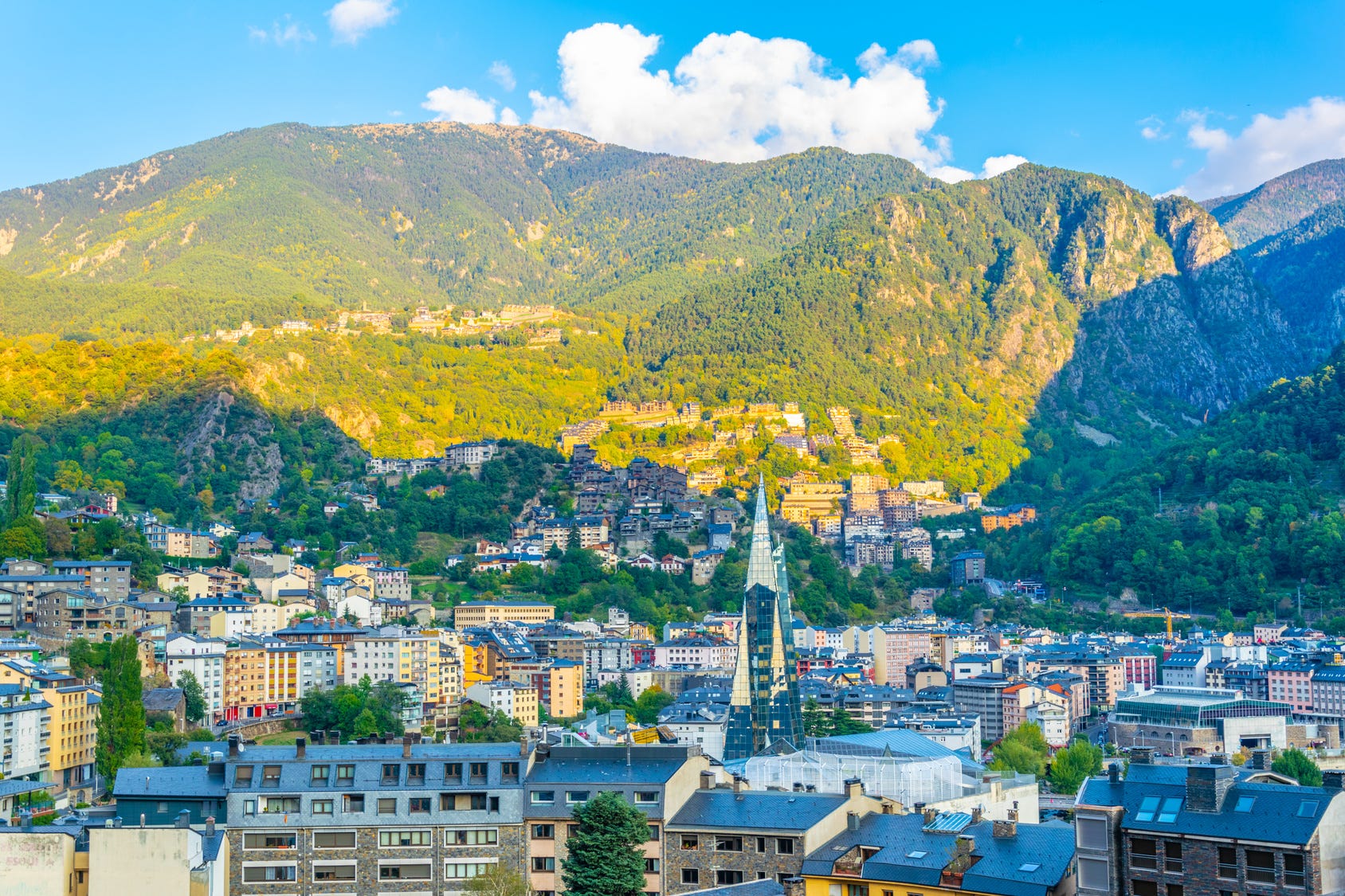
A quiet life in the mountains
A flat in a valley town, the ski lifts a short drive from the door. Mornings on a trail above the clouds, afternoons with nothing on the calendar. Streets so safe that nobody thinks about it. Spain down one valley, France over the pass, and Barcelona close enough for a long lunch and a show.
That's the wish people bring to Andorra. A small, orderly, beautiful country where life is calm, the mountains are the neighbors, and the tax bill is famously light.
For an American, that last part is the one to handle with care. Andorra's taxes are low, but the United States taxes its citizens wherever they live, and there is no income tax treaty between the two countries to sort out who taxes what. Andorra also raised the price of its residence permit sharply in February 2026. None of that makes it the wrong choice. It makes it a country you plan from the numbers out.
If this were my household, the first thing I'd check is simple: do the numbers still work once the US takes its share, and can we live inside Andorra's rules on days, permits and property? Get those two answers right and the rest is the pleasant part: the trails, the cafés, the quiet.
As one reader put it, "We have money, but not enough to survive a massive mistake." Andorra has a handful of mistakes it punishes. Every one of them can be avoided.
The life
Where people actually land. Andorra is small enough that "where" is mostly a question of altitude and pace. Andorra la Vella and Escaldes-Engordany, the joined-up capital at the bottom of the valley, hold the shops, the banks, the doctors and the restaurants that stay open in May. Higher up, La Massana and Ordino are quieter, greener and closer to the trails. The ski parishes toward the French side suit people who want winter at the door.
A good week. Picture a couple in their sixties in a rented flat in Ordino. He walks the dog up the valley before breakfast; she has a standing Thursday lunch with two other women who moved here a few years ago. Most mornings start with a hike in summer and a couple of runs on the slopes in winter, and most afternoons end in a café, or in the warm water at the thermal spa in Escaldes when the weather turns. Once a month they drive down to Barcelona or over to Toulouse for a big-city day. When the grandkids come at Christmas, the whole family skis. Nobody locks the car.
What it costs. Andorra isn't cheap. The fixed costs that surprise people are housing and entry. Homes to rent are scarce, and a law passed in January 2026 pushes empty flats and tourist lets back onto the rental market. The entry price for a passive resident is high and partly non-refundable. Budget for both before you budget for anything else.
Health care. Andorra has a public health insurance system, run by its social security fund (the CASS), that covers people who work and pay into it. A passive resident doesn't get it by moving in: you need private health insurance as a condition of the permit, and the public system's voluntary scheme is open only to residents who have already paid into it for years. Choose the policy before you arrive, checking it against the permit's rules and for care in Spain and France.
People. Andorrans are courteous and private, and the country is a mix of Andorrans and residents from Spain, Portugal, France and much farther afield. Catalan is the official language. Basic Catalan is already required to renew work permits, and the requirement is set to reach every immigration permit by 2029. The households that settle best take that as an invitation rather than a chore: a class in the first year, a walking group or a choir, a regular table at the same café. You can stay American and still belong.
The verdict
Where Andorra stands: a free, safe and very steady small country that works well for a well-off household that can meet its steep entry price and live inside its rules. Its taxes are low, but with no US tax treaty, an American's real bill is mostly set in Washington. Current as of November 13, 2026.
What works. Freedom, safety and calm. Freedom House scores Andorra 93 of 100, Free, twelve points above the United States. The government is stable. Residents pay a top income tax rate of 10%, with no wealth tax or inheritance tax. On October 19, 2026 Andorra signed an association agreement that would open the EU single market to it, if its voters and the European Parliament approve.
What doesn't. The entry price, first: €1 million invested in Andorran assets, plus €50,000 paid to the state for good. With no US tax treaty, the low Andorran rate doesn't lower your American one. And residents will increasingly need some Catalan to renew their permits.
On civil liberties, Andorra is a free democracy with two marks against it. Abortion is prohibited in all circumstances, so care means a trip to Spain or France. The government says it aims to decriminalize it for women before the 2027 election. And Andorra ranks 60th of 180 on press freedom, just ahead of the United States but well behind Spain and France. Same-sex couples can marry. None of this reaches a residence permit, a bank account or a property title.
Who it fits. Retired or financially independent households with wealth well beyond the €1 million the permit requires, who want mountains, safety and quiet in a small place, and may split the year with somewhere else. It also fits an entrepreneur who will genuinely run a business from there.
Who it fits poorly. Households for whom the entry investment would be most of their savings. Anyone who expects Andorra's low rates to cut their US tax bill. Anyone who wants a second passport: naturalizing takes twenty years and means giving up American citizenship. And households for whom access to abortion care at home is non-negotiable.
The bottom line: Andorra is a sound, safe second base for a wealthy household that plans the US tax side first, puts the investment in the right assets, and treats the permit as a long-term home, not a road to a passport.